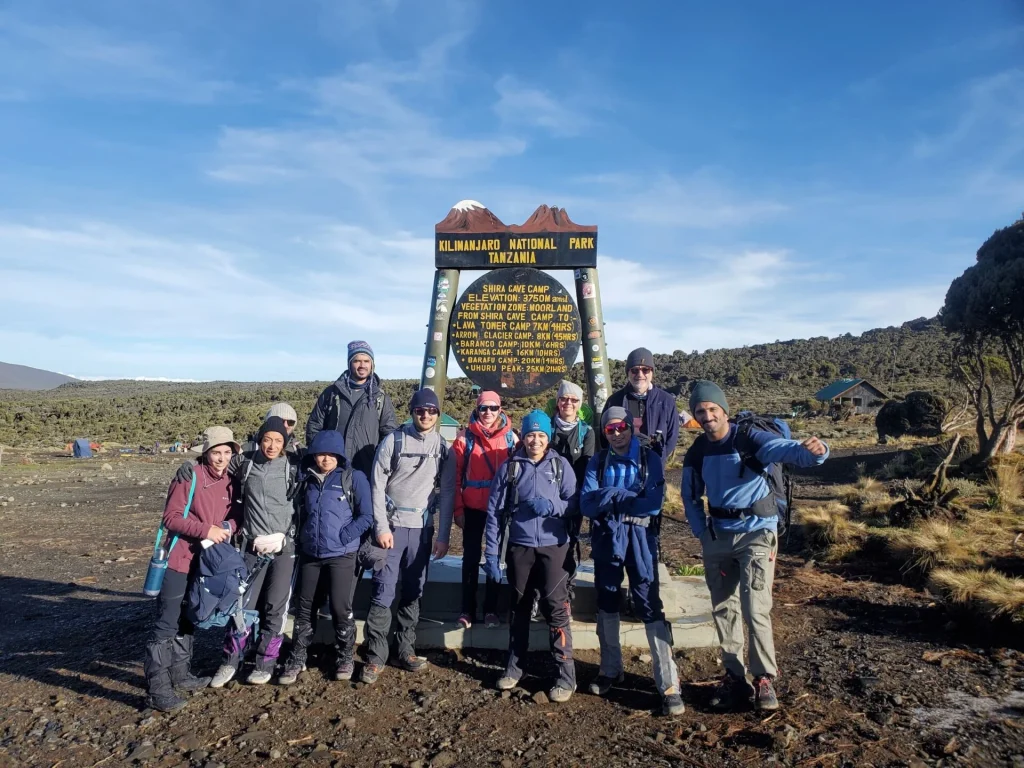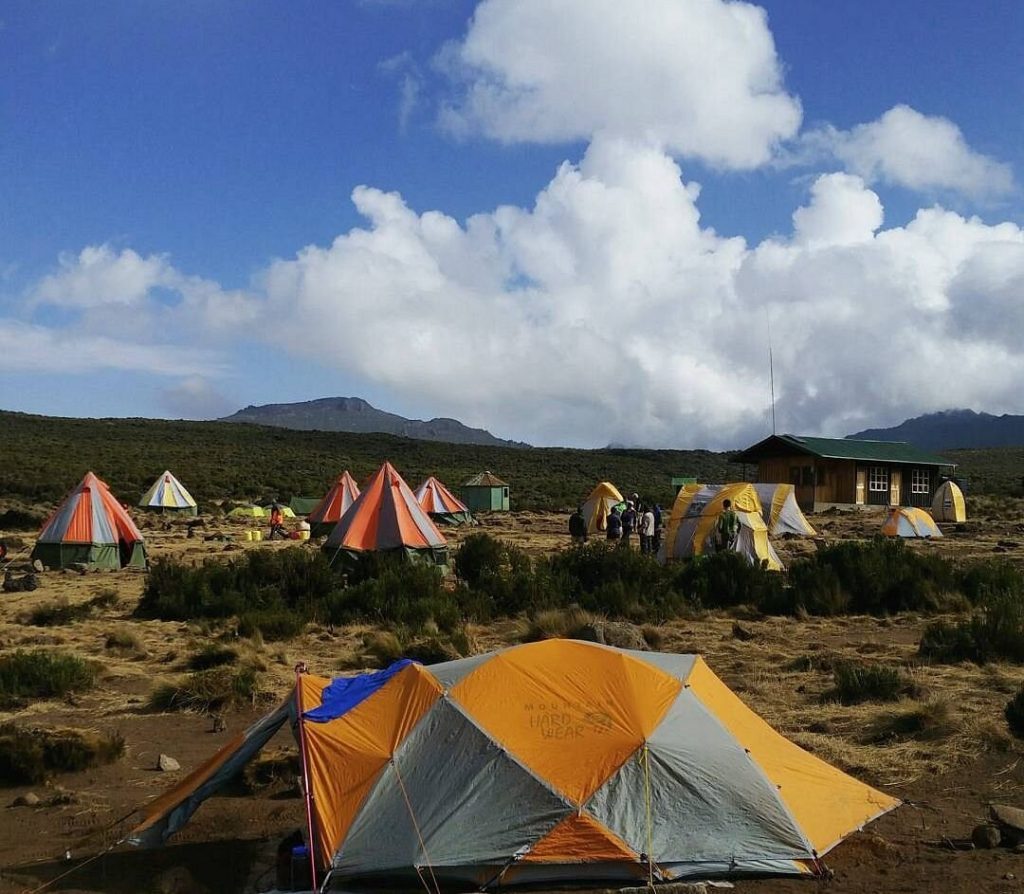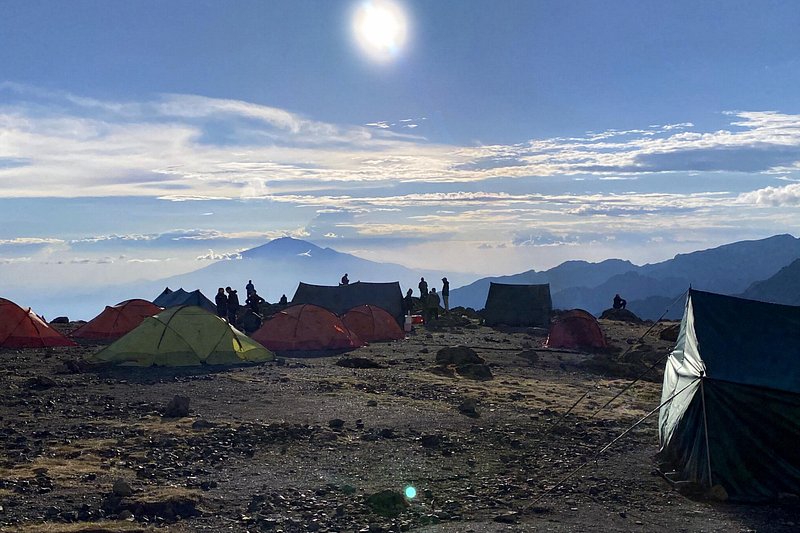
By Mandy Ramsden – South African – Extract from the book Dreamers & Doers.
I hadn’t planned to climb the seven summits. The closest I got to any sort of plan – back in 2006 – was to see the world and start with Kilimanjaro.
Giraffes loping gracefully across the acacia-dotted plain that flared out from a solitary snow-capped giant: this was the image that had sparked a momentary pre-pubescent musing that it must be pretty cool to stand in the snow at the top of Kilimanjaro and survey heat-shimmered Africa from its highest point.
But this arbitrary notion slunk off into the hazy and seldom accessed folder of childhood memories and lay dormant for two decades. It made several token appearances in conversations entitled “Things I’m keen to do one day” but invariably got re-buried in the “Things I talk about doing but never get off my butt to arrange” section of life’s filing cabinet.
This idea had lost out to what I thought was all there was to a grown – up life – marriage, children, a successful career, a nice home, a nice car, nice things. I never made time for anything else. Now I was freshly single and singularly untraveled at the advanced aged of 36. But life’s occasional traumas have a way of bringing a fresh perspective to the value and irretrievability of time. I wanted to keep a little of it aside just for me.
I had escaped from the slow death of marital misery, but still could not shake a growing sense of disappointment. What had been eating me for several years, and continued to gnaw uncomfortably in my gut, was this: Where did that Christmas Eve feeling go? Was there nothing left to generate that excited insomnia? Was it an emotion that existed only in childhood, to be fondly but distantly recalled through your children? Or did the trappings of career success come at the expense of passion and excitement? Was I expected to be moved by nice cars, safe seaside holidays and Carrol Boyes cutlery? Was this all there was?
Then one day, idle chatter at the office coffee machine led to a place on a trip to Kili with a group of colleagues and their friends. And so, unwittingly, I began a journey I had no idea would lead to Everest four years later.
Some people may be disappointed to hear that there was no great big Seven- Summits epiphany, no setting of one big bold mountaineering goal, no racing off for sponsors or publicity. There was just a need to keep seeking the simplicity and struggle and beauty that I found in these high places, in such contrast to my complicated life back home. An escape, if you like. And a great way to see the world.
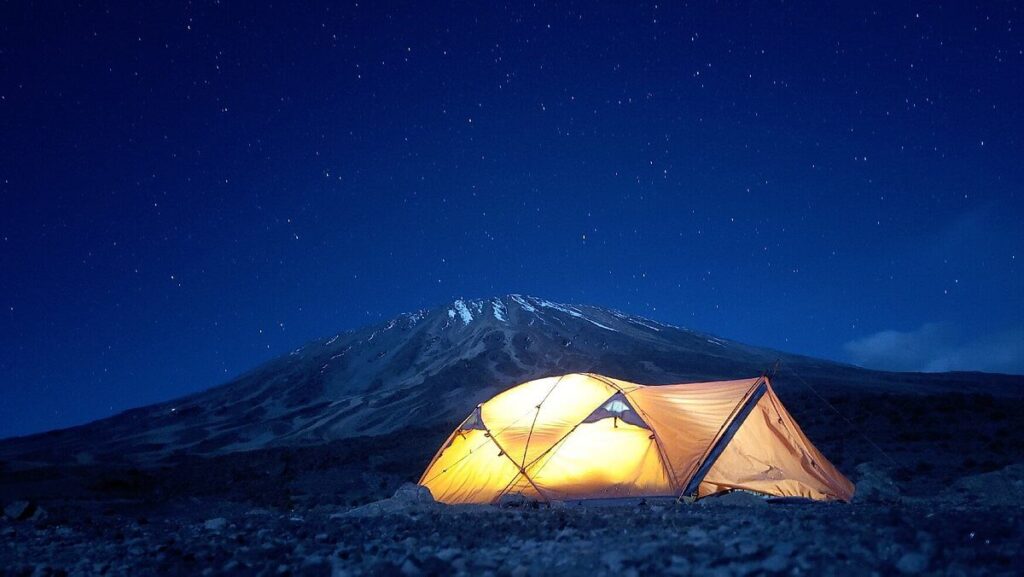
As we descended from the summit of Kilimanjaro, I sat for a moment, enjoying the solitude and marveling at the silence. In daylight, the slope we’d just climbed did not look as monstrous as it had seemed in the dark unknown. The clouds had vanished. The Rift Valley stretched on and on. I felt my children close to me, and yet the office suddenly seemed such a remote concept. As I sat on that rock, something clicked. Just a small shift. A door opening almost imperceptibly. Light shining through. A little color greeting the sliver of career ambition tip-toeing quietly out. I can’t put my finger on it.
Then I was swallowed up again by the projects and deadlines that had reluctantly disgorged me two weeks earlier. I was promoted to Director, a promotion I’d long coveted. Inexplicably, I was happy, but not thrilled or even vaguely excited. A different, stronger seed had been sown. I knew that Kili would not be my last mountain.
And so after Kilimanjaro followed Elbrus, and then Aconcagua, and then Carstensz Pyramid, all the time gathering friends and memories and still wanting more, but not imagining that I had earned the right to be on Everest. It was only after summiting Denali that I began giving Everest some serious thought. I’d proved to myself, (and to any guiding company worth going with), that Everest was a goal within my reach, for I’m not a mountaineer, but a high-altitude tourist who would never be able to indulge in her addiction without the support and guidance of many people. And so, after summiting Vinson Massif in Antarctica in January, 2009, I booked my place on the 2010 Adventure Consultants Everest team.
I’m always asked “Which was the hardest?” “The most beautiful?” My answer: The one you’re on now. All my mountains have been tough at the time. But like childbirth, the rigours of hard labour and the long agony that is every summit day are easily forgotten at the instant of topping out. And the question of “Why?” is easily answered without needing words when, exhausted and sunburned, you sip your first post-summit cup of tea, you trade summit-day tales with your tent-mate over your last biscuit, and you revel in your first shower in days and the lightness of clean clothes and the blessing of new friends, with whom you are now bound in shared memories forever.
My Seven Summits journey may be over, but my travels to high places continue, and each new peak, wherever it is and whatever its altitude, is embraced with the same excitement and sense of adventure as the one before it. “How do you top Everest?” is an oft-asked and awfully unimaginative question. Well, simply, it is not a competition. You love each mountain equally, the way you love your children – without distinction.
Frequently Asked Questions
Why do people climb Kilimanjaro just for the experience?
Many climbers are drawn to Kilimanjaro simply for the adventure and personal challenge. It’s not just about reaching the summit, but enjoying the journey through diverse landscapes. From lush rainforests to alpine deserts, every step offers breathtaking views. People often describe it as a life, changing experience that connects them with nature. The mountain gives a sense of accomplishment that stays with you long after the climb.
Can you climb Kilimanjaro without professional climbing experience?
Yes, Kilimanjaro is a trek, not a technical climb, so you don’t need mountaineering skills. The challenge comes from altitude, stamina, and mental endurance rather than technical obstacles. Anyone in decent health and with proper preparation can attempt it. Guides and porters provide support to make the journey safe and enjoyable. This accessibility is one reason so many people climb “just for the love of it.”
How does climbing Kilimanjaro inspire people?
Climbing Kilimanjaro often inspires people to push beyond their limits and face personal fears. The long trek teaches patience, perseverance, and self, reliance. Many climbers return home with a renewed sense of confidence and motivation. Witnessing the sunrise from the summit is an emotional and unforgettable moment. It’s an experience that reminds people why adventure and exploration are so rewarding.
Is it possible to enjoy the climb without rushing to the top?
Absolutely. Many climbers focus on enjoying each stage of the trek rather than just summiting. Taking time to notice the wildlife, forests, and changing landscapes makes the climb more memorable. Routes that are longer allow better acclimatisation and more moments to savor. “Pole pole,” meaning “slowly slowly,” is the mantra for experiencing the mountain fully. Enjoying the journey makes the climb meaningful beyond the summit itself.
Why do people say Kilimanjaro is worth it “just for the love of it”?
The mountain offers a unique combination of natural beauty, adventure, and personal challenge that few places can match. Climbers often find joy in the camaraderie with guides, porters, and fellow trekkers. Every stage of the hike, from base camp to summit, offers a different experience to cherish. Even those who don’t reach the top still feel a deep sense of accomplishment. For many, the love of adventure is reason enough to climb Kilimanjaro.
Still have questions?
Our local safari experts are happy to help you plan the perfect African safari.