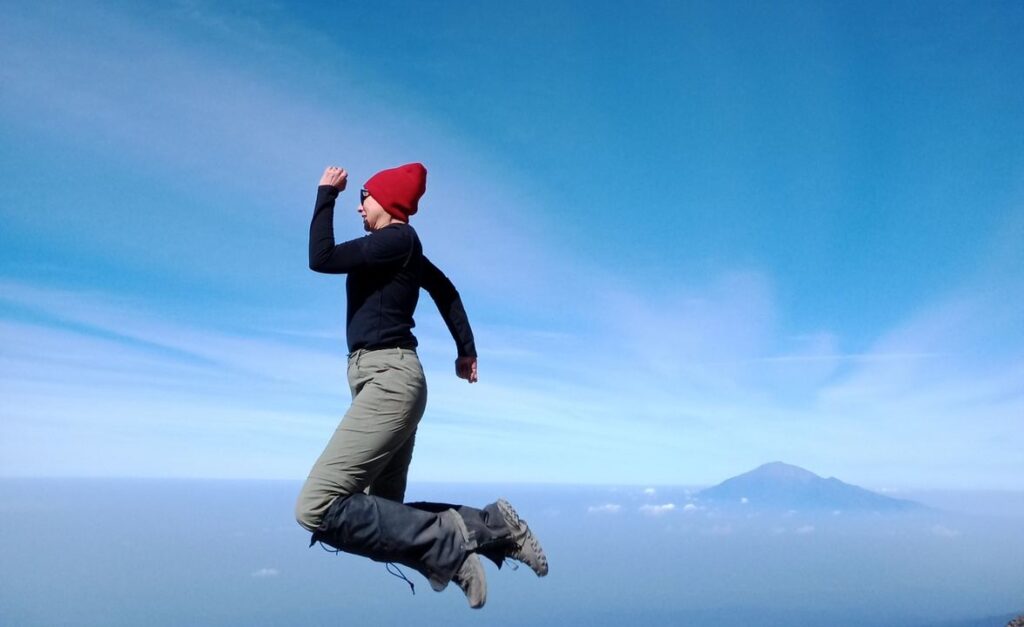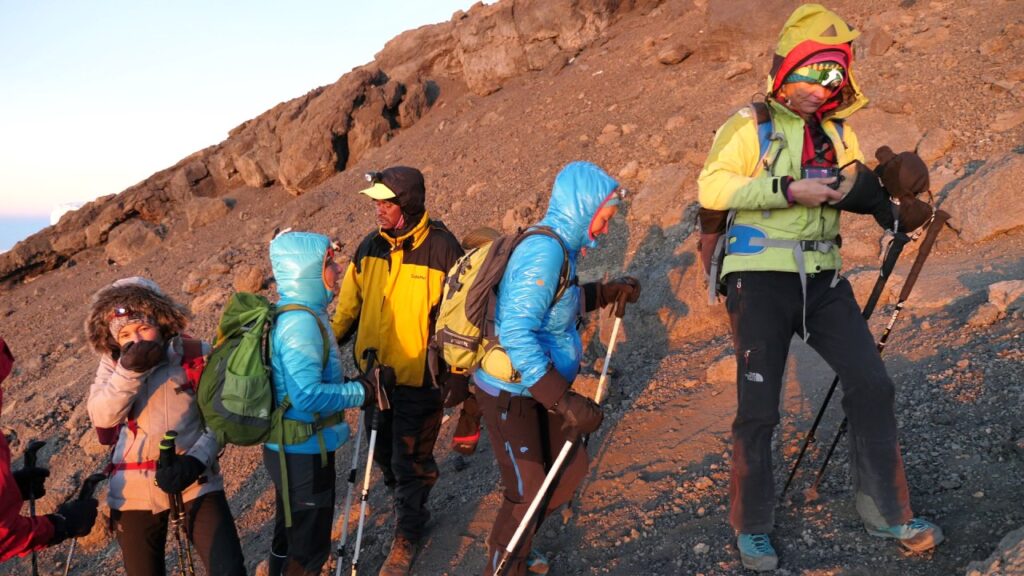
Often called Route 1, the Marangu Route is generally viewed as the most popular way in which to reach the summit of Kilimanjaro. Of the 15 000 or so individuals who attempt to climb Kilimanjaro each year, approximately 90% begin their journey at Marangu Park Gate.
The route has been nicknamed the Tourist Route, or the CoCoca-Colarail, due to the fact that it provides luxuries such as huts, bunk beds, flushing toilets and bottled drinks. It also involves an ascent up the mountain via the gentle eastern slopes, which is said to be far less strenuous than the route followed on other Routes such as Machame, Umbwe, Mweka and Shira.
Easier climbing does not necessarily make for a greater success rate however. Most climbers ascending up the Marangu Route tend to get trapped into experiencing a false sense of security as a result of the comfort factor in the early stages. This causes them to become overly ambitious, therefore endeavouring to summit the mountain in record time. This mistake quickly results in them succumbing to Altitude Sickness. Of all the climbers attempting to reach the summit via the Marangu route, a mere 10% in fact succeed in reaching the Rooftop of Africa.
Typically, an expedition to the summit by virtue of the Marangu Route should take 5 days or more. Working within this time frame will ensure that one’s body has sufficient time to Acclimatise, thereby substantially lowering the risk of AMS. Most individuals setting out to climb Kili will begin their journey in Nairobi, although it is possible to fly directly into Kilimanjaro Airport (KAI) if one so desires. From Nairobi, the most popular option is generally to transfer to Moshi and spend an evening in a guest house in town, which is an excellent beginning to the acclimatisation process.
To Trace Route Marangu up Kilimanjaro, one needs to look at the mountain from the east. On the first day of the climb, trekkers will be transported from Moshi to the Kilimanjaro National Park, where they will begin their expedition from Marangu Park Gate at an altitude of approximately 1900m. The first day’s walking will consist of slow, steady walking through the lush Rain Forest near the base of the mountain. After 3 to 4 hours climbers will reach their next destination, Mandara Hut at 2700m where they will spend their first night on Kili.
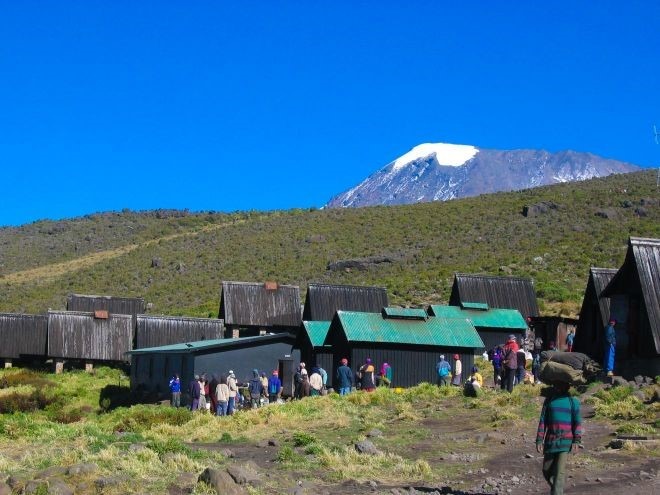
The second day’s walk is markedly more taxing than the first, and sees hikers ascending around 1000 meters in roughly 5 to 7 hours. This leg of the journey twists across the moorlands and through Giant Alpine Forest before terminating at Horombo. Upon arriving at the Horombo Huts, climbers will have the option of completing an extra leg of the journey known as the Saddle Walk. Aside from being a wonderful acclimatisation tool, the views of Kibo and Mawenzi from the trail are spectacular, and the Geological Formations remarkable.
On the third day of the journey, climbers will have the option of either spending an extra day at Horombo in order to further acclimatise, or alternatively setting off on the next segment of the trip to Kibo Hut. For the most part, this section of the climb is relatively steep and will take at least 6 hours to complete. The terrain is typically semi-desert, and becomes more and more desolate the closer one gets to Kibo. Upon arriving at Kibo, climbers need to ensure that they rest and consume sufficient fluids, so as to prepare for the demanding 24 hours ahead.
On the summit day, climbers will be woken just after midnight to begin the final push up the mountain. This leg of the journey can take anything from 6 to 10 hours, depending on conditions and the physical state of the climbers. It is typically an exhausting stage of the journey, and yet simultaneously incredibly rewarding. If the journey has panned out correctly climbers should reach the crater rim, otherwise known as Gillman’s point, just as the sun is rising over the African plains. From there they will have the option of pushing on even higher to Uhuru Peak, which at 5895 meters truly is the Great Roof of Africa
Following a celebration and a few moments of reflection on the summit, it will be time to begin the decent back down the mountain. Depending on individual levels of fitness, some climbers may be able to descend all the way down to the Horombo Hut, whilst others may opt to rather spend the night at Kibo Hut. The following morning will see the completion of the descent to the base of Kilimanjaro, more than likely followed by a transfer back to a guest house in Moshi.
Frequently Asked Questions
Why is the Marangu Route called the most comfortable route?
The Marangu Route is known as the most comfortable route on Mount Kilimanjaro because it features hut accommodation instead of tents. Climbers sleep in dormitory, style huts along the trail, which provides more comfort and less packing. Meals are prepared at the huts, reducing the need to carry heavy supplies. The trail is also less steep in most sections, making daily hikes easier. This combination of comfort and convenience makes it popular with first, time trekkers.
How long does it take to climb the Marangu Route?
The Marangu Route is typically completed in 5 to 6 days, depending on the itinerary. A longer schedule allows for better acclimatization, which helps reduce the risk of altitude sickness. The route follows a gradual ascent, giving climbers a steady pace toward the summit. Shorter itineraries may increase the difficulty due to rapid altitude gain. Most trekkers find the 6, day option the best balance between comfort and a higher chance of success.
Is the Marangu Route suitable for beginners?
Yes, the Marangu Route is often recommended for beginners because of its gentler slopes and hut system. The trail is well, marked and less physically demanding than other routes. Climbers can focus more on pacing and enjoying the scenery rather than carrying heavy camping gear. Even so, altitude sickness is still a risk, so preparation and proper hydration are important. Beginners who prefer comfort and simplicity often choose this route.
What kind of scenery can I expect on the Marangu Route?
The Marangu Route offers a mix of landscapes on Mount Kilimanjaro, starting with lush rainforest at lower elevations. As you ascend, the forest gives way to moorlands and alpine desert. You will pass iconic landmarks such as the Maundi Crater and Kibo Peak views. The summit provides a stunning panorama of the surrounding plains and distant mountains. Though less rugged than other routes, it is still visually rewarding.
Why choose the Marangu Route over other routes?
The Marangu Route is ideal for trekkers who value comfort and a well, organized trek on Mount Kilimanjaro. It is less crowded than Machame or Lemosho, yet still popular enough for reliable services. The hut system reduces logistical stress and makes the climb more accessible for beginners. The gradual ascent increases the chances of reaching Uhuru Peak safely. For a comfortable and achievable summit experience, Marangu is the preferred choice for many climbers.
Still have questions?
Our local safari experts are happy to help you plan the perfect African safari.