
Table of Contents
When you have the idea of climbing Mount Kilimanjaro then first think about precautions and things which will make your trip success. Usually people fail to reach Kilimanjaro summit Kibo peak due to altitude sickness and failure to reach summit is not related to physical fitness. Please note that any person can reach Kilimanjaro top provided he/she did not get any health problem.
One of the precautions to consider is how to overcome or avoid Health problems. These health problems which occurs are High Altitude Sickness (HAS) or Acute Mountain Sickness (AMS). However if you have proper information about HAS/AMS then you will climb Mount Kilimanjaro successful and with comfort. Mountain guides on Mount Kilimanjaro and Meru know well about HAS/AMS. All mountain guides are well trained and most of them have experience of 5 to 20 years climbing mount Kilimanjaro. So When hiking up Kilimanjaro tell the Mountain guide how do you feel and also follow advise. Altitude sickness occurs randomly and some people don’t get altitude sickness, so don’t be afraid, and keep on plan for your Kilimanjaro trekking expedition, climbing adventure trip. This information is just to alert you about what is on in Kilimanjaro trekking and taking precaution is necessary on human being life.
High Altitude Sickness (HAS) and Acute Mountain Sickness (AMS)
High Altitude sickness or Acute Mountain Sickness (AMS) can affect mountain climbers, hikers, skiers, or travelers who ascend too rapidly to high altitude, typically above 8000 feet or 2400 meters. The risk is higher for persons who normally reside at or near sea level. Anyone is at risk, no matter what age or level of fitness. The reduction in atmospheric pressure and a lower oxygen concentration at high altitude are the cause of the illness, which can affect lungs, nervous system, muscles and heart.
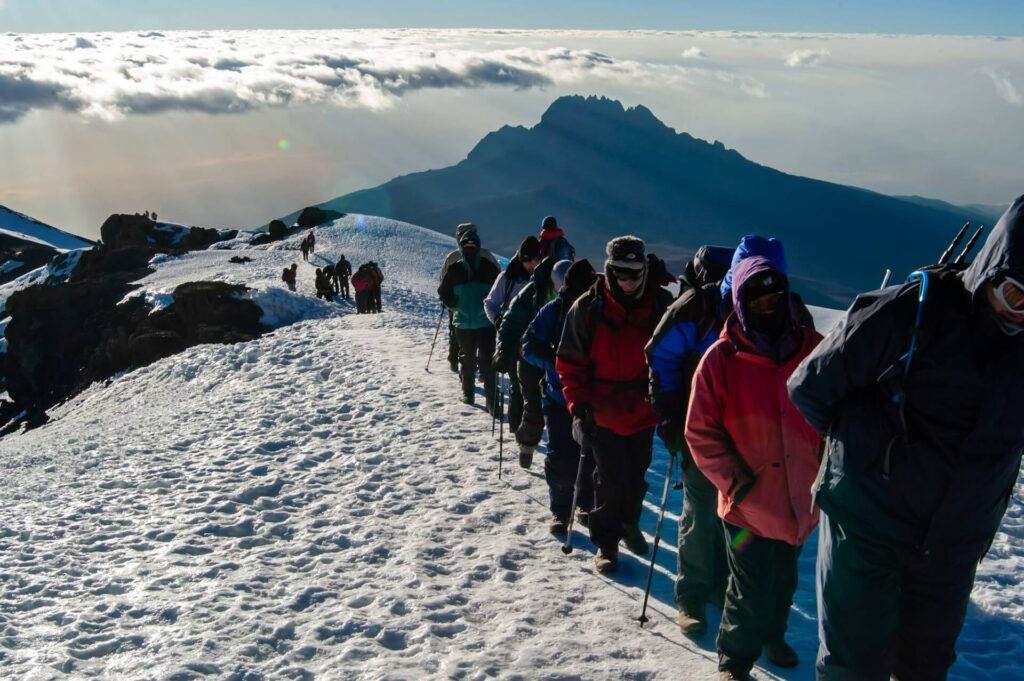
Symptoms can range from mild to life threatening.
Mild symptoms (most cases):
- Headache, difficult in sleeping, loss of appetite, nausea and/or vomiting, fatigue, dizziness or light –headedness, rapid pulse, shortness of breath with exertion.
Severe symptoms (can cause death if not treated early)
- Continuous cough with shortness of breath at rest, chest tightness or congestion, coughing up blood, bluish color of skin, inability to walk in straight line or to walk at all, deceased consciousness, confusion, gray or pale completion: in these cases there is edema in the lungs (HAPE or High Altitude Pulmonary Edema) or in the brain (HACE or High Altitude Cerebral Edema).
The risk and severity of AMS is higher as the rate of ascent is increased, the higher altitude attained and higher levels of exertion. It takes about 8 hours to develop, which is why skiers usually don’t suffer too much.
At altitude below 3000 metres, about 20% of the people develop symptoms, but above 3500 metres most people will experience at least some symptoms, while at altitudes below 5000 metres, virtually everybody will suffer symptoms, especially if enough time is not taken for acclimatization.
Considering the altitudes of the peaks of Mount Meru (4667 metres) and Mount Kilimanjaro (5895 metres) and the short time span generally taken in climbing these mountains, most climbers will develop some form as AMS ,if they do a rapid ascent without sufficient acclimatisation. For Marangu route you can climb for 5 days successful to the top, because Marangu route is easier and gentle. How ever it depends how fit you are and 6 days is recommend so that yourself enough time while climbing Kilimanjaro. Other routes mostly need 6 days or more like Machame, Rongai, and Umbwe; while Lemosho and Shira need 7 days or more for Kilimanjaro trekking expeditions.
How to prevent (serious) AMS:
Before deciding to climb mount Kilimanjaro, first make good choice of the Kilimanjaro climbing route. It depends your physical situation, Climate of the Region/city which you come from or you live. People from mountaineers countries like Italy, Austria, Switzerland, German etc are very fit and experienced, and are able take difficult routes like Umbwe, Machame. So For those coming from hot weather cities or who have less exercises then choose easier routes like Marangu, Rongai or Shira route.
Take as much time as possible to acclimatise. When climbing above 300 metres ,sleeping elevation should not increase more than 300 metres per night and spend a second night at same elevation for every 1000 metres. That is why we recommend to take an extra day for acclimatization so that your Kilimanjaro trekking adventure is fun and success.
Also when you arrive in Tanzania, overnight at a Hotel located in high altitude. This is also useful acclimatization treks on Mt. Kenya or Mt. Meru before climbing Kilimanjaro. Recognize early symptoms of AMS, so you can return if needed. Experienced guides will monitor you and warn you in time. All guides are experienced and have taken many Kilimanjaro trekking adventure trips to the Kilimanjaro snow.
Go slowly! This is special warning for extra fit climbers who have a tendency to go too fast and increase their risk for AMS. Please take advise of Guides and surely you will be safe and success in your Kilimanjaro trekking expedition.
Mount Kilimanjaro National park authority always have principles of maintaining group of 6 or less and at least 3 guides to take care of every Tourist climber. Mostly these guides are local born at base slopes of mount Kilimanjaro, well educated and trained. They have local knowledge useful for Tourists and adventures.
Drink as much water as you can, and enough water is provided by Travel Agencies/Kilimanjaro climbing outfitter. Acclimatisation and the exertion of the climb caused fluid loss. You will need to drink 3-5 litres per day! Monitor your urine color (should be clear).
Avoid walking or trekking very fast when you first get up to altitude, but light activity is better than sleeping because respiration decreases during sleep, making AMS symptoms worse. Avoid smoking, alcohol and tranquillizers as they further decrease the respiratory drive during sleeping-resulting in worsening symptoms.
Eat a high carbohydrate diet (more than 70% of calories from carbohydrate).Oral rehydration salts and energy bars are recommended. Ask the Travel agency or Kilimanjaro trekking for Menu daily time table and demand what you need.
Strongly consider the use of Acetazolamide (Diamox) to speed acclimatisation with a factor 3-4.This drug was introduced in the mid 1990’s; it makes the blood more acid and stimulates the frequency of respiration. Side effects: incease of urine output, tingling of fingers and lips. Mild drowsiness and a possible allergic reaction as it is sulfa based.If considering taking the drug, try it before the trip. The most recent advice for the dosage: 250 mg in the morning (whole tablet), 125 mg in evening (1/2 tablet).Start the day before or the day of the ascent and continue 3-4 days, as normally acclimatization takes 3 days.
People suffering from cardiac or severe pulmonary diseases and pregnant women should avoid high altitudes.
How to treat AMS:
- The principle is to descend to lower altitude as rapidly and safely as possible. Usually there are Emergency Mountain Rangers who are standby for taking rescue of any ill person. Mountain rangers work hand in hand with your guides.
- Oxygen and drug as Acetazolamide, Nifedipine and Dexamethasone can be used in more severe cases but need good medical supervision (not always available!).
- For severe cases as HAPE and HACE-hospitalisation is required,but facililities such as mechanical ventilation are usually not available. This refers to such devices as the Gamor Bag-standard equipment on mountains like Everest. With the ever increasing amount of climbers on Tanzania’s peaks (1000’s per year) one would hope for some investment in improvement of medical facilities on these mountains.
Take precautions and follow advice so that you avoid this sickness. Wish you well planning and Kilimanjaro trekking expedition and climbing adventure successful.
Let us help you plan Mount Kilimanjaro, contact us now:
Email: trek@kilimanjaroasap.com
Frequently Asked Questions
What is mountain sickness and why does it happen on Kilimanjaro?
Mountain sickness, also known as Acute Mountain Sickness , AMS , happens when your body struggles to adjust to lower oxygen levels at high altitude. On Mount Kilimanjaro, this can affect anyone, regardless of age or fitness level. As you climb higher, the air becomes thinner, making it harder for your body to get enough oxygen. Common symptoms include headaches, nausea, dizziness, and fatigue. Understanding this early helps you take the right precautions and stay safe during your climb.
How can I prevent altitude sickness while climbing?
Preventing altitude sickness on Mount Kilimanjaro is all about going slowly and giving your body time to adjust. The golden rule is “pole pole” (slowly, slowly), which helps improve acclimatization. Choosing a longer route with gradual elevation gain also increases your chances of success. Staying hydrated, eating well, and avoiding alcohol are simple but effective steps. Listening to your guide and your body is one of the best ways to stay healthy on the mountain.
What are the early warning signs I should watch for?
Early signs of Acute Mountain Sickness on Mount Kilimanjaro can be easy to overlook, so it’s important to stay aware. Mild headaches, loss of appetite, trouble sleeping, and unusual tiredness are common early symptoms. These signs may seem small but can worsen if ignored. Your guide will usually check your condition daily, sometimes using a pulse oximeter. Reporting symptoms early can prevent more serious problems later.
What should I do if I start feeling sick on the mountain?
If you start experiencing symptoms of Acute Mountain Sickness on Mount Kilimanjaro, it’s important to act quickly. The first step is to tell your guide immediately so they can assess your condition. In many cases, resting at the same altitude or descending slightly can help your body recover. Drinking fluids and taking prescribed medication may also ease symptoms. Never try to push through severe symptoms, as descending is the safest and most effective solution.
Are there medications or treatments for altitude sickness?
Yes, there are medications that can help manage or prevent Acute Mountain Sickness during your Kilimanjaro climb. One commonly used option is Acetazolamide, which helps your body adjust to altitude more quickly. However, it’s important to consult your doctor before using any medication. Natural methods like proper acclimatization, hydration, and pacing are still the most effective strategies. Medication should be seen as a support, not a substitute for safe climbing practices.
Still have questions?
Our local safari experts are happy to help you plan the perfect African safari.


