Table of Contents
Kilimanjaro National Park – Fauna Of Grasslands and Rainforest
The fauna within the Kilimanjaro National Park is nothing short of incredible. A journey up Kilimanjaro can be compared to travelling through a universe of microcosms, each unique and complete unto itself- and yet somehow still belonging to an incredible greater whole.
The wildlife native to the slopes of Kilimanjaro is as varied as the landscape itself. The grassy Lower Slopes span from 800 to 1800 meters, and are especially renowned for their extensive bird life. Native to this part of the mountain are colourful nectar feeding birds such as mousebirds and sunbirds, as well as other species including bulbuls and shrikes.
Occurring from 1800 to 2800 meters directly above the lower slopes is the tropical Rain Forest. Humid and misty, this green wonderland is filled wnaith a wealth of natural wonders. From rare butterflies to the extraordinary crimson turaco bird, squawking hornbills to leaping monkeys- the forest is literally brimming with life. Hidden behind the dense vegetation are also a number of wild animals, including Tree hyrax, Duiker ,White-Tailed Mongoose, Serval Cat, Aardvark and many more.
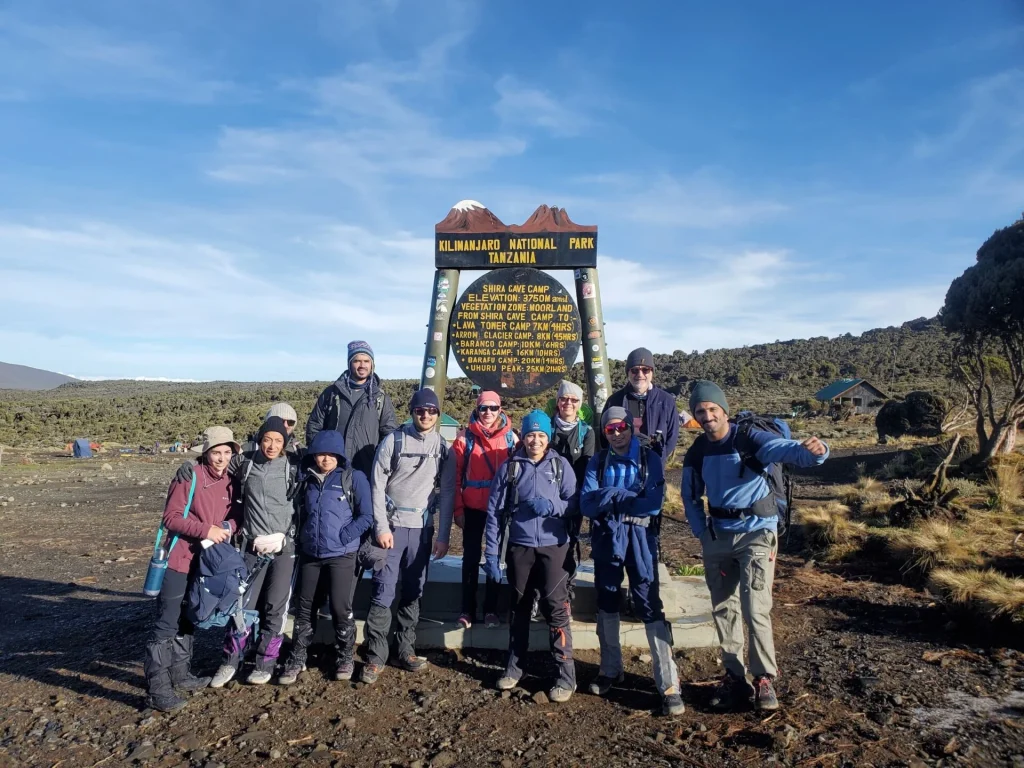
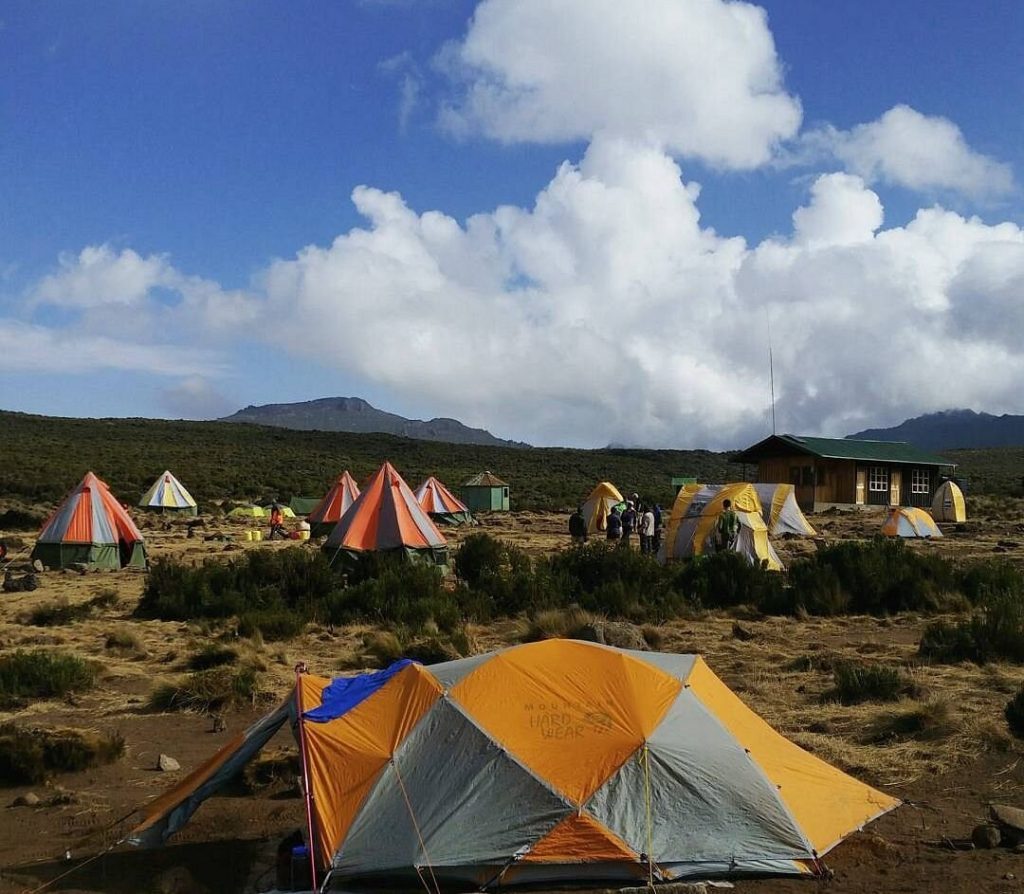
The heath and moorland covers some 1200 meters of Kilimanjaro, and ranges from 2800 to 4000 metres. Sightings of smaller mammals such as duikers, elands and klipspringers have been reported here. There are even claims of the odd lion having being spotted wandering across the Plateau. More common to this area however are the smaller rodents such as grass mice, and birds such as ravens, vultures and the pale brown alpine chat.
Plant Life – Rain Forest and Lower Slopes Flora
Plant Life on Kilimanjaro truly is kaleidoscopic, from the dense canopies of green within in the tropical Rain Forest, to the fine wisps of lichen scattered across the Highland Desert. In a typical ascent up the mountain one would encounter biodiversity beyond the wildest imagination, stretching across at least five very different habitats.
Once upon a time the base of Kilimanjaro was covered only by lowland forest and wild bush. However, due to the fact that approximately 12 million Tanzanians make their living from subsistence farming, it is not surprising that these lower slopes are now dotted with fields of crops. Weaving between the banana trees and coffee plants are brilliant wild flowers and fine grasses, providing the ideal surroundings for birds and small animals.
Bordering the lower slopes of the mountain is the rich, diverse cocoon of the rain forest. Providing over 95% of all the water on Kilimanjaro, this ecological playground is literally brimming with life. Canopies of towering trees such as camphorwoods and heather trees stretch their giant lichen covered arms towards the sky, whilst the new leaves of exotic tree ferns appear almost luminous in the flickering light of the forest. Also soaking up the humidity are unusual mosses and striking wild flowers such as orchids, impatiens and violets.
Fauna – Climbing Mount Kilimanjaro’s Higher Slopes
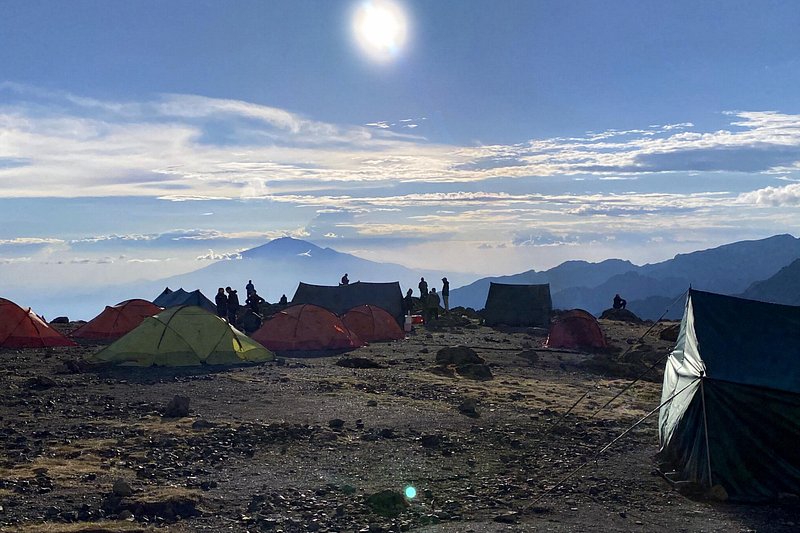
Fauna as one nears the summit of Kilimanjaro seems to become less and less. At an Altitude of 4000 to 5000 metres, the alpine desert exists as the ultimate climatic antithesis of Weather Conditions. In this icy furnace, temperatures reach a scorching heat of between 35 to 40 degrees during the daytime, and then plummet to well below freezing point at night.
The only living creatures able to withstand the temperature extremes on this part of the mountain are the insects and spiders able to find shelter in the nooks and crannies of soil fissures. Birds of prey occasionally visit the area in search of a titbit or two but very quickly return to the Lowlands in the evenings, unable to survive for lengthily periods at the incredibly high altitude.
The final layer making up the expanse of Kili, and indeed the icing on the Great White Mountain is the summit point. Few if any creatures are able to survive in these hostile surroundings, where precious commodities like oxygen and liquid are almost impossible to come by.
One of the many tales told about Kilimanjaro is that of the frozen leopard found in the summit zone in 1926. Immortalized by Hemingway in his book The Snows of Kilimanjaro, it is unknown what the creature was doing at such a high altitude. To this day the answer remains one of Kili’s great mysteries, the answer lying frozen beneath thousands of years of snow and ice.
Kilimanjaro Mountain Top Exotic Plants
Plants near the top of the mountain tend to become less and less. Travelling slightly higher up the slopes of Kili, one will come across the heath and moorland. Also known as the grassy land of giants, the heath is inhabited by enormous heathers growing taller than 9 feet in many instances. Scattered between the giant shrubs are resilient and beautiful flowers such as the Kilimanjaro protea, and ‘everlasting daisies’. Also lighting up the mountain with the colours of an African sunset are the well known succulents, Kniphofia thomsonii, otherwise known as red hot pokers.
Intersecting the heath, the moorland area is occupied mostly by senecios and lobelias. Some of these plants stand approximately 17 feet high and are over 100 years old. One sub- type of the species, the Lobelia deckenii has protective leaves which close over the plant’s tiny blue flowers at night, protecting them from the devastation of the evening frost.
At approximately 4500 feet, the alpine desert is a cauldron of extreme temperatures. Scorched by the equatorial sun during the day and battered by sub zero winds at night, only the hardiest of plants can survive here. Tussock shoots sprout from within the confines of the plant’s dead older strands and lichens cling directly to jagged lava rocks. Also managing to endure the harsh terrain is the resilient helichrysum, whose bright yellow flowers stand out like golden treasure against the empty, grey surroundings.
Frequently Asked Questions
What kinds of vegetation are found on Mount Kilimanjaro?
Mount Kilimanjaro has a unique range of vegetation zones due to its large elevation difference. The lower slopes are covered in dense tropical rainforest with tall trees, ferns, and thick undergrowth. As you climb higher, the forest transitions to moorland with shrubs, heathers, and giant lobelias. Above the moorland, the alpine desert zone has sparse vegetation and hardy plants adapted to cold and dry conditions. This diversity makes Kilimanjaro a remarkable place for nature lovers.
Are there unique plants on Kilimanjaro?
Yes, Kilimanjaro is home to many unusual and iconic plants. Giant lobelias and giant groundsels grow in the high, altitude zones and can survive extreme cold. Various species of heather and heath plants thrive in the moorland. Some plants are found only on the mountain, making them endemic to this environment. Seeing these unusual species is one of the highlights of the climb.
What kinds of animals can you see on the mountain?
The lower slopes of Kilimanjaro host wildlife like monkeys, bushbucks, hyraxes, and a wide variety of birds. In the forest zone, colobus monkeys and hornbills are common. As you ascend, wildlife becomes scarce because of colder temperatures and thinner air. Most large mammals are found only in the lower rainforest areas. Observing animals adds excitement to the trekking experience.
How does altitude affect plant and animal life?
Altitude greatly influences what can survive on the mountain. Lower altitudes support dense forests with rich biodiversity. Mid, altitudes have moorland plants that can withstand cooler temperatures. Above 4,000 meters, the environment becomes harsh, limiting plant life to hardy species and almost no animals. These changes create distinct ecological zones along the trek.
Why is Kilimanjaro’s ecosystem important?
Kilimanjaro’s ecosystem is unique because it contains multiple habitats within a single mountain. The variety of plants and animals supports biodiversity and offers research opportunities for scientists. Forests at lower elevations help regulate water flow and prevent soil erosion. Protecting the mountain’s flora and fauna preserves both its natural beauty and environmental health. Trekking responsibly helps maintain this delicate ecosystem.
Still have questions?
Our local safari experts are happy to help you plan the perfect African safari.