
Table of Contents
This long, twisting, and dramatic Machame route hiking, famous known as the “Whiskey Route,” is the second most popular Kilimanjaro trail after the Marangu route. With a daily limit of trekkers on this route, you will encounter white and black colobus monkeys and other wildlife on the trail and you’ll meet dozens of other climbers along the way while trekking with Kilimanjaro ASAP.
The ascent along this trail usually takes six days, but seven or even eight days is recommended. The walk is more challenging than the Marangu and Lemosho Route, but it has the advantage of being longer, which allows for quicker acclimatization and hence a higher success rate.
There is one path to the summit from the Barafu campsite which is the basecamp on the Machame Route giving you a good view of the peak. The campsites where you will spend a night are typically referred to as mountain tents placed on the ground.
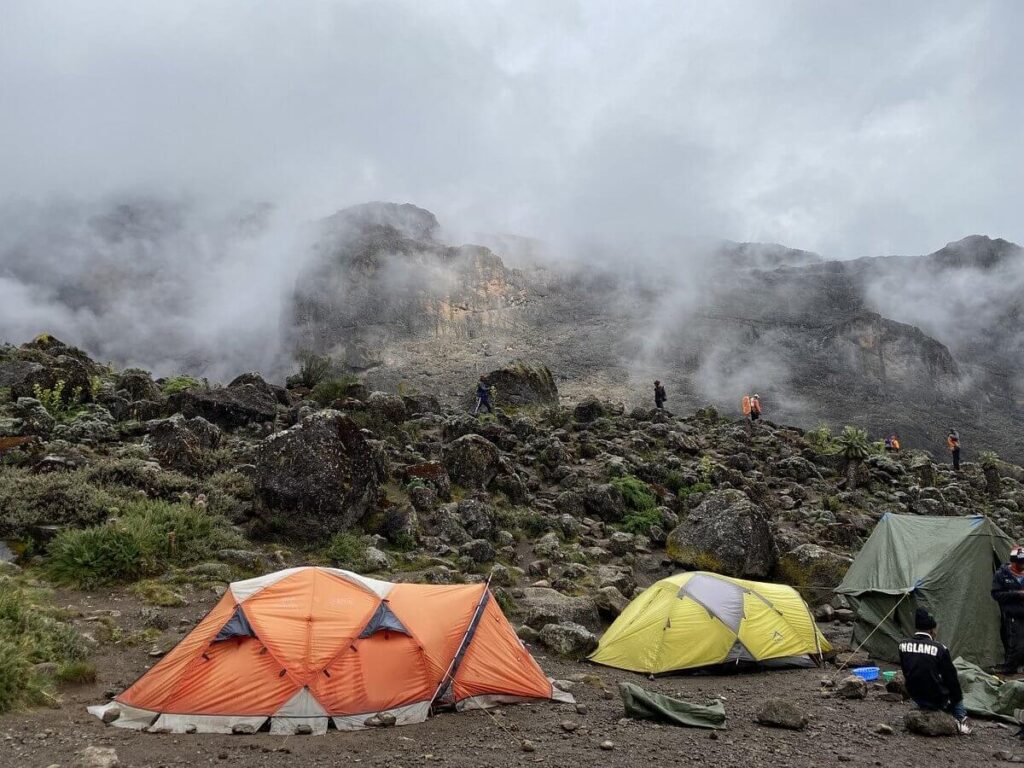
Day 1: Machame Gate to Machame Camp
Allow an hour for the trip from Moshi where our driver from Kilimanjaro ASAP will drive you to the gate and another 1 hour for the formalities at the gate to be done (1800m). Because the day’s walk takes five to seven hours, aim to leave the gate no later than 1 am.
The trek leads up to the west of Makoa stream, through lush, hot, and always rainforest alive with birds, from the gate. After thirty minutes, the trail narrows to follow parts of a rocky slope where the vegetation thickens, with huge heather and grass-like hair clinging from the trees.
The path is steep, muddy, and slick in sections, particularly after two to three hours. The forest gets thinner as you approach Machame Camp (3032m), and later the trail emerges onto alpine moorland. Long-drop toilets, water from a nearby stream, and spectacular views of the Western Breach are all available at the campsite, which is located in a clearing on the ridge.
Day 2: Machame Camp to Shira Camp
This is a very nice and simple day hike (about 4 to 5 hours) that takes you out of the forest (typically above the clouds, though it can still be misty) and onto the drier and rockier Shira Plateau. As long as you’re in decent shape, this is a very pleasant and easy day hike.
The trail continues northeast from Machame Camp along a steep and rocky ridge strewn with enormous heather, passing various clearings with spectacular views of Mount Meru in the west.
After three hours or so, the ridge comes to an end on a little cliff, where a primitive stairway has been erected. Lunch is served on the ledge. The trail descends from here, crossing multiple ravines and passing through an area dotted with huge lobelia and giant groundsels.
This trail continues through Shira Cave to the exposed Shira Camp (3847m) on the edge of the Shira Plateau, a vast, gently sloping area of bleak moorland punctuated by Shira Cone – the ruins of Kilimanjaro’s oldest summit.
The camp has a great view of the Western Breach and spectacular sunsets over Mount Meru. Temperatures are normally a few degrees above freezing at night, but the wind chill makes it feel considerably colder. The earliest signs of altitude sickness may manifest themselves here.
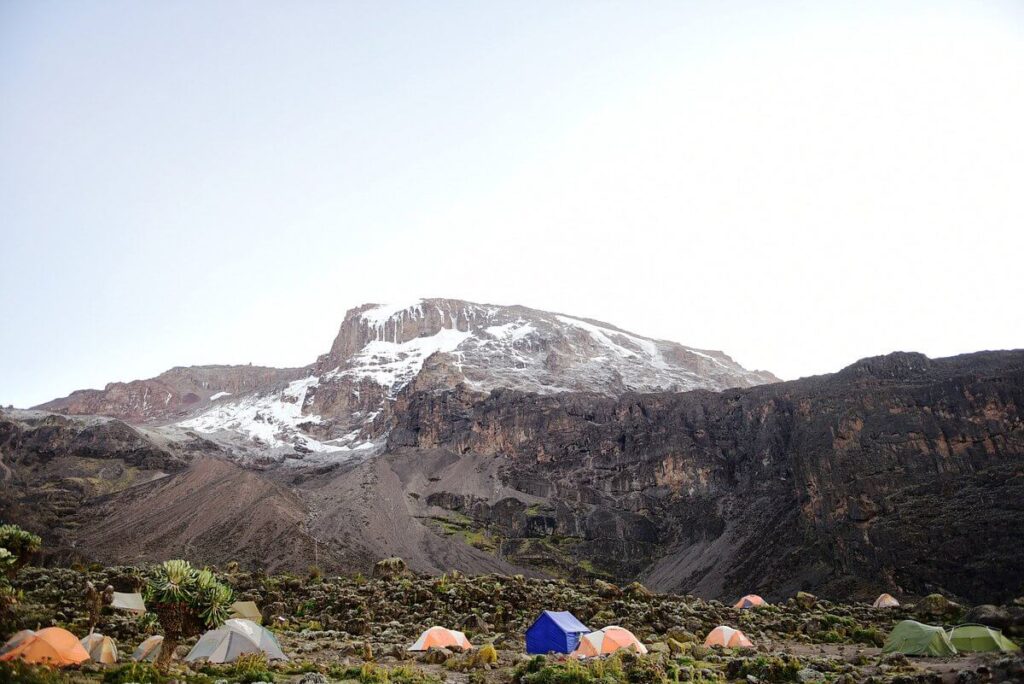
Day 3: Shira Plateau
The Shira Flat is an excellent area to spend an extra rest day acclimating. The primary feature is Shira Cone, which rises 200 meters above the plateau at the west end.
South of here are two spectacular pinnacles, Shira Needle and Shira Cathedral, produced by the first large eruption that formed the Kilimanjaro massif, and beyond them lies the Shira Ridge, the so-called “third peak” of Kilimanjaro. Elands are occasionally found on the plateau’s lower slopes.
If you’re feeling fine, though, you might opt to acclimate later; the hike to Barranco Camp the next day is especially suitable for this, ascending to around 4530m before descending to 3985m.
Day 4: Shira Camp to Barranco Camp Day
From Shira Camp, there are two options for reaching the summit: either through Barranco Camp and Barafu Camp to Stella Point, or straight up the Western Breach. The first option, which is explained below, is by far the most straightforward but you can always contact our expert from Kilimanjaro ASAP for more advice.
The 5-7 hours large rocks walk to Barranco Camp is quite gorgeous in a twilight kind of way. The trek begins with a modest eastward rise towards Kibo.
The trail diverges south at the summit of a ridge defined by the Shark’s Tooth (4400m), crossing a succession of shallow valleys at the base of the Western Breach and the 4600-meter Lava Tower before gradually descending to Barranco Camp (3985m).
The camp, which is set on alpine terrain, has a fantastic perspective of the snowy Western Breach as well as the Barranco Wall, which you’ll be hiking the next day and which seems to be intimidatingly steep from here. If you’re likely to have altitude sickness, it really strikes in Barranco, so keep your expectations in check.
Day 5: Barranco Camp to Barafu Camp
Although the trail from Barranco to Barafu Camp is described as a 1 day hike but it is usually done in 2 to 4 hours portions, with an overnight stop at the Karanga campsite in the between. This is extremely crucial if you didn’t spend a day at the Shira campsite for the best acclimatization.
Only a few sections of the Barranco Wall need hands-and-feet climbing, despite its steepness. Because the trail is limited, “seasoned” climbers may become irritated by the slow pace; ignore them and go at your own leisure. The trek takes about 90 minutes, and you’ll be rewarded with a wonderful view of the Heim, Kersten, and Decken glaciers at the top.
The trail then makes a beautiful eastward journey around Kibo’s base. By lunchtime, you should be at the top of the freezing Karanga Valley (4130m), allowing you a lovely evening to relax and sleep before moving out to Barafu the next day.
Heading eastward from Karanga Valley, the route eventually reaches a junction with the Northern circuit route after about 2 hours. Turn left for Barafu Camp, which is a 90 minutes ascent up a steep, rocky lava ridge.
It frequently snowfalls, and during the rainy season, this area might get completely engulfed.
Barafu Camp (4681m) is located on a ridge on the Saddle’s southern border, with a spectacular view of Mawenzi Peak. The disadvantage is that the campsite is frequently unclean; bring your trash down with you. The long drops are close to the ridge edge, so be cautious at night. Go to bed as soon as the sunset.
Days 6 and 7: Barafu to the summit and back down
The most exhausting day is a summit day, which requires trekking from Barafu Camp to the roof of Africa, Uhuru Peak (6–8 hours) and then descending to Horombo Hut on the Marangu route and Rongai Route or Mweka Camp on the Lemosho route.
The “session” begins when you are awakened for breakfast before midnight, and most hikers depart between midnight and 1 am. The trail ascends a steep valley on the outskirts of scree fields before passing between the Rebmann and Ratzel glaciers to Stella Point (5672m) on Kibo’s southern rim; the final few hundred meters are the most difficult part of the ascent. The ice-covered trail to Uhuru Peak (5895m) is about an hour longer; see 5 Days via the Marangu route for further information.
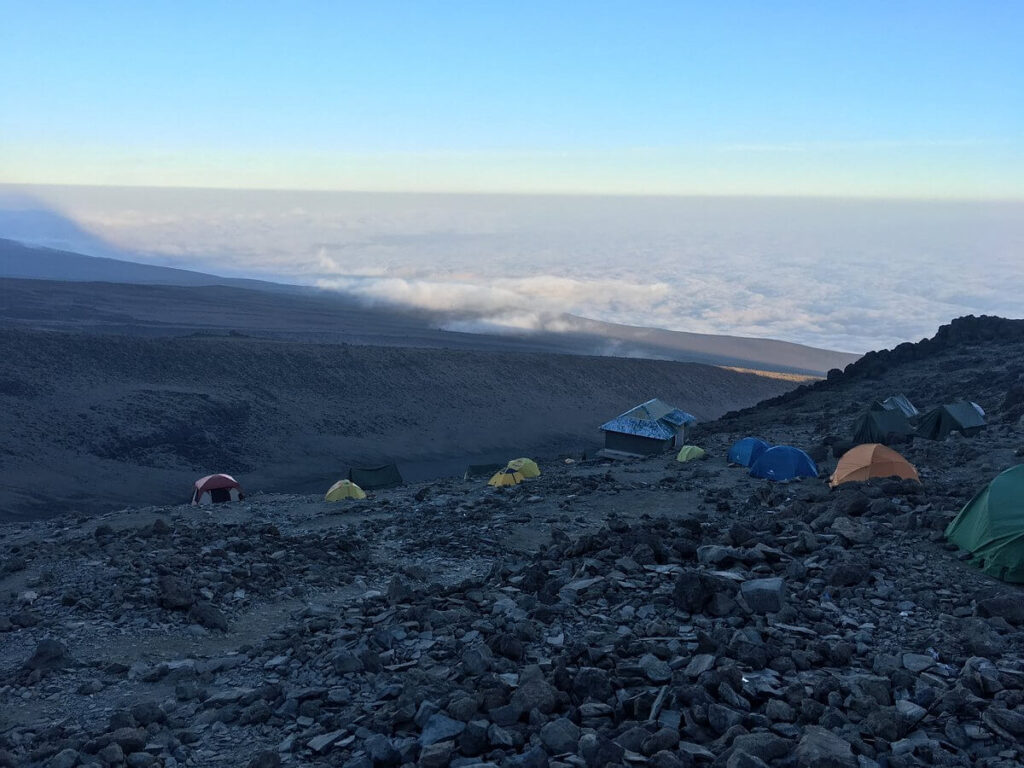
The Last Day on the Mountain
The path is rocky in the most section, with incredibly loose debris, making progress excruciatingly slow. On the way back down, most visitors arrive at Barafu Camp between 9 and 11 a.m., where they rest for an hour before embarking on a long journey down, either by the Mweka or Marangu paths, for their final night on the mountain.
Day 7 consists primarily of a few miles of reasonably easy, albeit occasionally muddy, downhill trekking. Take things slowly. You can always contact Kilimanjaro ASAP or Safari ASAP expert for more advice on Machame Route trekking details. We would love to arrange your Machame route trek for you.
Frequently Asked Questions
What makes the Machame Route special on Kilimanjaro?
The Machame Route is often called the “Whiskey Route” because of its challenging but rewarding nature. It offers some of the most scenic landscapes on the mountain, from lush rainforests to alpine deserts. The trail is longer than some other routes, giving your body more time to acclimatize. Trekkers often say it’s tougher but far more beautiful than shorter paths. The combination of scenery, challenge, and higher summit success rates makes it a favorite among climbers.
How long does it take to complete the Machame Route?
Most climbers take 6, 7 days on the Machame Route. This includes gradual ascent and descent, allowing better acclimatization. Shorter schedules are possible but reduce your chances of reaching the summit. Longer schedules also give more time to enjoy the scenery and rest properly at camps. Taking your time increases both safety and enjoyment on this challenging trek.
How difficult is the Machame Route compared to other routes?
The Machame Route is considered moderately difficult. It’s steeper than the Marangu Route, but the gradual climb and beautiful landscapes make it worth the effort. Altitude is still the main challenge, not technical climbing. Fitness, pacing, and mental endurance are key to success. Many trekkers say the route’s difficulty is balanced by the incredible views and variety of terrain.
What should I pack specifically for the Machame Route?
Because the route passes through multiple climate zones, layering is essential. You’ll need waterproof jackets, warm clothing, and sturdy boots. Trekking poles help with the steep ascents and descents. A headlamp is crucial for summit night, as most climbers start very early. Don’t forget snacks, water, and small comforts for camp life.
What are the best tips for success on the Machame Route?
Take your climb slowly and stick to your guide’s advice, altitude is the real challenge. Drink plenty of water and eat small meals throughout the day. Rest well at each camp and use the opportunity to enjoy the scenery. Hiring a reputable operator ensures you have experienced guides and proper support from porters. Finally, maintain a positive mindset: celebrate small milestones along the way as much as the summit itself.
Still have questions?
Our local safari experts are happy to help you plan the perfect African safari.


