Table of Contents
Passport and Visas
The following information regarding visas and entry into Tanzania is taken from the national website of the United Republic of Tanzania. As required by most other countries, a passport should have a minimum remaining validity of 6 months for entry into Tanzania.
Entry Requirements
Foreigners seeking to enter the United Republic of Tanzania should be in possession of a valid passport. The passport is to be presented to the Immigration Control Officer at any entry point: border station, airport, harbour. The passport must be presented along with one of the following:
– A valid visa
– A resident permit
– A pass
A visitor must also present an onward or return ticket together with proof that the visitor has sufficient funds to support himself or herself while in Tanzania.
The Purpose of a Visa
The visa is permission granted to a foreigner who intends to travel to Tanzania on business, for a holiday, to study or conduct research, or for other approved activities.
When entering Tanzania, the visitor with a visa may then obtain from the immigration control officer, a pass or any other authority to enter the country.
Those Who Require Visa
All foreigners from non-Commonwealth countries are required to have a valid visa unless their countries have agreements with Tanzania under which the visa requirement is waived. Exemptions: Citizens of Commonwealth countries are not required to obtain visas unless they are citizens of the United Kingdom, Canada, Nigeria, or India.
Types of Visa
There are five types of visa valid for entry into Tanzania:
- Ordinary Visa
An ordinary visa is issued at any Tanzanian mission abroad. It enables the holder to be granted a visitors pass at any entry point (border, airport, harbour). However, a person coming from a country where there is no Tanzanian mission or where it is reasonably distant shall be issued a visa at the entry point in Tanzania. - Business Visa
The business visa is issued to prospective investors who intend to visit Tanzania for such purposes as making feasibility studies, establishing professional and business contacts, and making arrangements for investments during the start up period. The validity of the visa can vary from one month to six months. The fees for the visa are determined administratively, so it is advised that prospective investors consult the appropriate authorities before making application for visas. - Multiple-Entry Visa
Foreigners who, because of their business or investments, need to make frequent visits to the United Republic of Tanzania are issued multiple-entry visas. Their validity ranges from one month to a year. Applications for multiple-entry visas are usually submitted by local contacts on behalf of the applicants. The fees for the visa are determined administratively; so-it is advised that prospective investors consult the appropriate authorities before making application for visas. - Referred Visa
The referred visa is one that requires special clearance or permission from the Director of Immigration Services in Dar es Salaam or the Principal Immigration Officer in Zanzibar. This type of visa is required for nationals of Lebanon, Pakistan, Bangladesh, Nigeria, Somalia and for refugees, stateless people and other nationalities as may be specified from time to time by the authorities. People affected by this regulation may make enquiries at the nearest Tanzania mission abroad. - Transit Visa
A transit visa is a permission to cross Tanzania from one entry point to another and is for people whose purpose in entering Tanzania is simply to pass through without visiting. It is issued for a maximum of two weeks.
There is no special clearance required for this visa except for those specified in Paragraph 4.4 above.
The transit visa is issued only to people with onward tickets, sufficient funds for the crossing in Tanzania, and an entry visa for the country of destination (or any proof that prior arrangements have been made that satisfy this requirement).
Visa-issuing Stations and Authorities
Visas are issued by the following:
The office of the Director of Immigration Services, Dar es Salaam, and the office of the Principal Immigration Officer, Zanzibar.
Tanzanian representatives abroad. Entry points to the United Republic of Tanzania: principally Namanga, Tunduma, Sirari, Horohoro, Kigoma port, Dar es Salaam International Airport, Kilimanjaro International Airport, Zanzibar Harbour and Zanzibar Airport. Any other gazetted entry point.
Visitors Pass
The visitors pass is issued to a prospective visitor to the United Republic of Tanzania who satisfies the authorized officer that he or she wishes to enter Tanzania for any of the following purposes:
- Spending a holiday
- Traveling
- Answering a subpoena or summons to attend court
- Obtaining medical treatment by a registered medical practitioner
- Any other reason deemed sufficient
Although Kilimanjaro ASAP make every effort to keep this information up to date and can offer advice, travellers should double check the requirements, either with the relevant consulate or Embassy, or by visiting the national website of the United Republic of Tanzania.
Every traveler is responsible for ensuring that they have a valid passport and all the relevant visas for their trip.
If you would like more information, or have any questions, please contact trek@kilimanjaroasap.com or call Kilimanjaro ASAP on 0788519851
Kilimanjaro Insurance
Kilimanjaro ASAP strongly advise all climbers to obtain suitable travel insurance immediately after booking a trip to Tanzania, especially if climbing Mount Kilimanjaro. As deposits are non-refundable and balance payments are only partially refundable, it is therefore advisable to cover yourself against trip cancellation, interruption, delays and unforeseeable expenses.
Travel insurance covers expenses such as:
– trip cancellation, interruption or delays
– emergency, accident and sickness
– lost, damaged, stolen or delayed baggage
– 24-hour emergency medical assistance
At a minimum, the insurance should protect you against trip cancellation and trip interruption, should you need to cancel your trip to Tanzania due to circumstances such as training injuries, sickness or emergencies.
For Mount Kilimanjaro tours your insurance should cover high altitude (6000 m) trekking (not to be confused with “mountaineering” or “mountain climbing” – most insurance policies do not cover these) and all medical and repatriation costs. Check if your existing insurance policy covers you for such eventualities. Keep your insurance documentation on your person at all times.
Medical Checks
Like taking part in any other arduous sport or activity, climbing Mount Kilimanjaro should not be undertaken lightly or without the appropriate preparation. One of the first preparatory tasks should be a visit to your own GP to discuss if altitude trekking would be suitable for a person of your age and condition. They will be able to advise whether this is an experience you should embark on or not.
Apart from a general assessment of your own personal health and fitness, you should also check if you have any pre-existing medical conditions that can cause problems on such a climb. Check if any of your medications can affect altitude acclimatization. Ask whether Diamox can be taken with your existing prescription medicines.
The minimum age for climbing Mount Kilimanjaro is 10 years old, but there is no maximum age limit. The climb however is strenuous and presents health risks, especially to people in high risk categories. Serious consideration should be given to carrying out the trek by anyone under the age of 18, or over the age of 60.
It is important that you prepare yourself physically for the trek beforehand by training correctly, eating a sensible, healthy and appropriate diet and having the relevant vaccinations. Kilimanjaro ASAP strongly recommend that you speak to your own GP before embarking on a trek or any training for one.
Training
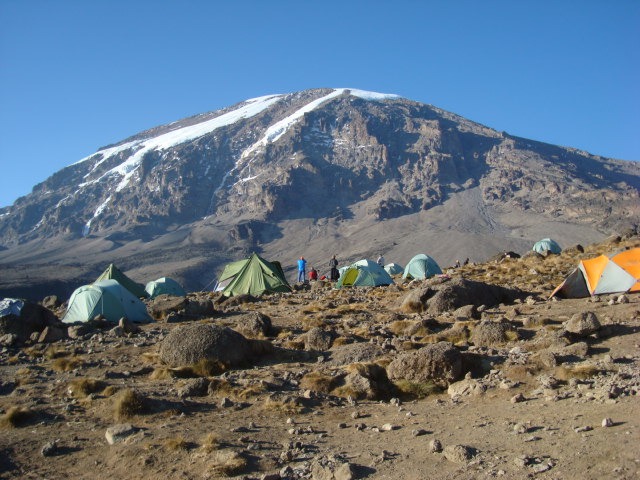
If you are seriously intending to climb Mount Kilimanjaro, then you will need to do some physical preparation before traveling to ensure that the climb is an enjoyable event rather than a tortuous slog. Reaching Uhuru Peak, the summit of Mount Kilimanjaro, is well attainable by most people of normal fitness levels, but the fitter and more prepared you are, the easier and more enjoyable it will be. Your ability to acclimatize will also depend heavily on how fit you are.
Training for your climb of Mount Kilimanjaro should commence no later really than 8 weeks before your date of departure to give yourself the best opportunity to build up stamina, strength and fitness. By the time you arrive in Tanzania, you should be capable of walking between 4 and 6 hours a day with a small backpack on your back.
Kilimanjaro ASAP recommend that you train using the boots and backpack you intend wearing and carrying on your climb of Mount Kilimanjaro so that you are comfortable using them.
All aerobic activities such as walking, running, swimming and cycling are great training methods, but the best preparation for the trek ahead is to get out walking, especially in the outdoors, up and down hills. Covering distances over gradients will help to prepare your legs and muscles for the climb.
If you have access to a gym or fitness instructor, you should be able to consult them for more personalized training programs to prepare you for your climb of Mount Kilimanjaro. As always, before embarking on any training or fitness program, Kilimanjaro ASAP would recommend that you consult your own GP regarding any potential health issues you may have that might affect your ability to train.
Frequently Asked Questions
How should I prepare physically for the climb?
Physical preparation is key to a successful Kilimanjaro trek. Regular cardio, hiking, and strength training help your body handle long days of walking and high altitudes. Practice hikes with a backpack simulate real conditions and build endurance. Even short daily exercises, like stair climbing, can make a difference. Being physically ready reduces fatigue and increases your chances of reaching the summit.
Do I need to get a medical check, up before the climb?
Yes, a medical check, up is strongly recommended. The climb involves altitude changes that can affect your heart, lungs, and overall health. Doctors can advise on altitude sickness prevention and prescribe medications if needed. Knowing your health status beforehand ensures you can trek safely. It’s better to be cautious than risk complications on the mountain.
What gear should I prepare in advance?
Proper gear is essential for comfort and safety. This includes hiking boots, layered clothing, a warm sleeping bag, and waterproof jackets. Don’t forget essentials like gloves, hats, trekking poles, and a headlamp. Checking your gear before departure ensures nothing is missing or uncomfortable. Being well, equipped makes the climb safer and more enjoyable.
How should I plan for acclimatization?
Acclimatization is vital to avoid altitude sickness. Plan for a slower ascent with extra days if possible. Stay hydrated and follow your guide’s advice on pace and rest breaks. Some routes naturally allow better acclimatization, so choose wisely. Proper acclimatization increases both safety and summit success.
Should I prepare mentally for the climb?
Yes, mental preparation is just as important as physical fitness. The climb can be physically exhausting and mentally challenging. Setting realistic expectations and preparing for tough moments helps maintain motivation. Visualization and positive thinking can make a big difference on difficult sections. Staying mentally strong ensures you enjoy the journey as much as the achievement.
Still have questions?
Our local safari experts are happy to help you plan the perfect African safari.