
Table of Contents
When you reach the summit of Mount Kilimanjaro, there is a sign that reads: “Uhuru Peak, Tanzania, 5895m“. Climbs of mountains to this height are not to be undertaken lightly as once above 2500m the air becomes thinner and there is less oxygen to breathe.
At altitude, the oxygen you take in is less and so the body has to work harder to get it to the essential organs. At the top of Mount Kilimanjaro there is half the amount of oxygen that there is at sea level!
Acclimatisation is a temporary change within the physiology of the body to cope the lack of oxygen. You cannot ever completely acclimatise to high altitude, especially above 5000m, as there just isn’t enough oxygen to keep the body going for any length of time. You can however, acclimatise temporarily in order to reach your ultimate goal of the Kilimanjaro summit.
So what exactly happens as you climb Mount Kilimanjaro?
You will start to breathe faster to try and get as much oxygen into your body and round your system as possible. Even whilst standing still your heart will beat faster as it works harder to pump the oxygen around your body.
The body also starts to make other changes to help counteract the lack of oxygen: more red blood cells are produced to increase the capacity to carry oxygen around the body. The brain requires 15% of all the oxygen taken in, so it limits the body’s ability to carry out any physical activity. A slower walking pace will naturally be adopted and tiredness and breathlessness will occur sooner if movement is accelerated.
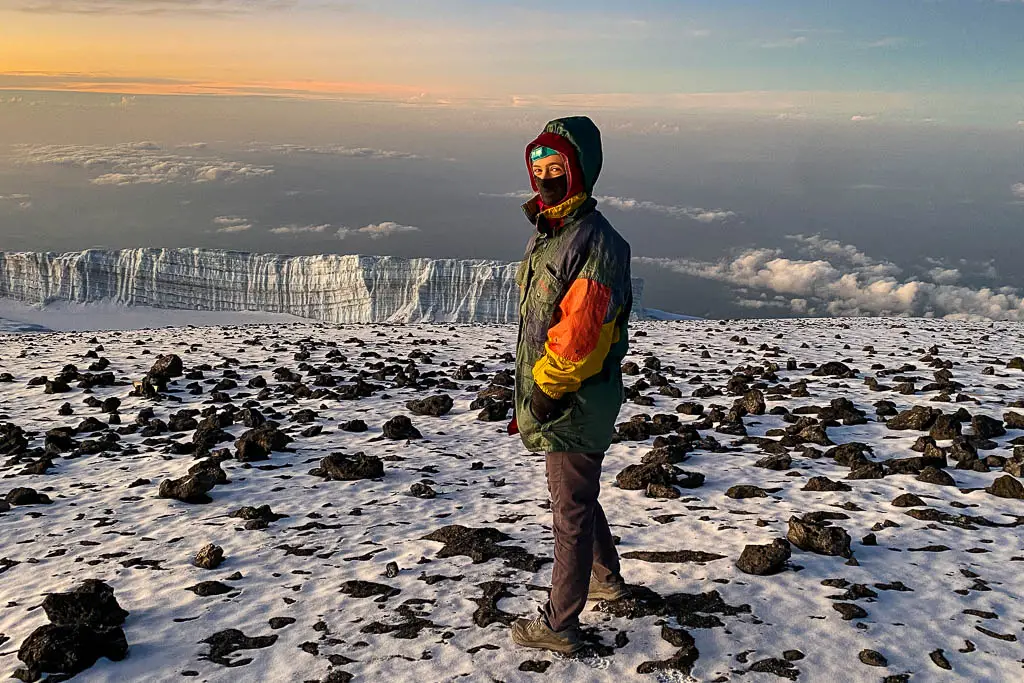
To help the body acclimatise, you should go slowly. Mount Kilimanjaro trek itineraries allow plenty of time for climbing each day to give the body plenty of time to adapt. The guides will deliberately set a steady slow pace to help you acclimatise. Remember, they have done the climb many times before with lots of people of all ages and abilities. They will therefore set the pace, which should not be increased regardless of how well you feel at any time.
It is important to keep drinking water, including electrolytes, to replace the fluids and salts lost through perspiration throughout the day. As well as drinking regularly, you must eat little and often to keep your energy levels up. Sports snack bars are ideal items to carry with you.
Rest is extremely important. Sleeping at altitude can be more difficult due to the issues with breathing. However, do not be tempted to forgo this or take sleeping tablets to help you.
As much as anything, a clear positive mental attitude is important for climbing Mount Kilimanjaro. As with any challenge, the battle ahead is not only a physical one, but a mental one too. Staying positive will help you to reach the summit of Kilimanjaro healthily.
So what types of problems can altitude cause?
AMS – Acute Mountain Sickness
Acute Mountain Sickness (AMS) or Altitude Sickness can occur when the human body is exposed to high altitude. It affects everyone differently and some more severely than others. Of course it helps to be fit and healthy, but AMS has total disregard for experience and fitness. You may have trekked previously at altitude and not been effected, but another time you may experience symptoms. The following are a guide to help you recognise AMS.
Mild AMS
Symptoms include headaches, feeling tired and fatigued, loss of appetite, shortness of breath, swelling of hands and feet, stomach upset, nausea, dizziness, pins and needles, inability to sleep – generally feeling a bit rough!
Moderate AMS
Severe headaches that are not relieved by medication, nausea and vomiting, increasing weakness and fatigue, shortness of breath, decreased co-ordination (Ataxia).
Severe AMS
Shortness of breath at rest, inability to walk, decreasing mental status, fluid build in lungs or brain causing swelling. The only way to alleviate severe AMS is to receive medical attention and to return to a lower altitude immediately.
High Altitude Pulmonary Oedema (HAPO) and High Altitude Cerebral Oedema (HACO) are two, more serious and life threatening conditions that are associated with altitude sickness and occur when an individual has not been able to acclimatise properly or has climbed too quickly. Symptoms that are not assessed or remain untreated can eventually result in either of these conditions, where lack of oxygen can result in leakage of fluid through the capillary walls into either the lungs or the brain causing swelling. Both conditions require immediate evacuation and hospitalization.
HAPE – High Altitude Pulmonary Edema
HAPE results from fluid build up in the lungs. This fluid prevents effective oxygen exchange. As the condition becomes more severe, the level of oxygen in the bloodstream decreases, which leads to cyanosis, impaired cerebral function, and death.
Symptoms of HAPE include:
- Shortness of breath at rest
- Tightness in the chest
- Persistent cough bringing up white, watery, or frothy fluid
- Marked fatigue and weakness
- A feeling of impending suffocation at night
- Confusion, and irrational behavior
Confusion, and irrational behavior are signs that insufficient oxygen is reaching the brain. In cases of HAPE, immediate descent of around 2,000 feet (600 m) is a necessary life-saving measure. Anyone suffering from HAPE must be evacuated to a medical facility for proper follow-up treatment.
HACE – High Altitude Cerebral Edema
HACE is the result of the swelling of brain tissue from fluid leakage.
Symptoms of HACE include:
- Headache
- Weakness
- Disorientation
- Loss of co-ordination
- Decreasing levels of consciousness
- Loss of memory
- Hallucinations & Psychotic behavior
- Coma
This condition is rapidly fatal unless the afflicted person experiences immediate descent. Anyone suffering from HACE must be evacuated to a medical facility for follow-up treatment.
Will any drugs help to prevent Altitude Sickness?
Kilimanjaro ASAP are often asked if there is any medication that can help prevent altitude sickness and the effect it has on the body. A commonly used drug to help combat the effects of altitude sickness on the body is Diamox.
Diamox is the commonly used brand name for the prescription drug Acetazolamide. This can be taken as a preventative measure to combat the effects of altitude sickness. However, Diamox does not guarantee immunity from altitude sickness and may not always be effective.
Kilimanjaro ASAP are not able to advise or recommend medication. Diamox is only available on prescription and you should consult your GP for advice if you are considering using it.
If you would like more information, or have any questions, please contact trek@kilimanjaroasap.com or call Kilimanjaro ASAP on
0788519851
Frequently Asked Questions
Why is acclimatisation so important on Kilimanjaro?
Acclimatisation is one of the most important parts of successfully climbing Kilimanjaro because the altitude increases quickly. As you go higher, the air gets thinner, which means your body gets less oxygen with every breath. Without proper acclimatisation, you risk altitude sickness, which can make you feel dizzy, tired, or even force you to turn back. Taking time to adjust allows your body to adapt gradually and perform better. In simple terms, good acclimatisation can make the difference between reaching the summit and not.
What is the best way to acclimatise during the climb?
The best way to acclimatise is to follow the “climb high, sleep low” principle. This means hiking to a higher altitude during the day and then descending slightly to sleep. It helps your body adjust without over, stressing it too quickly. Choosing a longer route, like 7, 8 days instead of 5, 6, also gives your body more time to adapt. Going slowly and listening to your guide’s advice is key to staying safe and successful.
How slowly should I hike to improve acclimatisation?
On Kilimanjaro, slower is actually better when it comes to hiking pace. Guides often use the phrase “pole pole,” which means “slowly slowly” in Swahili. Walking at a steady, relaxed pace helps your body adjust to the altitude more effectively. If you go too fast, you’re more likely to feel symptoms of altitude sickness. Taking it easy might feel unusual at first, but it greatly increases your chances of reaching the top.
Does drinking water help with acclimatisation?
Yes, staying well hydrated plays a big role in helping your body adapt to high altitude. Most climbers are advised to drink around 3 to 4 liters of water per day during the trek. Proper hydration helps your body circulate oxygen more efficiently and reduces the risk of headaches and fatigue. It’s also important to eat regularly, even if your appetite drops at higher altitudes. Small habits like drinking and eating consistently can make a big difference.
Are there any tips to prevent altitude sickness on Kilimanjaro?
There are several simple but effective ways to reduce your risk of altitude sickness. Taking your time, choosing a longer route, and listening to your guide are some of the most important steps. Some climbers also use medication like Acetazolamide (Diamox) after consulting a doctor. Getting enough rest, eating well, and avoiding alcohol also help your body adjust. Ultimately, respecting the mountain and not rushing the process is the safest approach.
Still have questions?
Our local safari experts are happy to help you plan the perfect African safari.


