
You will often find the kind and hard working people of Tanzania offering to carry your heavy burden, especially the porters of Mt Kilimanjaro. By this they of course mean they will carry your load, on their head! Seeing people carry huge and heavy bags, sacks and bowls on their head is usually a bit of a shock. It seems impossible and unnatural to those who have never experienced it before. But to the porters of Kilimanjaro, this is an everyday occurrence and one which they learned from being very young.
The practice of carrying weighted packages on the head dates back to ancient times and has been used to carry out daily chores such as fetching water, to show skill in tribal dances and through work such as portering. But why does the art of carrying on the head appear to be such an easy skill for some people but causes muscle strain, spasm, pain and renders others immobile for days?
Many studies have been carried out over the year’s on how certain races have the ability to develop such a skill. The truth, it seems, still to eludes most scientists but it comes down to walking gait, muscles fibres, environment and the persons centre of gravity.
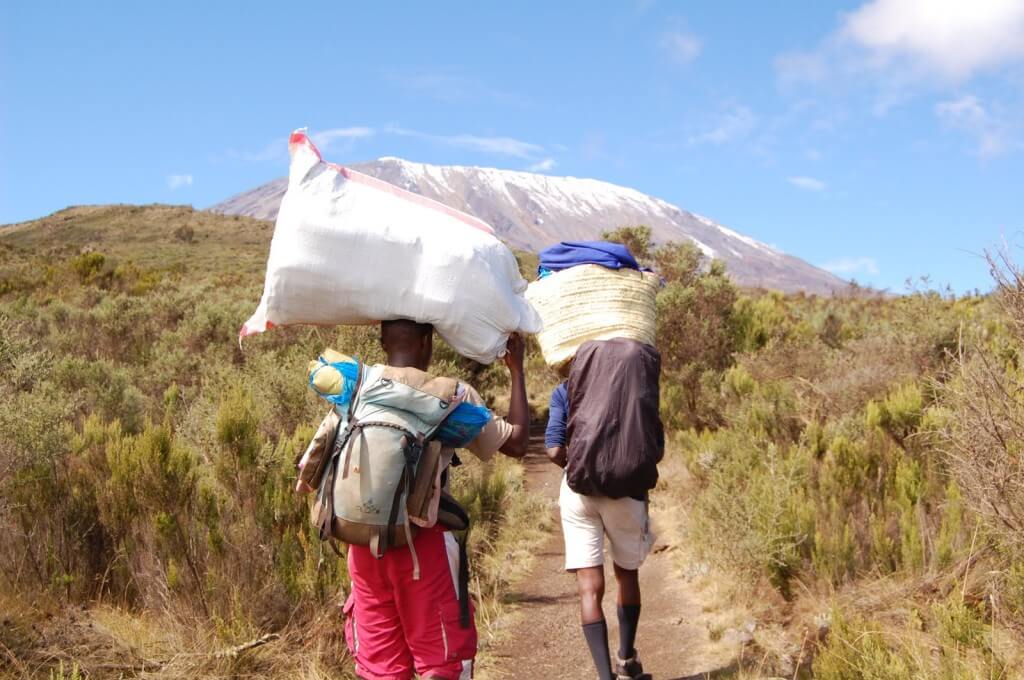
These are skills that have been built up over time from youth to adulthood so they have developed this even though they appear to have more chance of succeeding than the average Westernised individual.
For those who carry loads on their heads, it seems they are able to reduce the energy which is expended during physical activity and often they are able to cancel the energy used in some cases. When tests have been carried out on Western counterparts, the energy used is unable to be decreased or cancelled and the metabolism increases which makes it virtually impossible to carry the load very far at all. It is actually more efficient to carry a load on your head because it takes the strain off your back and makes your larger/stronger leg muscles do more of the work.
Whether it’s the sherpa’s of the Himalayas, the workers and homemakers of India, Africa and South America or the bread couriers of Egypt, they have all developed this skill which enriches their lives and the lives of others.
The porters of Kili will make your trek up the mountain a very special one for so many reasons but when they’re carrying your gear on their head whilst trekking to the summit, you’ll no doubt be in awe of their physical and mental endurance.
Frequently Asked Questions
Why do people in Tanzania carry items on their heads?
Carrying items on the head is a traditional practice that has been used for generations. It allows people to transport heavy loads efficiently while keeping their hands free for other tasks. The technique also helps maintain balance and posture when done correctly. For many, it’s more than just practical, it’s a cultural skill passed down through families. It’s common to see this in markets, farms, and villages across the country.
Is there a special technique to carrying things on the head?
Yes, balance and posture are key. People learn to keep their backs straight and their necks stable to prevent strain. Often, a small cloth or pad is placed on the head to cushion the load. The ability to walk smoothly while carrying heavy items comes with practice and muscle memory. Beginners usually start with lighter items before gradually moving to heavier loads.
What kinds of items are typically carried this way?
People carry a wide variety of items on their heads, from firewood and water containers to baskets of produce or goods from the market. In rural areas, it’s common to see bundles of crops or firewood. In towns, market vendors often transport vegetables, fruits, or handmade products this way. The method is versatile and used for both daily chores and trade purposes.
Are there any health benefits or risks associated with it?
Carrying on the head can strengthen neck, back, and core muscles over time. However, improper technique or overly heavy loads can cause strain or injury. Experienced carriers develop strong posture and balance, which minimizes risks. Children often start learning with lighter loads to build strength safely. With care, it can be a sustainable way to carry items while promoting good posture.
Why is it considered a cultural art in Tanzania?
It’s called an art because it combines skill, tradition, and grace. Walking long distances with heavy loads while maintaining balance requires practice and patience. It’s also deeply tied to daily life and community identity. Many locals take pride in their ability to carry items efficiently on the head. Beyond practicality, it represents resilience, elegance, and a link to Tanzanian heritage.
Still have questions?
Our local safari experts are happy to help you plan the perfect African safari.


