Table of Contents
So you’ve decided to climb Kilimanjaro, but now you may be wondering which route to choose and which is the best for you! To make that decision easier, Kilimanjaro ASAP has some great advice for you:
The Marangu Route
The Marangu route is the shortest route, and as such regarded as the easiest route to the summit of Kilimanjaro. You may have heard it referred to as the ‘Coca-Cola’ route (due to the fact that it is ‘softer’ than some of the other route choices!) although you will still face a challenging trek to the summit of Uhuru Peak. This route takes you at a gentle pace through forests, moorlands and across the ‘Saddle’ which is a high altitude desert separating the main summit of Kibo (5896m) from the craggy Mawenzi (5149m) to reach Kibo hut. From here you will make your early morning trek to the summit where you will see the dawn rising from Gillman’s Point on the crater rim.
The Marangu route is the only route on Kilimanjaro that provides you with accommodation in ‘huts’ rather than tents, so you will have the luxury of a mattress and a little extra warmth at night.
The minimum number of days recommended to complete the trek is 5, though if you are new to high altitude trekking we suggest that you include the extra day which will help with acclimatisation and give you a much better chance of success.
The Machame Route
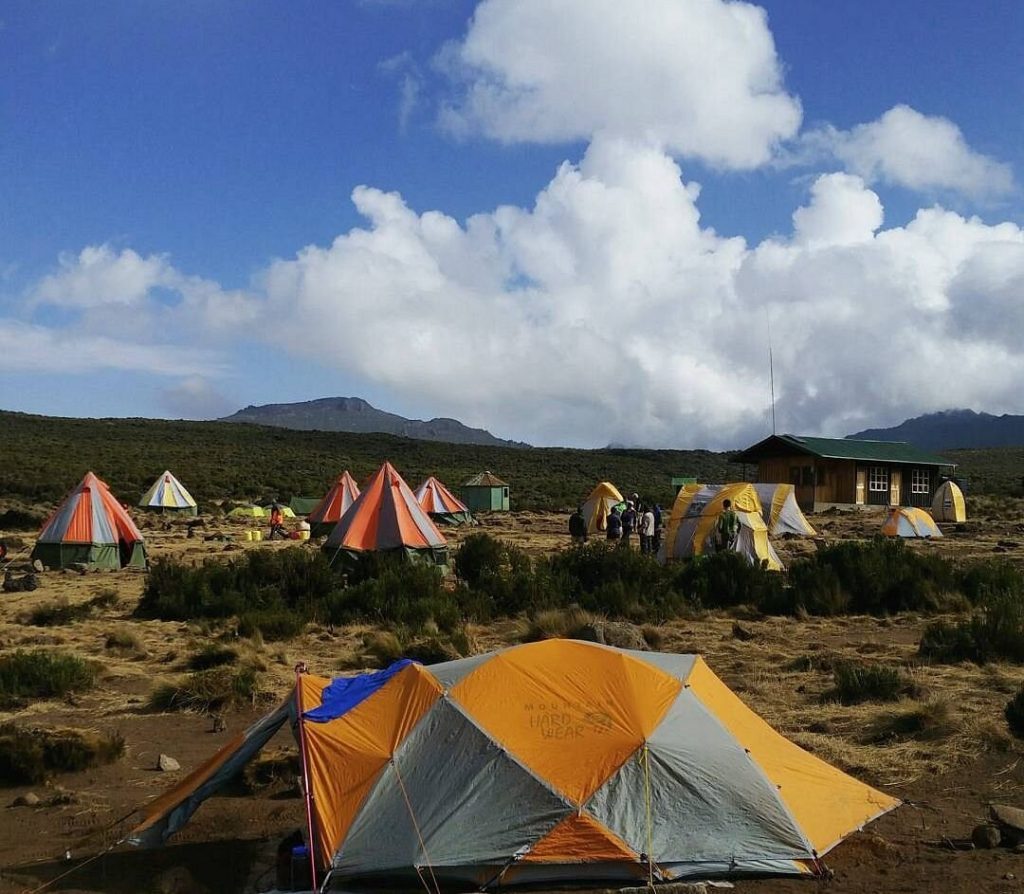
The Machame route is a popular choice and therefore a great choice if you’re trekking solo and would prefer to join up with others on the trek. It’s often referred to as the ‘Whiskey route’ (though we do recommend you stick with water until your return to the hotel!) and has a very impressive success rate for reaching the summit of Uhuru Peak. We recommend that you consider the 7 day trek which will give you ample time to acclimatise for the final trek to the summit, though for those that want a more challenging trek you can make it to the top in 6 days by missing out a night of camping at the Karanga river. The Machame route takes you up a steep path, ascending through the forest. It will then take you beneath the stunning glaciated precipices of the icefields before taking you to the summit. The descent from the summit follows the Mweka route.
The Lemosho Route
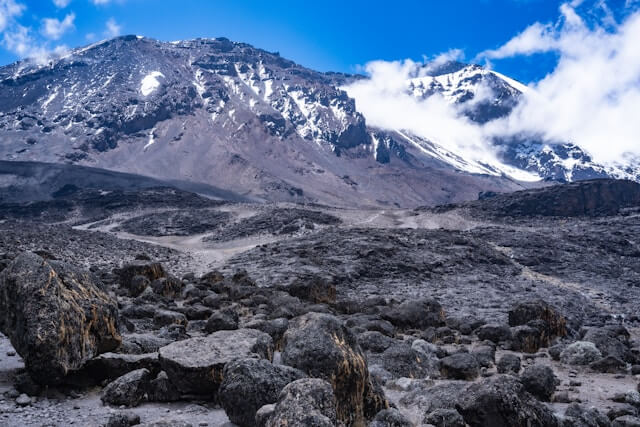
The Lemosho route is one of the longest route to Uhuru Peak, but is an excellent choice for those wanting to take a more scenic trek to the summit. As the longest route it offers excellent acclimatisation and has a great success rate. Beginning from the northern side of the mountain it takes you gradually though beautiful forests and across moorlands, along the Shira plateau until eventually it meets with the more frequently used Machame route. This route has some spectacular views of the icefields – something that the budding photographers amongst you will certainly enjoy! After reaching the summit of Uhuru Peak you will then descend the Lemosho route via the Mweka route.
For a comfortable trek we suggest the 8 day itinerary, though those that are fit will easily complete the trek in 7 days. Accommodation is in tents that will be provided for you, along with a sleeping mat and the other camping items. All you need to bring is yourself, your sleeping bag and your personal equipment! Our pre departure information gives you a list of the recommended items to bring.
The Rongai Route
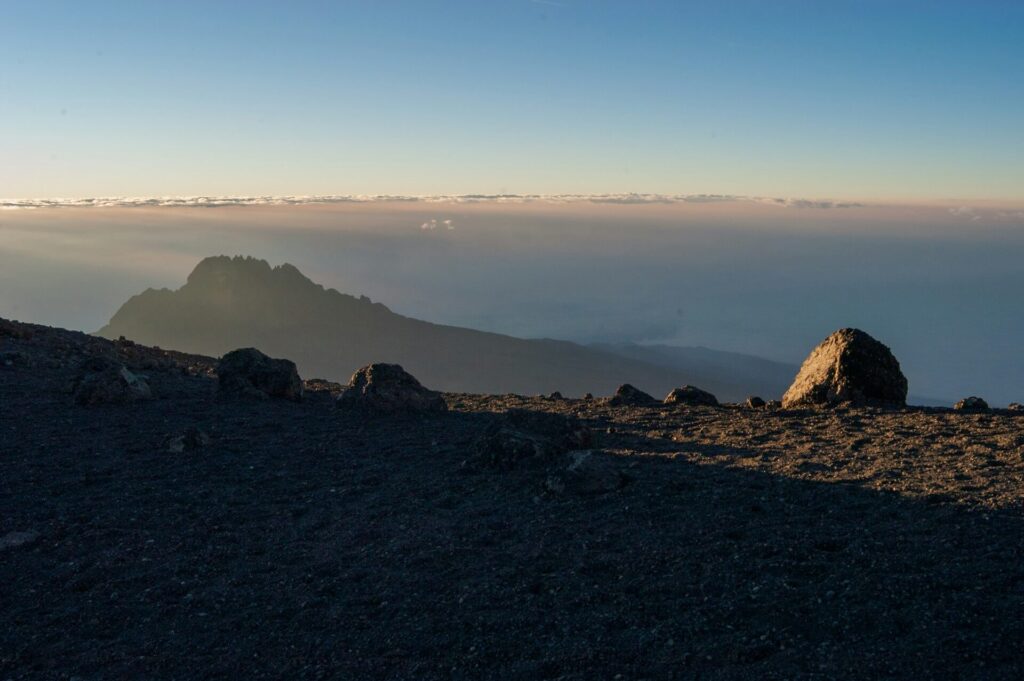
The Rongai route is an excellent choice if you are looking to take a less used route on Kilimanjaro. It is considered to be the second easiest route (after the Marangu route), but is less used than the Marangu or the Machame routes. It begins the approach to Uhuru Peak from the less forested north side, so is a good choice if you are taking your trek during the ‘rainy seaon’, as this side sees less rain fall in general. After reaching the summit, you will make your descent using the Marangu route.
The standard number of days for this route is 6, although we recommend that you add an extra day to help with acclimatisation if you haven’t trekked to high altitude before. This will give you a better chance of reaching the summit and allows you to take things a little easier. On the Rongai route your accommodation will be in tents (even on the descent) which will be provided for you along with your sleeping mat and other camping equipment. You will need to bring with you your own sleeping bag and personal equipment. A full list of the recommended equipment can be found in our general information section.
Kili Fact: The terms Coca-Cola and Whiskey don’t talk about the drink options available on the route, rather they were/are used to dictate the difficulty of the route. Coca-Cola is a softer drink and Whiskey is the harder drink.
The Umbwe Route
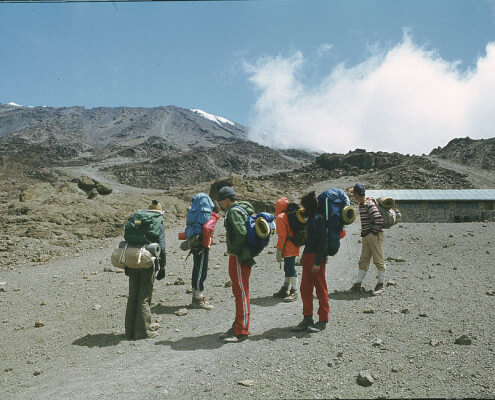
The Umbwe route is the hardest but most spectacular and direct way to reach Uhuru Peak. It follows a forested ridge to the moorlands, then traverses below the Southern Icefields to reach the Barafu Route which is followed to the summit. An early start is made on the summit day to reach Stella Point, on the Crater Rim at dawn. Uhuru Peak lies a further 40 min. along the rim.
Accommodation on the Umbwe route is in tents which the porters will pitch for you; you will need a sleeping bag, warm clothes and walking poles. This is a steep, tough and in places slightly exposed trek within the limits of a fit individual used to walking in mountain areas. An extra day can be added to our itinerary to explore or relax along the route, (best taken at the Barranco Hut).
Regardless of which route you choose, you are in for a fantastic journey and one heck of an adventure! You will see sunsets that you will remember fondly for a lifetime, have great conversations with and learn from the wonderful guides, keep in touch with the interesting people you meet and you’ll still be able to see the famous (though sadly disappearing) highest snow cap on the equator. This will be a story for you to tell for years to come.
Kilimanjaro ASAP, one of the top Kilimanjaro operators in Northern Tanzania. Begun in 2012 by Thomas Nyaki as an international travel agency. Safari trips, Mount Kilimanjaro and Mount Meru climbs commenced in 2017.
Many years of experience in running these trips have now been accumulated and in some years Kilimanjaro ASAP has been the top provider.
We now have a large fleet of 4x4WD vehicles and over 10 guides working with us. 8 mountain guides are registered to Kilimanjaro ASAP. All of our drivers and guides are experienced and speak English.
Listed below are some of the many things that Kilimanjaro asap have done to improve the conditions for both staff and the local people:
Mount Kilimanjaro porters society
Kilimanjaro ASAP are proud of the work they do in using tourism to create better livelihoods for their employees, partners and communities. As such Director, Thomas Nyaki, set up plans with the purpose of improving living and working condition for the porters (and their families) who climb Mt Kilimanjaro and Mt Meru. This includes:
- Providing free training during the low season, in areas such as health, financial management and investment skills, mountain sickness training skills, environmental conservation education and English courses.
- Assisting porters to open bank accounts. Currently almost 90% of the porters and guides have their own bank account and card. Wages are paid directly in to their account and this is helping them handle more safely and manage more effectively their money. This has helped porters to pursue their own businesses, afford to build their own houses, pay their bills and take care of their families as well as cover their basic needs of food, shelter, clothes and education.
- Helping provide employment opportunities to porters during the low season, for example environmental initiatives have led to several tree planting projects around Moshi and Karatu.
- Establishing tipping sheets for fairness and transparency to ensure that porters get their tips as agreed by clients. This sheet is signed by clients when the tip is paid and signed by porters when they receive their tips and is monitored by the office.
- Kilimanjaro ASAP pay higher wage rates than that which has been proposed by KINAPA and TANAPA.·
- Where required, members are loaned (free of charge) hiking equipment such as sleeping bags, tents, raincoats, waterproof trouser, jackets socks, gloves and shoes for the duration of their trek. The team have membership ID cards which help identify them and support their equipment requirements. It also helps with monitoring the whereabouts of the equipment at any one time.
- Ensuring that porters carry loads that respond to set standards of a maximum of 20kg per person, our team have their luggage weighed at the base hotel. This means that luggage that is over this maximum may be left behind at the hotel. Therefore, when the porters from the Kilimanjaro ASAP organised trips arrive at the Kilimanjaro National Park gate to have the luggage weight double-checked before the climb, they will not be over the weight limit.
- Kilimanjaro ASAP porters and other staff are given 3 meals a day whilst on trek and each member has been given a bicycle.
Frequently Asked Questions
How many routes are there to climb Kilimanjaro?
There are several popular routes to climb Mount Kilimanjaro, each offering a different experience. The main ones include Machame, Marangu, Lemosho, Rongai, Shira, and Northern Circuit. Each route differs in length, scenery, and difficulty. Some routes are steeper and shorter, while others are longer but offer better acclimatization. Choosing the right route can impact your chances of summiting successfully and how much you enjoy the journey.
Which route is best for beginners?
For beginners, the Marangu Route is often recommended because it has hut accommodations and a relatively gentle gradient. This “Coca, Cola” route is less physically demanding, making it suitable for those with limited trekking experience. However, it is shorter, so acclimatization is slightly less than on longer routes. Longer routes like Machame or Lemosho may be more scenic and improve summit success rates, even if they are more challenging. Ultimately, your fitness level, schedule, and desire for adventure will guide the choice.
Which route offers the best scenery?
If scenic views are a priority, Lemosho Route and Northern Circuit are excellent choices. Lemosho is known for its lush forests, stunning cliffs, and panoramic vistas. Northern Circuit is the longest route and circles much of the mountain, providing breathtaking perspectives and fewer crowds. Machame is also popular for dramatic landscapes and varied ecosystems. Choosing a scenic route can make the trek even more memorable.
How does route length affect summit success?
Route length has a major impact on your chances of summiting Mount Kilimanjaro. Longer routes give your body more time to acclimatize to altitude, reducing the risk of Acute Mountain Sickness. Shorter routes like Marangu or Rongai are quicker but can be more physically demanding and may lower success rates. Routes lasting 7, 9 days usually have higher summit success due to slower, steadier ascent. Taking extra days may feel longer, but it often results in a safer and more rewarding experience.
Should I consider crowds when choosing a route?
Crowds are an important factor when selecting a route on Mount Kilimanjaro. Popular routes like Marangu and Machame can be busy during peak seasons, especially near camps and summit night. Less crowded options like Lemosho, Shira, or Northern Circuit offer more solitude and a quieter trekking experience. Smaller groups often mean more personalized attention from guides. Considering crowd levels helps you choose a route that matches your comfort and adventure preferences.
Still have questions?
Our local safari experts are happy to help you plan the perfect African safari.