Investing in hiking equipment can be a daunting exercise. However, a successful summit attempt of any mountain is largely dependent on ensuring that one has the correct equipment right from the outset. Kilimanjaro is no exception. Due to the fact that the majority of Routes up the mountain are non-technical, many hikers make the mistake of skimping on equipment so as to save money. This ultimately results in an unpleasant climbing experience, as well as in most cases failure to reach the summit at all.
For starters it will be necessary to purchase both a kit bag and a rucksack. The rucksack will be carried by climbers, whilst the kit bag will be carried on the heads of porters. In consideration for the porters the kit bag should thus be as lightweight as possible and not possess any wheels or protruding handles. When fully packed it should weigh at most 15kg.
The rucksack should ideally hold 30 to 40 litres and be fitted with both waist straps and chest straps, so as to maximise comfort and support. It should also be fully waterproof and hardy, so as to withstand all types of Weather on the mountain and keep the contents within it clean and dry. Finally, it should be fitted with loops large enough to hold two climbing poles.
Climbing poles can prove invaluable especially on the summit day and descent, by which time knee and ankle joints are likely to have taken a serious beating. Apart from providing tremendous support, they also aid in balance and conservation of energy which may both be seriously lacking by the end of the journey. There are numerous options available, from wooden walking sticks to adjustable metal poles. Although a pair of poles generally provides more support, many individuals find a single pole less cumbersome and easier to use.
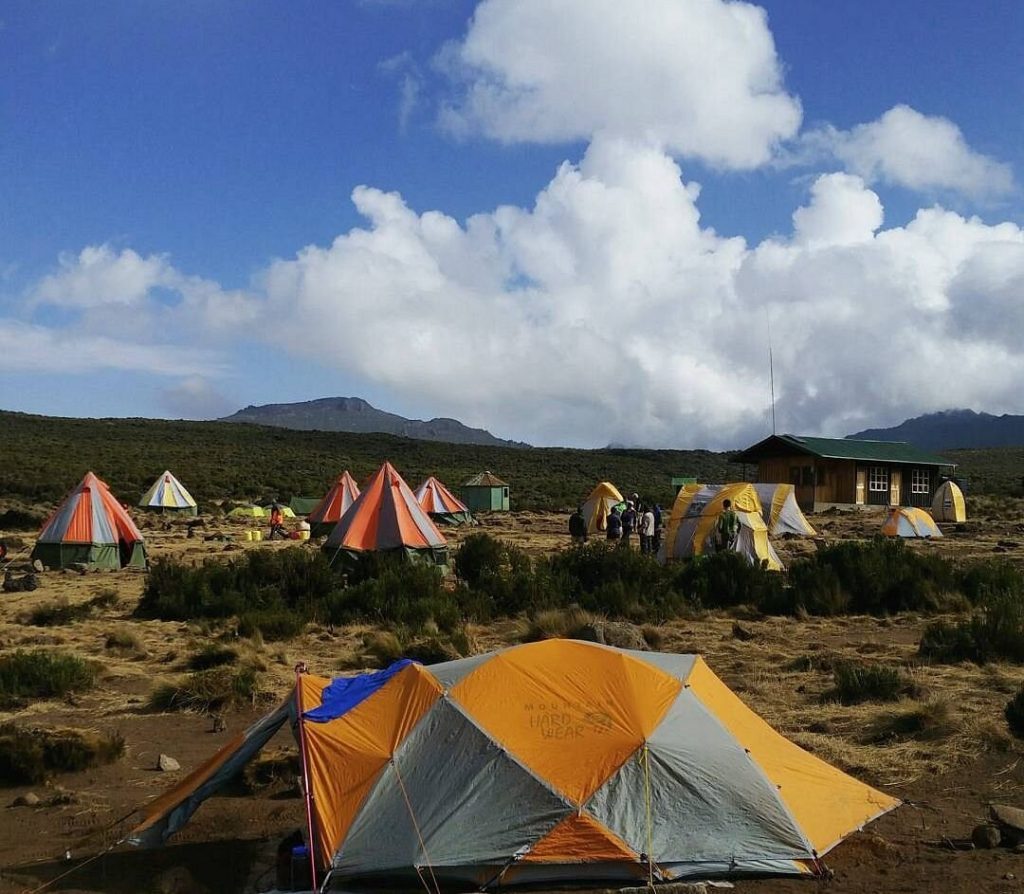
At higher altitudes, evening temperatures on Kili often drop far below -10 degrees Celsius. Warm sleeping gear including a sleeping bag, and possibly a pillow are therefore nothing short of essential. On routes that make use of tented accommodation, an inflatable sleeping mat is also recommended so as to provide more insulation between climbers’ bodies and the freezing ground below. Synthetic sleeping bags rated three or more are ideal, as are those fitted with an insulated hood which will provide even more protection against the cold.
Other items to take into account include toiletries, toilet paper, torches, batteries, a first aid kit, water containers and water purification tablets, a camera, pair of binoculars, spare shoelaces, snacks and a book or magazine for evenings when the effects of altitude may result in insomnia. It may also be worthwhile to invest in a water-less washing liquid and hand cleaner which will come in handy when water supplies become scarce. Most equipment can be hired either at the Moshi town, or alternatively in the towns of Arusha. It is however advisable to purchase one’s own equipment so as to ensure maximum comfort along the journey.
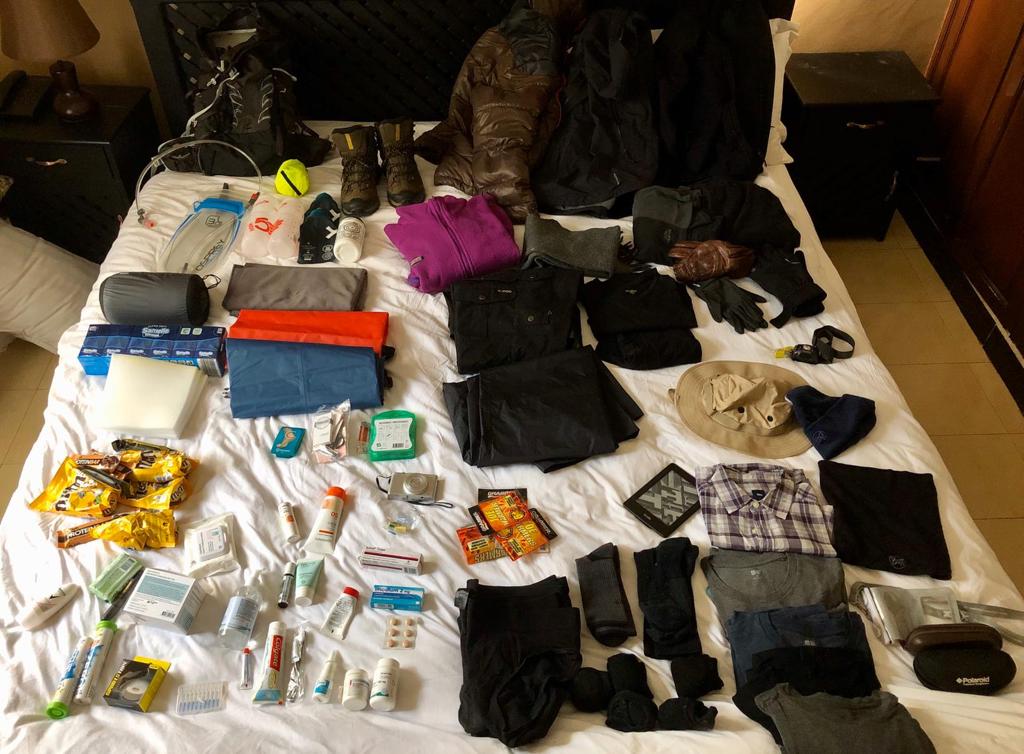
Clothes, First Layer Hiking Gear
Packing clothes for Kilimanjaro can be a demading exercise. Although only 3 degrees south of the equator, when it comes to the highest peak in Africa, there is no doubt that Weather Conditions do not comply with the typical laws of latitude. Conditions on Kilimanjaro range from equatorial to arctic depending on both the Altitude and the time of day. In order to ensure one is as comfortable as possible during the climb, it is therefore vital to pack an extensive range of first layer clothing, from shorts and T-shirts to thermal underwear and gloves.
By far the most important item to consider when planning one’s wardrobe for Kilimanjaro is a pair of good quality hiking boots. These should be worn in well before the trip begins so as to limit blisters as far as is possible. Feet in particular take a serious beating on the sharp rocks and rocky terrain during both the ascent and the descent. Aside from thick socks, it may therefore also be viable to consider purchasing special inserts which can be fitted inside boots so as to provide extra support.
When it comes to actual clothing, it is advisable to dress in layers right from the outset of the trip. It may however be possible to set off in just a pair of shorts and a T-shirt on the first day of the journey, depending on the season in which one is climbing. More importantly than anything else, it is important to ensure that the base layer is made out of breathable fabric such as woven polyester, so as to control body temperature sufficiently.
Clothing which makes up one’s second layer should ideally be both lightweight and warm. Polar fleece or similar knitted materials are good options. The outer layer needs to consist of waterproof pants and a waterproof jacket. These will prove especially invaluable from the third day onwards where apart from rain and sleet, one may also be pelted by grauple or snow pellets at regular intervals. It is vital to ascertain that aside from waterproof, this outer coat is also breathable so as to allow for perspiration to fully evaporate from the layers below.
Clothing – Outer Layer Hiking Supplies For The Climb
In addition, many people find that an extra down or synthetic jacket is an absolute lifesaver, especially at high Altitudes where Temperatures can drop well below freezing point before the sun has even fully disappeared from the sky. Indeed, on the summit day many climbers find that wearing every single item of clothing they have is still not sufficient to shield them from the bitter cold and arctic conditions.
Last but certainly not least on the list of essentials are the smaller items such as gloves, glove liners, hats and thermal underwear. In addition to purchasing a balaclava to protect ones face from the cold it is also advisable to take along a broad rimmed hat to keep out the sun’s rays, which tend to get stronger the higher one climbs. Added to this, a good pair of glacier glasses or sunglasses will prove fundamental in protecting one’s eyes from the bright sunlight and glare on the ice and snow.
Frequently Asked Questions
What clothing do I need for climbing Mount Kilimanjaro?
You need clothing suitable for a wide range of temperatures, from warm forests to freezing summit conditions. Layering is essential, including moisture, wicking base layers, insulating mid, layers, and a waterproof outer shell. Warm accessories like gloves, a hat, and thermal socks are important for the high, altitude sections. Proper clothing helps you stay comfortable and safe throughout the trek. Choosing the right gear can make a huge difference in your experience.
What kind of footwear is best for Kilimanjaro?
Sturdy, well, broken, in hiking boots with ankle support are essential for the rocky and uneven trails. Waterproof boots are ideal because rain and snow are possible in various zones. Many climbers also bring lightweight camp shoes for relaxing at night. Quality hiking socks help prevent blisters and keep your feet dry. Good footwear is critical to avoid injuries and enjoy the trek.
What essential gear should I bring?
Essential gear includes a durable daypack, trekking poles, a headlamp with extra batteries, and a high, quality sleeping bag rated for cold temperatures. Sunglasses and sunscreen protect against strong UV rays at high altitude. A reusable water bottle or hydration system is important to stay hydrated. Packing these items ensures safety, comfort, and convenience during the climb. Proper gear also helps you focus on reaching the summit.
Do I need health and safety supplies?
Yes, a basic first aid kit is important, including pain relievers, blister care, and any personal medications. Altitude sickness medication may be recommended after consulting a doctor. Hand sanitizer and wet wipes help maintain hygiene when water is limited. Having these supplies allows you to manage minor health issues on the mountain. Being prepared keeps the climb safe and more enjoyable.
Are guides and porters required?
Yes, you must climb with a registered guide and support team because independent trekking is not allowed. Porters carry heavy luggage, tents, and cooking equipment, making the climb more manageable. Guides ensure safety, navigation, and proper acclimatization along the route. Using a professional team also supports local employment and the mountain’s tourism system. Their assistance is essential for a successful and comfortable climb.
Still have questions?
Our local safari experts are happy to help you plan the perfect African safari.