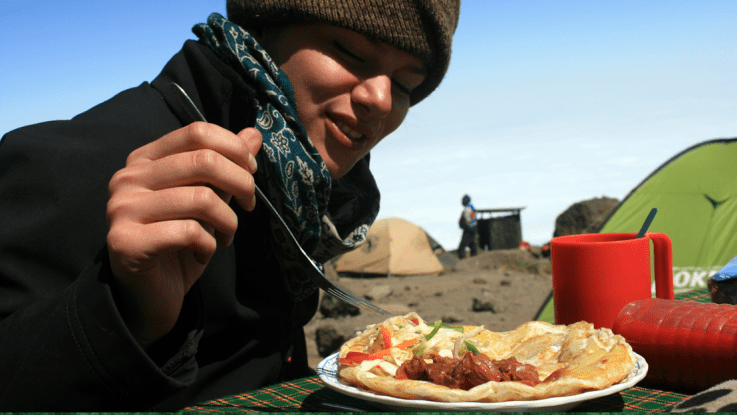
Camping food during the climb will be prepared by employees that accompany climbers on their journey up the mountain. Despite the adverse conditions at most campsites, Kilimanjaro ASAP staff will go out of their way to ensure that climbers are always provided with decent meals.
Breakfast typically consists of porridge, eggs, toast and fruit to give climbers the energy they need to begin the day and help with the symptoms of altitude sickness. Lunches are usually eaten en route to the next campsite, and therefore consist of sandwiches and fruit. Dinners are prepared using the freshest ingredients possible and include meat, Carbohydrates and vegetables.
Whilst supplies for the meals will be carried by Porters, it is up to climbers to pack their own snacks into their rucksacks. When energy levels are low, carbohydrate and glucose based snacks such as dried fruit, chocolate, seed bars and sucking sweets may very well prove to be nothing short of lifesavers. Mini packets of hot chocolate will also provide energy, warmth and comfort during icy evening around the campfire.
Even more essential to hikers’ wellbeing than food is their consumption of liquids. Dehydration can occur easily due to the amount of fluid being lost through respiration, perspiration and increased urination as a result of altitude. Doing a urine check is one of the most effective means of checking for dehydration, as a sufficiently hydrated individual’s urine will always be pale yellow in colour. Anything darker is a warning sign that the body’s kidneys may be taking strain due to insufficient water levels.
Typically, one should drink at least three liters of water a day, excluding that which is consumed during mealtimes. This figure will however vary according to body size, Fitness Levels and Altitude. Hikers should ensure that they always keep water supplies within reach and stop to drink at regular intervals. At higher altitudes, where water supplies are scarce and purification becomes necessary, it is vital that instructions on purification tablets are strictly adhered to.
On the summit day, water supplies should be plentiful and should be stored as close to the inside of rucksacks as possible so as to prevent freezing. Similarly, packing a large quantity of food to snack on is strongly advised, as hiking time typically exceeds 12 hours and energy supplies deplete quickly in the severe conditions on the mountain. Remaining hydrated at all times and supplying ones body with sufficient fuel will greatly increase chances of a successful summit.
Frequently Asked Questions
What type of meals are served on Kilimanjaro treks?
On Kilimanjaro, meals are usually prepared by the guides and cooks provided by your trekking operator. You can expect a mix of continental and local dishes, including rice, pasta, vegetables, and meats. Breakfast often includes porridge, eggs, and bread to give energy for the day’s climb. Lunch is typically a packed or hot meal, while dinner is a hearty hot meal after reaching camp. The food is designed to be nutritious and high in calories to fuel your long hikes.
Do you need to bring your own food?
Most climbers do not need to bring their own meals because the trekking package includes food throughout the climb. However, some people like to carry extra snacks, such as energy bars, chocolate, or nuts. These are useful for quick energy boosts on steep or long sections. Carrying a few personal snacks also gives variety and comfort. It is important not to rely solely on personal food, as the main meals are well, planned by the guides.
Are there vegetarian or vegan options?
Yes, most trekking operators can provide vegetarian or vegan meals if requested in advance. Meals typically include vegetables, beans, rice, pasta, and fruits to meet dietary needs. Some operators may also accommodate gluten, free or other special diets with prior notice. It is essential to inform your operator before the trek so they can plan accordingly. Proper nutrition is crucial to maintain energy levels at high altitude.
How do climbers stay hydrated on Kilimanjaro?
Staying hydrated is very important when climbing Kilimanjaro due to altitude and physical exertion. Climbers are encouraged to drink at least 3, 4 liters of water per day. Many trekkers carry a reusable water bottle or hydration system. Guides often provide boiled or treated water at camps to prevent illness. Drinking water consistently helps reduce fatigue and the risk of altitude sickness.
Can you enjoy local Tanzanian foods on the trek?
Yes, trekking meals often include local Tanzanian dishes and flavors to give a taste of the culture. Common additions include chapati, ugali, beans, and stews made with local ingredients. Fresh fruits like bananas and oranges are also popular for snacks. Including local foods adds variety and keeps meals interesting during the climb. Experiencing Tanzanian cuisine is a small but memorable part of the Kilimanjaro adventure.
Still have questions?
Our local safari experts are happy to help you plan the perfect African safari.