Table of Contents
- Is Mount Kilimanjaro in Tanzania or Kenya?
- Hotel and Accommodation in Moshi Town?
- Mount Kilimanjaro Climbing Cost
- Guides and porters on Kilimanjaro Mountain
- Porters are essential
- Rules for walking well while Climb Mount Kilimanjaro
- Tipping Guide on Mount Kilimanjaro
- The Umbwe Route
- Frequently Asked Questions
The first mention of Mount Kilimanjaro dates back to antiquity and returned to the geographer Ptolemy. He quotes a “big snowy mountain”. The name “Kilimanjaro” originates from the Chaga language, spoken by the Wachaga people, who are native to the foothills of Mount Kilimanjaro. In Chaga, the term “Kilimanjaro” derives from “Kilemakyaro,” where Kilema means “impossible” and Kyaro means “journey,” translating to “impossible journey.” The older generation of the Chaga believed that reaching Uhuru Peak, the mountain’s highest point, marked the end of the journey, and one must descend after arriving there. This belief is why they referred to it as an impossible journey.
Arabs and Chinese merchants who traded on the coast had heard of it. The first European to discover Mount Kilimanjaro was Johannes Rebmann, a German missionary, and explorer. It was in 1848. He admired the mountain but did not climb to the top.
Located on the border of two countries, two rival spheres of influence (German and British), Mount Kilimanjaro appears as a sacred monster on the ground.
Is Mount Kilimanjaro in Tanzania or Kenya?
In 1886, the British and German governments defined a route for the border that separated their possessions in East Africa. They made it simple and drew a straight line from Lake Victoria to the Indian Ocean. This line cut Mount Kilimanjaro in two. Which was silly. It was then decided that it would bypass the famous mountain from the north, and not from the south, so as not to cut this natural wonder by a vulgar border. Mount Kilimanjaro thus found itself on the territory of Tanzania, and not in Kenya.
First Person to Summit Kilimanjaro
In 1887, the Austro-Hungarian explorer Samuel von Teleki attempted to reach a point 4000 m below the summit of Kibo. Finally, the first real ascent to the summit was made in October 1889 by the German Hans Meyer, a professor of geology. Meyer named his peak the Kaiser Wilhem Spitze, after the name of the Prussian emperor.
The clean mountain air did well with his guide, a man named Mzee Lauwo. Selected by the Chief of Chagga, because this man was familiar with the mountain surroundings. After Tanzania’s independence, Mount Kilimanjaro was returned to the Tanzanians by the British.
Mount Kilimanjaro Originality
330 km below the equator line, Mount Kilimanjaro holds many world records. Apart from winning Africa’s top attraction from World Travel Awards. Mount Kilimanjaro holds the record of being a mountain so cold, so high, and so close to a line so hot (the equator). It is also one of the few such tall mountains in the world that are not attached to a continuous chain of peaks and peaks. Many people call this a “free-standing mountain”.
Each year, more than 35,000 hikers climb this legendary Mount Kilimanjaro. On certain days in July and August, it gets upset on the slopes, and the huts can be full. Think about it and reach us to book in advance.
Kilimanjaro International Airport is 45 km from the Moshi town. Allow 1 hour drive by car, passing through Moshi- Arusha road. At Kilimanjaro ASAP we provide free Airport transfer to the Hotel once arrived.
Hotel and Accommodation in Moshi Town?
Many visitors sleep in Moshi, where hotels are plentiful, and at all prices. There are cheap budget hotels at the foot of this great lady of Africa. More than a Drop: Stay in this decent home which some of its profit help to educate Girls between 18 and 21 years of real poor and difficult background a one-year hospitality training course. The course teaches students the most important skills required by hotels of the mid and upper class and prepares them for self-reliance and self-determination in life.
Other Hotel Accommodation in Moshi before and after climbing Mount Kilimanjaro: Kilimanjaro Wonders Hotel, Panama Hotel and Resort and Park View Inn Moshi
How is it like to summit Mount Kilimanjaro
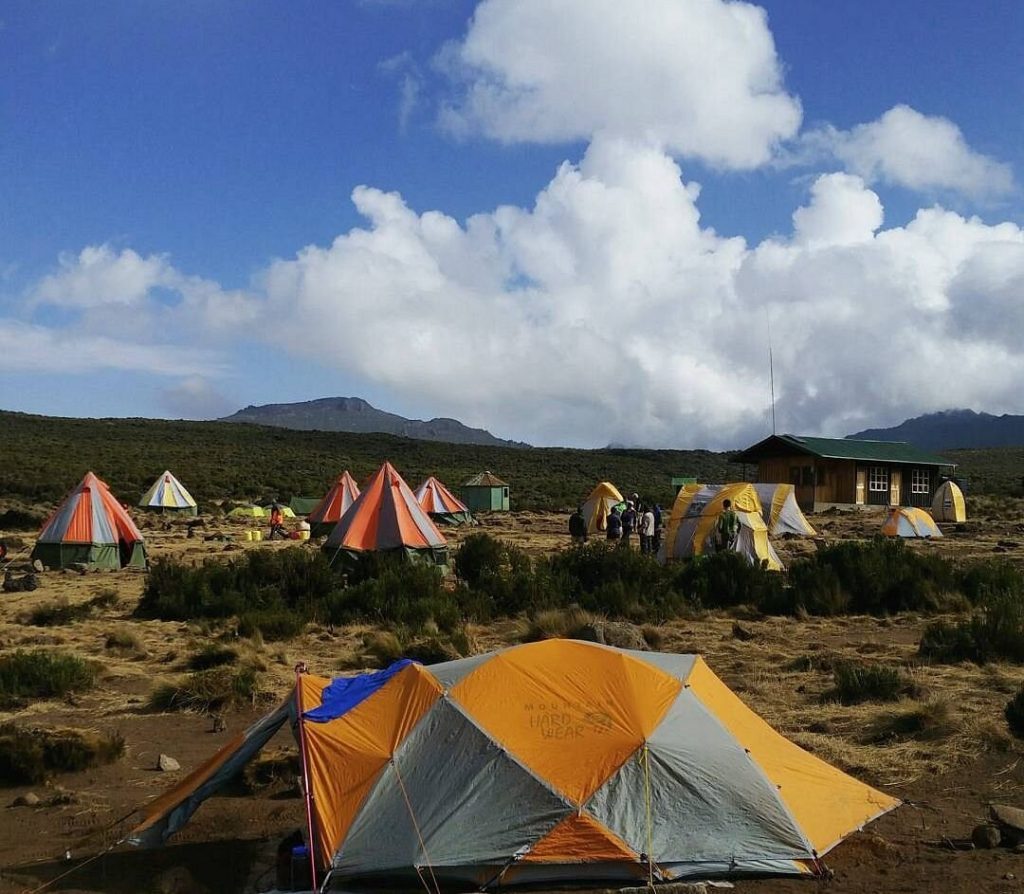
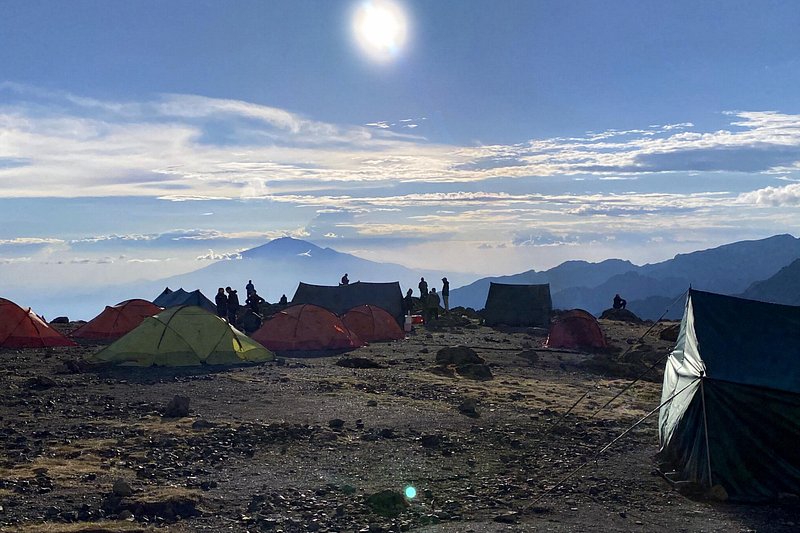
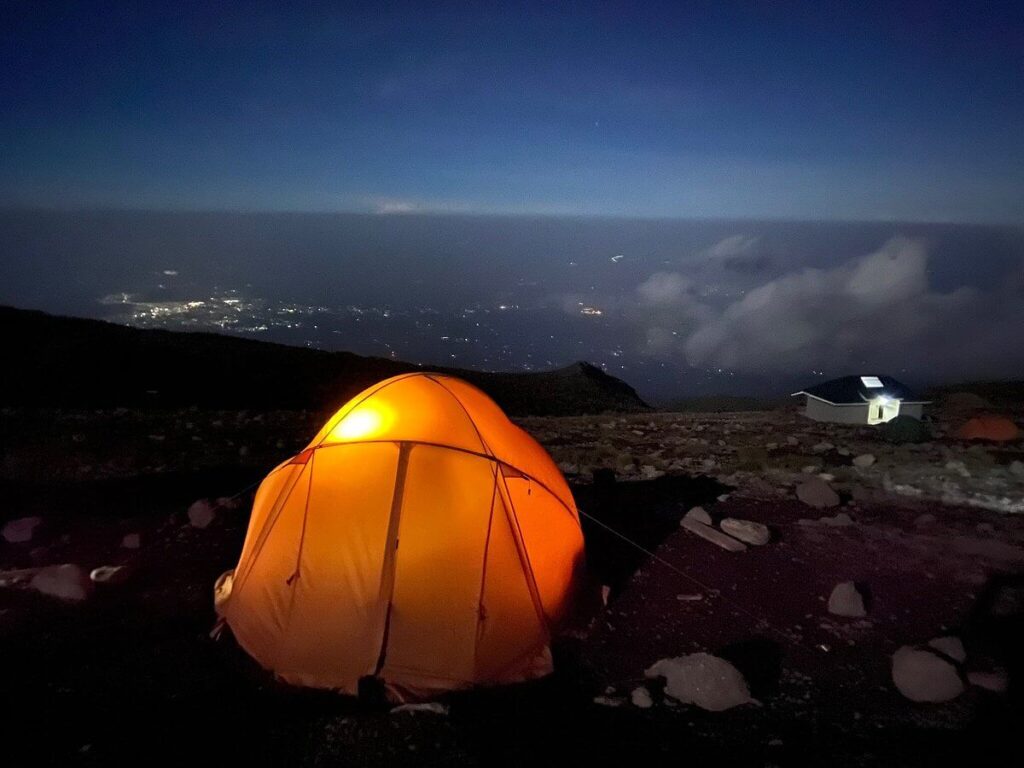
Above 4000m the vegetation is alpine desert and you will be able to witness only White-necked ravens going around the campsite. Not so much while arriving at the camp. No water for a wash. No water streams above this elevation. By the time you arrive, you will be tired and maybe weak. The crew will be ready to set up your tent as well as a table for dinner before you get to sleep (you won’t feel sleepy anyway)
Your guide will visit you before hitting the bed for checking on your required summit clothes. It is advised to sleep on 3 layers. First, it is cold at the base camp at the night (up to -10c). Second, it is because you have to make your layers warm as you will leave at midnight for the summit which is exactly cold.
Before leaving the Uhuru Peak, you will have a cup of coffee and cookies or biscuits. Put on your last layer (5th layer) for the summit and be ready to go to the top of Mount Kilimanjaro (Uhuru Peak). What an incredible trek.
Temperatures At the top of Mount Kilimanjaro, the nights are really cold. In the middle of August, the thermometer can drop to – 20 C. Dress and cover yourself accordingly.
Climbing to the top of Mount Kilimanjaro is not an excursion reserved for Olympic champions. Anyone can do this, from 16-17 years old (not advised before), provided they are in the good physical condition and have enough breathing capacity. Everyone is advised to run (jogging) once or twice a week.
Mount Kilimanjaro Climbing Cost
You will have to pay the entrance tax to Kilimanjaro National Park. There is also a cost for shelter (tent or hut), and food which is included in the price. Camping cost. You also have to pay the security fee (rescue fee): whether you are two or ten hikers the cost is the same. A good value-for-money agency, located in Arusha or Moshi, takes between $ 1700 and $ 2400 per person sharing, for a hike of 6 days / 5 nights. At this price everything is included. guides, porters, various government taxes, Entrance fees to the park, food, accommodation in shelters
Attention: Tips are to be added to this amount (see below the section “Tipping”). Unless you are already well equipped before leaving. The renting of necessary mountain clothing and equipment in specialized stores can be arranged by Kilimanjaro ASAP team. All in all, the ascent of Mount Kilimanjaro is a wonderful, but also an expensive adventure.
When is the best time to Hike Mount Kilimanjaro?
March, April, May (most rain), and November are the four wettest months, and thus the least frequent. There is also a small rainy season in October and November but can depend on the season. Weather has never been systematic on Mount Kilimanjaro. It’s good to seek information from an experienced Kilimanjaro tour operator for more clarification. wet and slippery tracks, clouds at the top.
The months of July, August, and December are the months of the year when there are the most hikers on the tracks of Mount Kilimanjaro. January, February, and September are also dry, but less crowded: these are the best months to trek Kilimanjaro.
Guides and porters on Kilimanjaro Mountain
They are compulsory on all the routes of Mount Kilimanjaro. On average it is necessary to recruit four porters per person, a guide for two people and a cook. Our guides and porters have the necessary certificates and licenses. They are serious, competent, and tenacious people in their work. They always attend frequent training to guide trekkers to the roof of Africa. We always collaborate with our local guides and porters. We select them for their physical and professional qualities. This is a guarantee for you.
Besides the recommendations specific to hiking at altitude. A good guide, for example, must be able to provide as much information as possible about the flora and fauna in Mount Kilimanjaro. Always trust your guide. Never leave it. Establish good contact with him from the start, do not let him eat in his corner, do not treat him high. In case of tension, be firm, if necessary, but always keep your good humor and courtesy. This is the golden rule.
Porters are essential
No, it is not a romantic and neocolonial vision of things. Quite simply, a matter of physical resistance. The higher you go, the faster your organism becomes exhausted, and the more you cannot bear the weight of a bag on our shoulders. 15 kg on a street in Moshi, it works. But between 4,000 and 5,000 m, this 15 kg will become an unbearable burden, which will tire you even more. But it is at the end of the journey that we need our energy.
A good team of guides and porters is essential for the success of the ascent. The expedition leader sends one of his guys forward to reserve the places in the shelters. This allows you to arrive at the refuge while your bags are already there. You are sure not to stay out once arrived at the campsite.
Mount Kilimanjaro Altitude Sickness
Only 65% of hikers who left to all routes will only reach the summit of Mount Kilimanjaro, one of the reasons for this is altitude sickness. It can result in many ways: vomiting, headache etc. There are no rules. Some well-prepared hikers are victims and do not reach the summit. Others, novices in the mountains, do this without problems. Another strange phenomenon: people of 70 years sometimes reach the summit more than hikers of 25-30 years. Why? Because of the more dilated arteries in older people, I suggest.
Kilimanjaro clothing and equipment
No need to bring spikes and ice axes. The clothing and equipment, necessary for the ascent of one of the two peaks (the highest) of Mount Kenya, are not necessary for Mount Kilimanjaro. You also don’t need to bring a tent. We normally provide that. For Marangu Route, you sleep in shelters (Hut) set up and managed by the park. No mosquitoes either: brave mosquitoes don’t go up that high.
If you have nothing planned or nearly nothing, you will find some equipment and enough to survive on the mountain in Moshi town. The town is located at the foothills of Mount Kilimanjaro. From $ 5 per piece per the whole trek, you can rent things like wool hats, hoods, or bottles of water. Know that cold and altitude sickness are the two enemies of the hiker.
Below is a list of essential things to take:
- A large bag, not necessarily a backpack, but like a duffel bag or sports bag to carry the bulk of your things. It is this bag, which must not contain more than 25 kg of belongings, that you will give to the porter each morning.
- A small backpack for the day’s business.
- A sleeping bag that can withstand at least temperatures of 0 c, for both routes.
- A good pair of shoes that you have already made for your feet. With a rigid and sculpted sole to walk in scree and snow.
- A waterproof poncho or cape style garment, in case of rain.
- A mountain anorak or a Gore-tex type over-shirt.
- A Polartec-type fleece under a jacket. It’s the best windbreaker, it’s warmer and lighter than a sweater. Avoid pullovers, unless your equipment budget is already spent.
- A pair of mountain mittens and a fine pair of silk gloves to put under, because the nights are real cold.
- A cap against the sun, and a wool cap against the cold. A mountain pants for the cold, and short shorts for the first steps.
- T-shirts and underwear, for day and night.
- Several pairs of socks.
- A headlamp for the last night stage, and a flashlight.
- A real good pair of sunglasses.
- A tube of ultra-powerful sunscreen and a stick of lip protection cream.
- A pharmacy: anti-nausea drugs, tablets for mountain sickness, anti-inflammatory ointment, an adhesive strip, purifying tablets for water.
- A bottle of water from Camelbak packs
- A roll of toilet paper or wet wipes.
Rules for walking well while Climb Mount Kilimanjaro
Above all, no madness or excess. Save energy and rhythm your efforts, that’s the basic rule when you climb to nearly 6,000 m in 5 days. Need to to know how to stop (in case of headache or vomiting), and to descend immediately from a landing.
Many hikers appear to forget that the Uhuru peak, at 5,896 m. It is 500 m higher than the Everest base camp in the Himalayas which you can reach after two weeks of walking at the start from Kathmandu. In Kilimanjaro, the acclimatization of the body must be done much faster, it is a source of problems of all kinds among climbers.
Food and drinks on Mount Kilimanjaro
You have to eat regularly because you need 4,000 calories a day. To make it to the top of Mount Kilimanjaro, eating well is fundamental. If necessary, you must even force yourself to eat in the evening. Otherwise, the body will start to weaken. One thing to know. Appetite decreases with lack of oxygen which is hard to find when you climb high. Eat as much food as possible in the earlier days as it’s easy to lose appetite.
Prefer rice, cereals, bread, and energy foods adapted to my attitude. You must drink. Drink lots of water and fruit juices: between 4 and 5 liters of fluid per day, in theory. Alcohol should be avoided. Do not do like Captain Haddock in Tibet, who refuses to move forward because he has no more whiskey in his bag!
Tipping Guide on Mount Kilimanjaro
Impossible to escape. It is a practice so widespread, so institutionalized, that it has become a quasi obligation. Kind of the second salary paid by climbers to guides and porters. Climbers give on average 10% of the total price of the ascent. So count around $ 20 for the guide per day per group, $ 10 for each porter per day per group, and $ 15 for the cook per day per group. Never pour anything in advance.
Tips should be given at the end of the hike. We advise you to put each tip for a specific person in an envelope and present it to them. If you put in one envelope and hand it out to the guide then it is important to mention to the crew especially porters how much they received.
Security and Safety while Kilimanjaro mountain
Mount Kilimanjaro is not a cardboard amusement park. The highest mountain in Africa is no joke, it makes its share of victims each year. The park has set up a rescue team, made up of takers who are ready to intervene in the event of a medical emergency. In each refuge, there is a team of rescuers.
These men all work on the trails along with the Mount Kilimanjaro. Each team has special stretchers, mounted on all-terrain wheels, on which the wounded or sick are loaded. In case of emergency, the descent is done by the track to the park gate. A special car (rescue fee) is requested by the park for the operation of these rescue teams which is included in the cost price.
The Marangu Route
(Marangu Route) The best known, the most popular, the most visited. It is also the easiest. This route is often called the “Coca-Cola Route”. The ideal is to climb in 5 days / 6 nights. The Marangu trail begins at the Marangu Gate, near the village of Marangu (40 km north of Moshi).
The Umbwe Route
This track is seldom used. For trained walkers, in excellent physical condition. It takes 6 days and 5 nights. The track begins at Umbwe Gate, at the bottom of the southern flank of Mount Kilimanjaro. As there is no refuge at each stage, you have to bring a tent.
The Machame Route
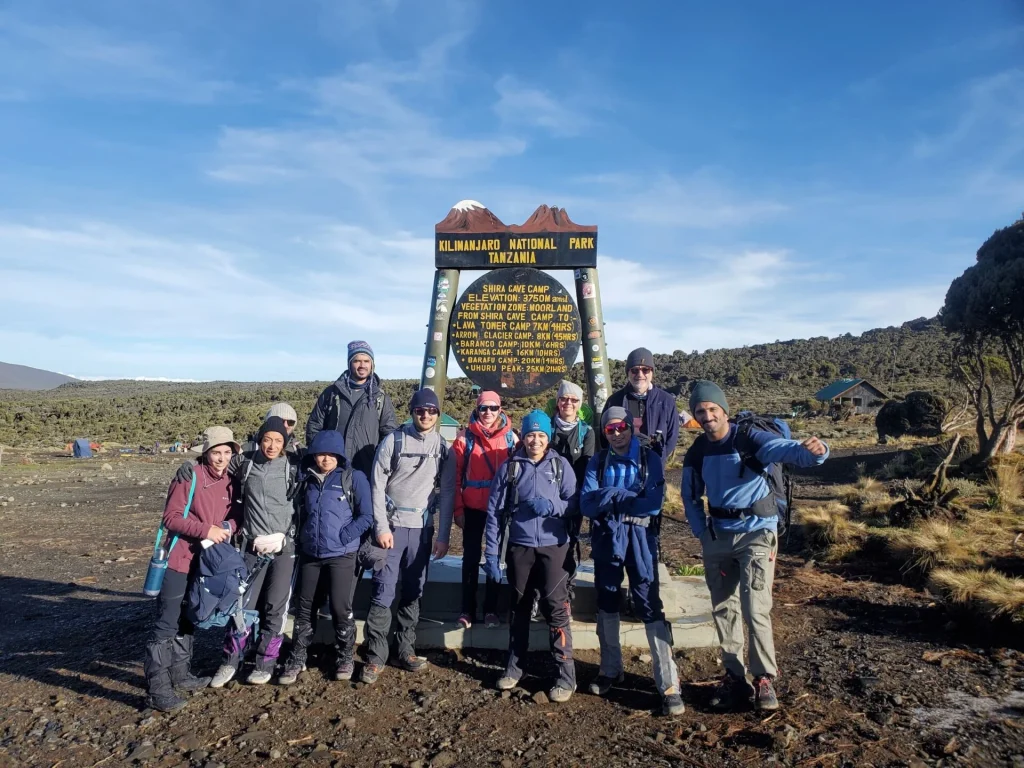
It is one of the most difficult routes, but also the most beautiful. This track climbs on the southwest side of the mountain through the forest. Then it joins the Shira track (Shira Route and Lemosho Route) from the Shira refuge (3,800 m) from the summit, the descent is via the Mweka track. Count 7 days and 6 nights in total to climb via this route.
The Lemosho Route
Geographically, it is the most scenic and popular track along Kilimanjaro mountain. The difference in level is so great. Between the starting point and the point of arrival. From one campsite to another. That is why most climbers prefer to take it since it acclimatizes itself compared to other routes.
The Shira Route
The longest and least used track. The first part of the track is done in an all-terrain vehicle. Few hikers venture there. The walk begins at Londorossi Gate, on the western side of the mountain.
Conclusion
The reward, that is to say, the view is not free, you have to pay the price. Real frequent altitude sickness, blisters on the feet, stripping cold, lack of sleep. The “Kili” is earned. Arrange your dream Kilimanjaro adventure with a budget-friendly local tour operator, Kilimanjaro ASAP Contact us for the unique and best adventure tours from Tanzania.
Frequently Asked Questions
What’s the secret to actually enjoying the Kilimanjaro trek?
The biggest secret is to go slow and stay present. Many trekkers rush and end up exhausted or struggling with altitude. Taking your time helps your body adjust and lets you enjoy the scenery. Talk to your guides, take photos, and soak in each moment. When you stop focusing only on the summit, the whole journey becomes more enjoyable.
How can I improve my chances of reaching the summit?
Choose a longer route that gives you more time to acclimatize. Routes that take 7, 8 days have much higher success rates than shorter ones. Listen carefully to your guides, they know exactly how to pace the climb. Stay hydrated, eat even when you don’t feel hungry, and get as much rest as possible. Small habits like these can make a big difference on summit day.
What should I do to stay comfortable during the trek?
Comfort comes down to good gear and smart habits. Dress in layers so you can adjust to changing temperatures throughout the day. Keep your daypack light but carry essentials like water, snacks, and a rain jacket. Wet wipes and a small towel can make you feel surprisingly refreshed at camp. Little comforts go a long way when you’re on the mountain for several days.
How do I handle altitude and fatigue on the mountain?
Altitude affects everyone differently, so it’s important to listen to your body. If you feel unwell, tell your guide right away instead of pushing through it. Drinking lots of water and walking slowly can help reduce symptoms. Taking breaks and breathing steadily also makes the climb easier. Remember, it’s not a race, your goal is to reach the top safely.
What makes the Kilimanjaro experience truly unforgettable?
It’s not just the summit, it’s everything along the way. The changing landscapes, the friendships with your crew, and the quiet moments on the trail all add up. Watching the sunrise near the top is something you’ll never forget. Sharing the journey with others makes it even more special. In the end, it’s the experience as a whole that stays with you long after you leave the mountain.
Still have questions?
Our local safari experts are happy to help you plan the perfect African safari.