
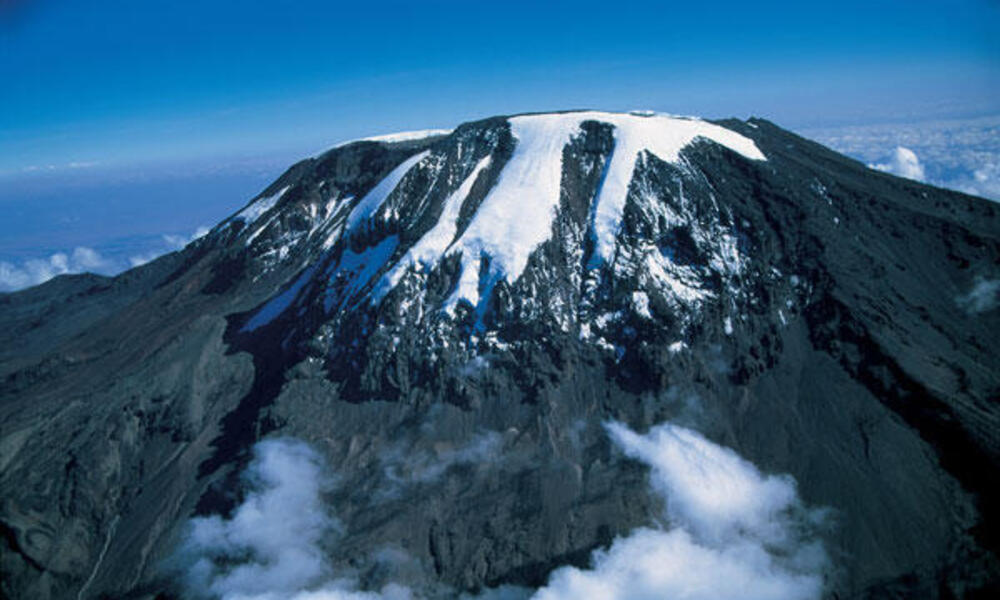
Located just 3° south of the equator, Kilimanjaro’s snow-topped flat top, shimmers in the blue sky, towering over the surrounding plains. It is easily the most recognisable landmark in East Africa. Grand and majestic, it looks “as wide as all the world, great, high, and amazing white in the sun” as the famous author Ernest Hemingway had described it. Kilimanjaro, rising to 5895 metres (19,340ft) is the highest freestanding mountain in the world (compare with nearby Moshi town with an elevation of 900m), the highest summit in Africa and the highest mountain in the world that can be climbed without technical equipment and techniques. This makes many average people want to attempt this feat. Conquering Mt. Kilimanjaro is mostly a matter of fitness and determination mixed in with how well your body adjusts to the high altitude. At the summit, the oxygen content is only half of what it is at sea-level. Most climbers will suffer some symptoms of Acute Mountain Sickness (AMS). Some of the most fit athletes in the world have failed in their attempt to climb the mountain due to AMS while many far less fit have succeeded in their attempt. Our staff has gone through extensive and continual training in recognising signs of AMS and knowing what decisions to make in the climber’s best interest. Your health will be expertly monitored along the way. By listening to your guides and heeding their advice, you will have the greatest opportunity for a successful climb. You do need to realise that in some cases your guide may tells you that you should not continue the climb. We are prepared to care for some in your group who need to return before summiting while still being able to lead the others to the top.
A Kilimanjaro climb can be accomplished in as few as 5 days but taking longer leads to a higher success rate. Over a period of a few days, you will pass through several climate zones, from equatorial rain forests surrounded by banana and coffee plantations to near arctic conditions. This makes packing the right layers vital. Make sure you follow our packing list. Note that all items can be rented locally. It is strongly recommended that you arrive in Tanzania allowing an extra day or two so you can recover from jet lag, get a chance to enjoy the local culture and also as a precaution for delayed/lost luggage. The staff at Kilimanjaro ASAP can arrange for some local sightseeing tours during extra days.
At higher altitudes, your desire to eat may diminish and your stomach may be upset by some foods. Yet, the climb consumes a large amount of calories and especially on summit day, needs a good supply of energy. Our cooks recognise this and are experts at preparing meals accordingly. Kilimanjaro ASAP can also prepare special diets (such as vegetarian, etc) given notice well before the start of the trip. We can even prepare special celebrations such as birthday cakes during the trip (with notice before the climb).


