When it comes to an Alternate Route to the summit, if your reason for climbing Kili is truly to test the boundaries of your own ability, then the Umbwe Route is without a doubt the way to go. As the most challenging route up the mountain, Umbwe is definitely not for the faint hearted, and is generally only suggested for those individuals who have prior climbing experience.
The Umbwe Trail begins at the Umbwe Gate in the Kilimanjaro National Park at an altitude of approximately 4593 feet. Due to the fact that the path is typically used as a decent path only, it is incredibly sheer right from the start and becomes increasingly steeper as one ascends. For this reason it is recommended that an ascent via the Umbwe Route take a minimum of 7 days and incorporate at least one extra day for Acclimatisation.
The first day of hiking sees walkers transcending through the canopied Rain Forest near the base of the mountain for approximately 6 hours before reaching the first campsite. The trail is a tough one which requires hikers to maintain a rather intense level of concentration so as to avoid tripping over the many roots and stumps which are scattered along the way. The campsite is situated in the vicinity of the Umbwe Cave, the first of many impressive caves located along the Route.
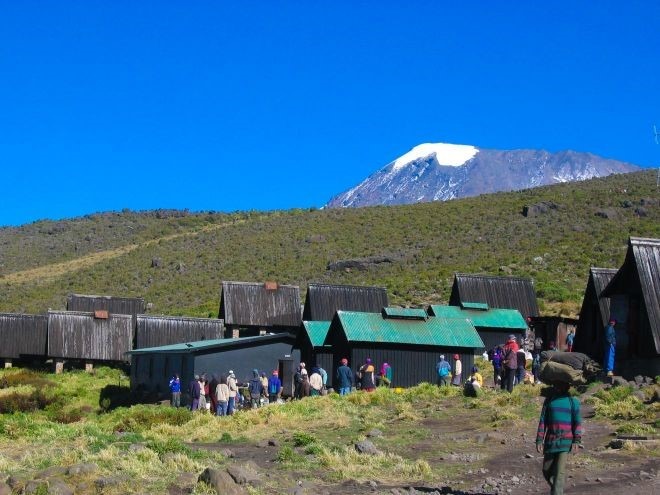
On the second day, hikers will leave the enclosure of the rainforest behind and ascend over 3000 feet to the Barranco Camp which lies in the Great Barranco Valley. Situated just below the Western Breach, this camp provides spectacular views of both the sloping landscape below as well as the snowy peak above.
From this point onwards the Umbwe Route typically follows the Machame Trail up the mountain, incorporating Barafu Camp, Stella Point, and with any luck finally Uhuru Peak. Alternatively, hikers may elect to attempt the more challenging albeit shorter Western Breach option via the Arrow Glacier. Both routes descend via the rolling moorlands of the Mweka Route and exit through the Mweka Gate at an altitude of 6496 feet.
Frequently Asked Questions
Why is the Umbwe Route considered the hardest route on Kilimanjaro?
The Umbwe Route is often called the toughest way to climb Mount Kilimanjaro because it is very steep and has a rapid ascent profile. Trekkers gain altitude quickly, which gives the body less time to adjust. This increases the difficulty both physically and mentally throughout the climb. The trail is direct and demanding, with fewer gradual sections compared to other routes. Because of these factors, it is usually recommended for experienced hikers.
How long does it take to complete the Umbwe Route?
Most climbers complete the Umbwe Route in about five to seven days. The shorter duration makes it appealing to those with limited time, but it also adds to the challenge. Faster ascents can increase the risk of altitude sickness if not managed carefully. Some itineraries add extra days to improve acclimatization and safety. Choosing a slightly longer schedule can make a big difference in your chances of success.
What kind of scenery can you expect on the Umbwe Route?
The Umbwe Route offers beautiful and dramatic scenery despite its difficulty. It begins in dense rainforest, where you may hear birds and see unique plant life. As you climb higher, the landscape changes into moorland and then alpine desert. The views become more open and striking as you approach higher elevations. The route eventually joins the Machame Route, where you continue toward the summit.
Is the Umbwe Route crowded with climbers?
The Umbwe Route is one of the least crowded routes on Mount Kilimanjaro. Because of its steep and demanding nature, fewer people choose it compared to more gradual routes. This gives trekkers a sense of solitude and a more personal experience on the mountain. You can often hike for long stretches without seeing many other groups. For those who enjoy quiet trails, this route can be very appealing.
Who should consider climbing Kilimanjaro via the Umbwe Route?
The Umbwe Route is best suited for experienced trekkers who are comfortable with steep climbs and high altitudes. It is ideal for those looking for a challenging and less crowded path to the summit. Climbers should be physically fit and mentally prepared for demanding conditions. Proper preparation, including training and acclimatization, is essential for success. For beginners, other routes with a slower ascent are usually a better choice.
Still have questions?
Our local safari experts are happy to help you plan the perfect African safari.