
Table of Contents
Ascending Mt Kilimanjaro involves climbing to an elevation which is some 16 000 feet above sea level. The amount of time your body has to adjust to this change will depend on the route which you have elected to travel. This can range from anywhere between five to ten days. For obvious reasons, the slower the ascent the easier it will be to acclimatise. Unfortunately, most Kilimanjaro tour operators attempt to work within the shortest time frame possible so as to save on cost. This often results in unpleasant side effects for those making the climb, including AMS.
The effects of altitude differ from person to person and are virtually impossible to predict. Strangely enough, it is sometimes the Fittest individuals that end up experiencing the severest of symptoms. For most individuals, reduced oxygen levels in the atmosphere begin to take their toll at around 11 500 feet (3500 meters). There is no hard and fast rule however, and the exact levels at which Symptoms begin to manifest themselves, as well as the severity with which they occur vary greatly from one individual to the next.
The human body responds to Altitude and oxygen deprivation in a number of ways. In order to create more red blood cells, the body’s ‘oxygen carriers’, the blood will get rid of any surplus fluid. This occurs through increased urination and exhalation of water vapour. The heart begins to beat faster so as to distribute oxygen more effectively around the body. Breathing becomes deeper and quicker so as to facilitate the maximum inhalation of oxygen possible. In some cases, individuals will have difficulty sleeping and will experience difficulty breathing at night and unusual dreams.
Although it is seen as acceptable for healthy individuals to travel directly from sea level to 11 500 feet, anything higher is considered reckless. Experts advise that above 3500 meters, ascent should be incredibly gradual and should not exceed more than 300 meters per day. Most Routes to the summit of Kilimanjaro require an ascent of at least 500 meters per day, putting pressure on the body to acclimatise at an incredibly rapid rate.
In order to assist the body in acclimatising effectively, climbers should try to breathe slowly and deeply at all times. They should also ensure that they obtain sufficient sleep and consume plenty of fluids. Consuming Carbohydrates early in the morning will also aid in keeping energy levels high and altitude sickness at bay.
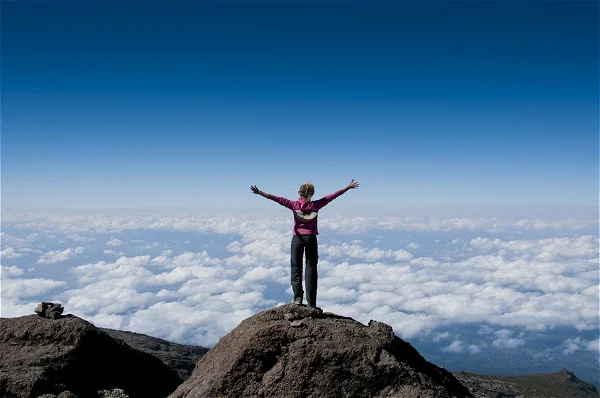
Mild Altitude Sickness – Climbing Mt. Kilimanjaro
Altitude Sickness, and in particular Acute Mountain Sickness (AMS) is a condition that presents itself when Acclimatisation lags behind ascent. In effect, there is no way to tell if a person will in fact suffer this illness during their ascent of Kilimanjaro. Unlike many other medical conditions, factors such as Fitness and Medication have no bearing on whether or not an individual will succumb to AMS.
Whilst there is no way to prevent AMS from occurring, research suggests that certain factors do make a person less likely to develop symptoms of the condition. Gender appears to play an important role, with females being far less susceptible to AMS than their male counterparts. Conversely, having healthy lungs and being a seasoned climber appear to have no effect on the reduction of susceptibility.
In its mildest form, AMS first presents itself as a headache accompanied by either insomnia, nausea, or just a general feeling of lethargy. Although not the most pleasant of experiences, mild AMS will not have any serious consequences if treated correctly.
Travel sickness tablets such as Stugeron and Avomine will help with nausea, as will an oxygen mask. Ginger has also been proven to be a fast acting natural alternative in the treatment of nausea. Similarly, a good dose of Neurofin or Aspirin should be enough to cure climbers of their headache. With sufficient rest and no further ascent, symptoms should subside in a couple of hours.
Acute Mountain Illness – Climbing Kilimanjaro
Acute Mountain Sickness usually remains Mild until the last few days of the journey when it can become moderate to incredibly severe in some individuals. Moderate AMS symptoms include a shortage of breath even when stationary, vomiting and a severe headache that simply does not subside even with the aid of medication. The only manner in which to successfully treat this form of AMS is to make no further ascent, or possibly descend a couple of meters. Unfortunately, due to time frames this is unlikely to be an option on Kilimanjaro. Many climbers fail to reach the summit as a result of simply feeling too ill to continue their journey.
Severe AMS occurs in approximately 2% of climbers, usually at an altitude of between 4000 and 5000 meters. Symptoms should be treated immediately and include, among others confusion, a staggering gait and loss of co-ordination. Following decent, sufferers should immediately be given oxygen and a combination of drugs including Diamox, Nifedipine and Dexamethasone. Failure to descend and seek treatment will result in a coma almost certainly followed by death.
Provided that individuals are aware of the symptoms of AMS and treat them swiftly, the condition poses no serious threat. When uncertain, climbers should adhere to the following three rules:
• If AMS is even suspected, do not under any circumstances ascend any further.
• Never leave a person suspected of suffering from AMS alone. They may begin to struggle to breathe and have a panic attack, or alternatively develop severe symptoms and need help in descending.
• If symptoms worsen, descend immediately
If all else fails, the golden rule of gaining elevation slowly and descending promptly if one is ill is the simplest and most effective manner in which to ensure a safe and catastrophe free expedition.
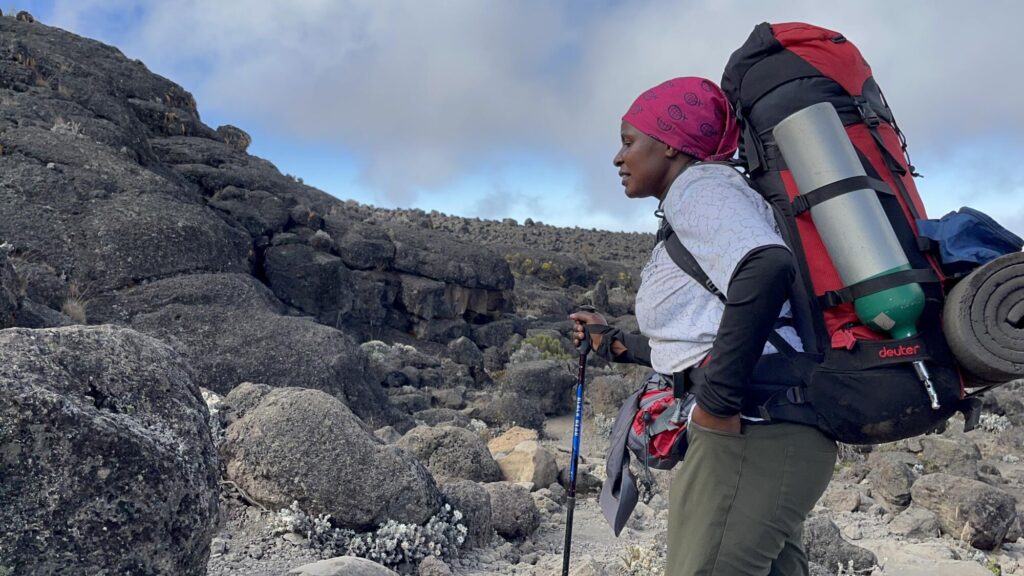
Edema – Pulmonary, Peripheral and Cerebral Edema
Edema is one of the potentially fatal complications that runs hand in hand with Severe AMS. However, provided that climbers are aware of the effects that Altitude may be having on their bodies, they should never meet complications such as these during their ascent of Kilimanjaro.
Causes Of Edema
Two of the rarest complications to be associated with severe AMS are High Altitude Cerebral and Pulmonary Edema, or Oedema as it is called in Britain. Edema is quite simply a medical term for swelling, and in these particular cases refers to engorgement in the lungs and brain. Symptoms of Pulmonary Oedema include shortness of breath, a nagging cough, a fever and sometimes a gurgling sound in the lungs. Climbers suffering from Pulmonary Oedema are in need of emergency medical treatment and should be evacuated to lower altitudes immediately.
Cerebral Oedema occurs as a result of fluid accumulating in the tissue of the brain which in turn causes the blood vessels within the brain to swell. Those suffering from this condition will experience confusion, hallucinations, drowsiness, and occasionally vomiting. Like Pulmonary Oedema, Cerebral Oedema needs to be treated correctly and swiftly. If sufferers are not immediately evacuated to a lower altitude and given the right combination of Medication, the condition may very well prove deadly.
Other less serious complications arising due to lack of Acclimatisation include Retinal Haemorrhages and Peripheral Oedema. Retinal Haemorrhages occur when minuscule blisters form in the rear quarters of the eye and eventually burst, causing haemorrhaging behind the retina. The condition is relatively harmless, seldom painful and reasonably simple to treat. Thus it is often not even detected by an individual until long after descent. In extreme cases it may hinder a climber’s ability to focus correctly, in which cases a swift descent is strongly advised.
Peripheral Oedema is a condition that results from an excess of fluid in the face, arms, legs and extremities. Symptoms of this type of Edema tend to appear predominantly in female climbers, and disappear over time. In order to minimise discomfort, jewellery and tight clothing should be removed prior to ascending any further.
Other effects of altitude include nosebleeds, dry eyes, fainting and problems with digestion. Although unpleasant, none of these conditions pose any serious threat whatsoever. In all cases however, the golden rule of dealing with altitude applies: remain aware of your body at all times and the moment symptoms worsen or become Severe, cease ascent immediately.
Altitude Sickness Medication – Information On side Effect
Medical Information on Altitude Sickness Medication is incredibly extensive and easily obtainable. Researchers are divided in their views as to the effectiveness of drugs in the treatment of AMS. Some experts feel that drugs such as acetazolamide, commonly known as Diamox, are incredibly useful in the prevention of symptoms of AMS. Conversely, other are of the opinion that the drugs wreak havoc on the body’s natural cycles and in fact ultimately end up doing more harm than good.
It cannot be disputed that the effects of using Diamox or a similar prophylactic drug when attempting a moderately rapid ascent are indeed positive. Diamox inhibits the conversion of carbon dioxide and thus ensures that the acidity level in one’s blood remains constant. Fluid levels in the body therefore remain regular, often preventing the onset of AMS. The drug also aids in the reduction of sporadic breathing, a condition which causes panic attacks in many climbers at high altitudes.
Before becoming too enthusiastic about making use of Diamox however, climbers should be careful to consider the side effects of the drug. Aside from increased urination, Diamox has also been known to cause nausea, drowsiness, rashes, serious allergic reactions and the inability to experience the ‘fizz’ in carbonated beverages. Tingling and numbness in the extremities is also a well-known side effect of the drug, although a number of people have in fact reported finding these sensations quite pleasant.
Aside from side-effects another disadvantage of making use of the drug is that while it does relieve the symptoms of AMS, in reality it still does not inhibit them from worsening should individuals fail to cease their ascent. Due to the fact that its use may disguise the Symptoms Of The Condition, many climbers may be prompted to continue with their ascent under the false assumption that they are acclimatising successfully. This can lead to the development of potentially life threatening complications such as Pulmonary and Cerebral Edema.
Reactions to the drug differ greatly from person to person, as do dosage requirements. Some climbers find it more effective to begin with lower doses a few days prior to ascent, whilst others find it sufficient to ingest higher doses one day prior to ascent only. Ultimately it remains a question of experimenting with what works most effectively in each and every situation. It should however be noted that in certain individual cases, the drug has been known to have no effect on the prevention of AMS whatsoever.
Other effects of altitude include nosebleeds, dry eyes, fainting and problems with digestion. Although unpleasant, none of these conditions pose any serious threat whatsoever. In all cases however, the golden rule of dealing with altitude applies: remain aware of your body at all times and the moment symptoms worsen or become unbearable, cease ascent immediately.
Frequently Asked Questions
How does altitude affect your body on Kilimanjaro?
Climbing Mount Kilimanjaro exposes your body to high altitudes, which means less oxygen in the air. Your body responds by breathing faster and increasing heart rate to get enough oxygen. Some people experience headaches, nausea, or dizziness as a result of altitude. These are signs that your body is adjusting, but severe altitude sickness can be dangerous. Proper acclimatization and a gradual climb help your body cope more effectively.
Why do climbers feel tired quickly on Kilimanjaro?
The reduced oxygen at higher elevations makes your muscles work harder, so fatigue sets in faster than at lower altitudes. Carrying your backpack and hiking steep slopes adds to the strain. Even fit climbers notice that their pace slows and recovery takes longer. Staying hydrated, eating well, and pacing yourself can help reduce extreme tiredness. Taking rest breaks is essential for both physical and mental stamina.
Can Kilimanjaro affect your sleep?
Yes, altitude and physical exertion can make sleeping more difficult on the mountain. Some climbers experience restless nights, frequent waking, or shortness of breath while sleeping. Cold temperatures can also interfere with rest if your sleeping bag is not warm enough. Proper acclimatization and a good sleeping system improve sleep quality. Adequate rest is important for energy and summit success.
How does your body adapt to high altitude?
Your body adapts to high altitude by producing more red blood cells to carry oxygen more efficiently. It also increases breathing rate and changes blood flow to vital organs. These changes help you survive and function in low, oxygen conditions. Acclimatization days and a gradual ascent allow these adaptations to happen safely. The better your body adjusts, the higher your chance of reaching the summit.
What are the risks of not acclimatizing properly?
Failing to acclimatize can lead to altitude sickness, which may include headaches, nausea, vomiting, and shortness of breath. In severe cases, it can cause life, threatening conditions like high, altitude pulmonary or cerebral edema. Rapid ascents increase the risk because your body doesn’t have time to adjust. Climbers are advised to follow a slow pace and take rest days as needed. Proper acclimatization is critical for both safety and enjoyment of the climb.
Still have questions?
Our local safari experts are happy to help you plan the perfect African safari.


