
Table of Contents
There are several East African Trekking adventures that you can plan for your next active holiday in Africa. Few travellers know little about available trekking and trails adventure that can be found in Tanzania, Kenya and Uganda, many of them will hike Mt Kilimanjaro and Mt Kenya which now have challenges of high traffic from hikers especially from June to October.
East Africa provides the best trekking experience that any adventurous will wish for and have different options for your vacation but the main question remains on how to plan and who to take you there, you will need to plan in advance and research different outfitters who can prepare and arrange the treks for you, but to give you an idea of the available trails, below are the five of the best trekking adventure in East Africa.
Mountain Elgon Trekking
This is the most recently created of Uganda’s national parks and encompasses the upper regions of Mt Elgon up to the Kenyan border. The mountain (Wagagai is the highest peak at 4321 metres) is said to have one of the largest surface areas of any extinct volcano in the world and is peppered with cliffs, caves, and gorges and waterfalls. The views from the higher reaches across the wide plains are some of the most spectacular in Uganda.
The upper slopes are clothed in tropical montane forest, while above this lies a vast tract of alpine moorland which extends over the caldera, the collapsed crater which covers some 40 sq km at the top of the mountain. Sipi Falls, north of Mbale in the foothills of the mountain, has to be the most beautiful and romantic waterfall in the whole of Uganda, regardless of what you might think about Murchison Falls. Don’t miss it, even if you don’t trek up the mountain. The best time to climb the mountain is from December to March, but the seasons are unpredictable and it can rain at any time.
The national park is being supervised by a very enthusiastic and dedicated bunch of people under the umbrella of the Mt Elgon Conservation & Development Project. The idea is to promote conservation and rehabilitation of the flora & fauna of Mt Elgon, encourage sustainable development in the communities surrounding the park, maintain the quality and quantity of the water flow to all areas affected by the forest, and develop the long-term tourism potential of the mountain. In terms of overseas visitors, this comes down to trekking up the mountain, and to this end, they’ve already produced a leaflet that describes the possibilities.
Mount Rwenzori Trekking
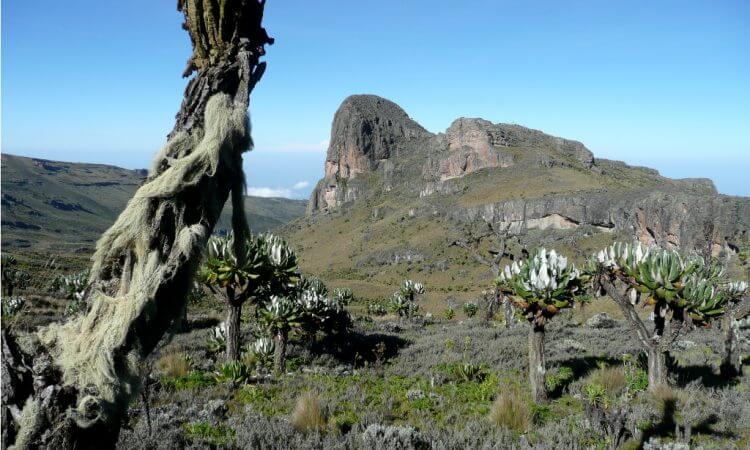
The fabled, mist-covered Ruwenzori Mountains on Uganda’s western border with Zaire are almost as popular with travellers as Kilimanjaro and Mt Kenya but definitely harder to climb. They have a well-deserved reputation for being very wet at times.
This was best summed up by a comment on the wall of Bujuku hut: “Jesus came here to learn how to walk on water”. After five days, anyone could do it.’ Be prepared and take warm, waterproof clothing. The mountain range, which is not volcanic, stretches for about 100 km. At its centre are several mountains which are permanently snow and glacier-covered: Mt Speke (Vittorio Emmanuele is its highest peak at 4890 metres); Mt Baker (Edward is its highest peak at 4843 metres); Mt Gessi (Iolanda, 4715 metres); Mt Emin (4791 metres) and Mt Luigi di Savoia (4627 metres). The three highest peaks in the range are Margherita (5109 metres), Alexandra (5091 metres) and Albert (5087), all on Mt Stanley.
The climbing varies from the easy ascent of Mt Speke, which requires only limited mountain experience, to the harder routes on Stanley and Baker, which should not be attempted unless you are of alpine standard. Climb to the top only if you want to otherwise, the guides will be happy to take you around the lower reaches.
Five days is the absolute minimum for a visit to the range, but seven or eight days is better, with one or two days at the top huts. The best times to climb are from late December to the end of February and mid-June to mid-August, when there’s little rain. Even at these times, the higher reaches are often enveloped in mist, though this generally clears for a short time each day.
Mount Meru Trekking
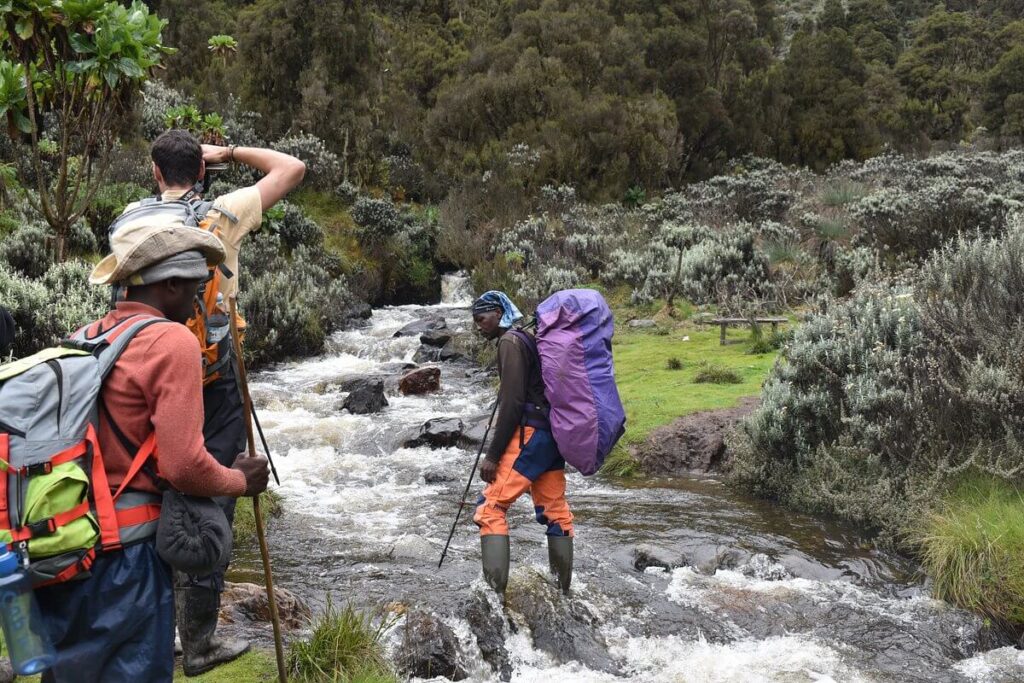
The climb up Mount Meru possibly rivals that up Kilimanjaro. There are numerous animals and changes of vegetation to be seen along the way. Parts of the climb are very steep, particularly along with the saddle, but the views are absolutely stunning.
In the dry season, jogging shoes are sufficient, but if there is a possibility of rain, you are advised to have a stout pair of boots. As for Kilimanjaro, bring along plenty of warm clothing. Temperatures drop to below zero at night upon the saddle and around the peak, and there is often snow there, too. You will have your professional guide as well as porters who are get paid wages as for porters and guides on Kilimanjaro.
It is obvious from the walking time mentioned that Mt Meru can be scaled in just 3 days, which makes an option if your time is limited but it does limit what you will see on the way and you need to be fairly fit. It may not be Kilimanjaro, but it is not that small either.
Mount Kenya Trekking
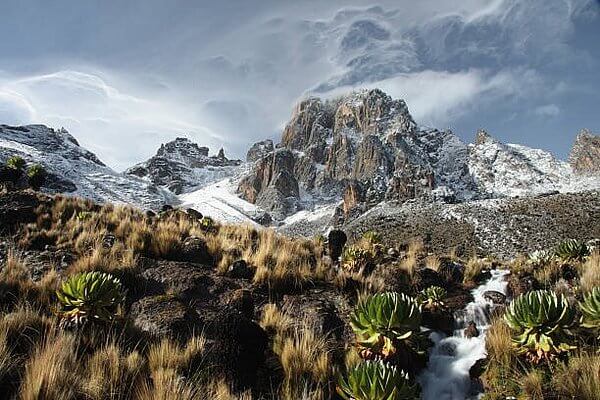
Although a distinctly separate massif from the Aberdares, Mount Kenya also forms part of the central highlands. Africa’s second-highest mountain at 5199 metres, its gleaming and eroded snow-covered peaks can be seen for miles until the late-morning clouds obscure the view.
Its lower slopes, like those of the Aberdares, are intensively cultivated by the Kikuyu and the closely related Embu and Meru peoples, along with the descendants of the White settlers who grow mainly wheat on the grassy and largely treeless plains on the northern side.
So vast is this mountain that it’s not hard to understand why the Kikuyu deified it, why their houses are built with the doors facing the peak and why it was probably never scaled until the arrival of European explorers.
These days it’s every traveller’s dream to get to the top and take home with them a memory that money cannot buy. The mountain is circled by an excellent tarmac road along which are the area’s main towns — Naro Moru, Nanyuki, Meru and Embu, along with Isiolo at the extreme north-eastern end. We deal first with the towns along this road and then with Mt Kenya itself since the towns are the jumping-off points for climbing the mountain.
Mount Kilimanjaro Trekking
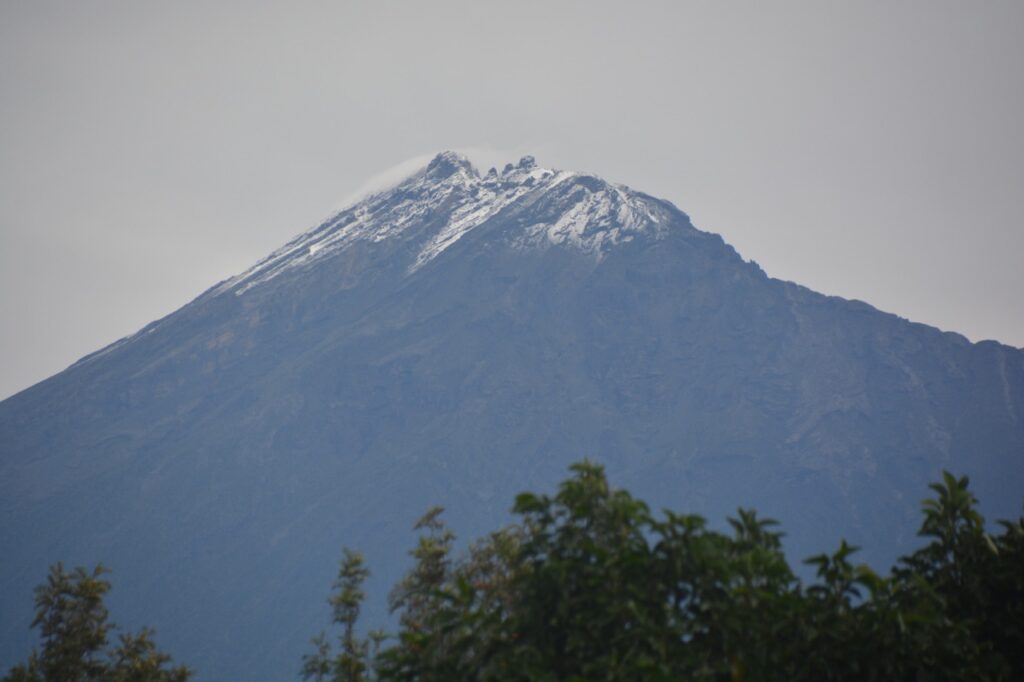
An almost perfectly shaped volcano that rises sheer from the plains, Mount Kilimanjaro is one of the African continent’s most magnificent sights. Snowcapped and not yet extinct, at 5895 metres it is the highest peak in Africa.
From cultivated farmland on the lower levels, it rises through lush rainforest onto the alpine meadow and finally across a barren lunar landscape to the summit, Mt Kilimanjaro is truly the best African Adventure. It is a traveller’s dream to scale the summit, watch the dawn break and gazes out over vast expanses to East African bushland. Who would come to East Africa and not climb Kilimanjaro? Certainly not many.
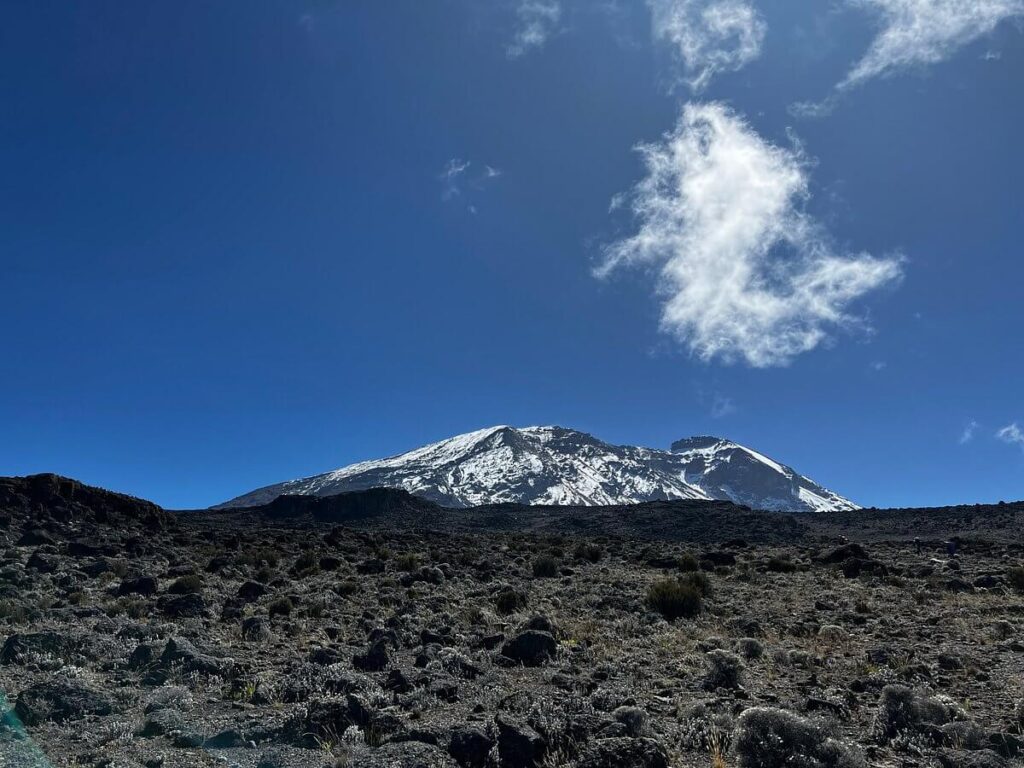
Most trekking adventures in East Africa need at least a minimum of 3 days to complete the hiking while Kilimanjaro and Rwenzori mountains need at least a minimum of 7 days for the best hiking experience and acclimatization process.
Even though almost these mountains are located in the equator area but still they experience snow and always become very cold during a night which goes down to -10c which means you will need proper clothing and equipment during the climb. You can always reach us in case you will have any question regarding the trekking adventure in East Africa.
Frequently Asked Questions
What are the must, do treks in East Africa?
East Africa offers a range of unforgettable trekking experiences. Top treks include climbing Mount Kilimanjaro, hiking the Rwenzori Mountains, exploring the lush Mount Kenya trails, trekking in the dramatic Simien Mountains, and hiking the volcanic landscapes of Mount Elgon. Each offers unique scenery, from snow, capped peaks to deep valleys and wildlife, rich forests. These treks vary in difficulty, so there’s something for beginners and seasoned hikers alike. Choosing a trek depends on your fitness level, adventure style, and how much time you have.
How physically challenging are these treks?
Challenges range from moderate hikes to strenuous multi, day climbs. Kilimanjaro and Mount Kenya involve long days and high altitudes, requiring endurance and acclimatization. The Rwenzori Mountains and Simien Mountains are more rugged, with steep paths and rocky terrain. Some treks, like Mount Elgon, are gentler but still demand stamina for longer routes. Proper preparation, training, and pacing make these adventures achievable for most fit travelers.
What kind of wildlife can you see on these hikes?
East African treks are not just about mountains, they’re also wildlife experiences. On Mount Kenya and Kilimanjaro, you may spot elephants, buffalo, or monkeys in the lower forests. The Simien Mountains are famous for the rare Ethiopian wolf and gelada baboons. Rwenzori’s forests are home to forest duikers, colobus monkeys, and countless bird species. Each trek combines stunning landscapes with the thrill of seeing wildlife in its natural habitat.
When is the best time to go trekking in East Africa?
Timing depends on the region and rainfall patterns. For Kilimanjaro and Mount Kenya, the dry seasons from January to March and June to October are ideal. Rwenzori and Mount Elgon are best trekked during drier months, usually December to February or June to September. Simien Mountains are most accessible from October to March. Planning around dry seasons ensures safer trails, better views, and more enjoyable hikes.
Do you need guides for these treks?
Yes, hiring experienced guides is highly recommended, and sometimes mandatory. Guides ensure safety, help with navigation, and provide local knowledge about wildlife, plants, and culture. Many treks also require porters to carry gear and set up camps, especially on multi, day climbs. Using guides supports local communities and enhances the overall experience. Even seasoned hikers often rely on guides to make the adventure smoother and more memorable.
Still have questions?
Our local safari experts are happy to help you plan the perfect African safari.


