
Table of Contents
Soaring high above the plains and foot-hills, snow-capped Mount Kenya thrusts over 5 km into the sky, silently standing guard over the beautiful east African Rift Valley. The landscape surrounding the mountain is so impressive and beautiful that the local people believe it to be the home of their God, Ngai, and reverently call it the Mountain of Brightness. Mount Kenya National Park surrounds this massif and is home to a wide variety of wildlife and some of the most amazing plant life in Kenya, all of which you can discover for yourself as you come with Kilimanjaro ASAP to trek Africa’s second-tallest mountain.
Mount Kenya is an ancient extinct volcano, and is believed to have reached over 6,500mt during its active period, around 3.5 million years ago. Today, at 5,100mt, Mount Kenya is the tallest mountain in Kenya and the second tallest in Africa after Mount Kilimanjaro in Tanzania. This very beautiful mountain is special in several different ways! Firstly, it is the only snow-capped mountain that straddles the Equator, and secondly, Mount Kenya encompasses several different eco-systems and habitats ranging from Afro-Alpine at the higher altitudes, to semi-arid savannah grasslands in the low-lands. Mount Kenya National Park was established to protect this national treasure, which has been recognised as a UNESCO World Heritage as well as a World Biosphere Reserve.
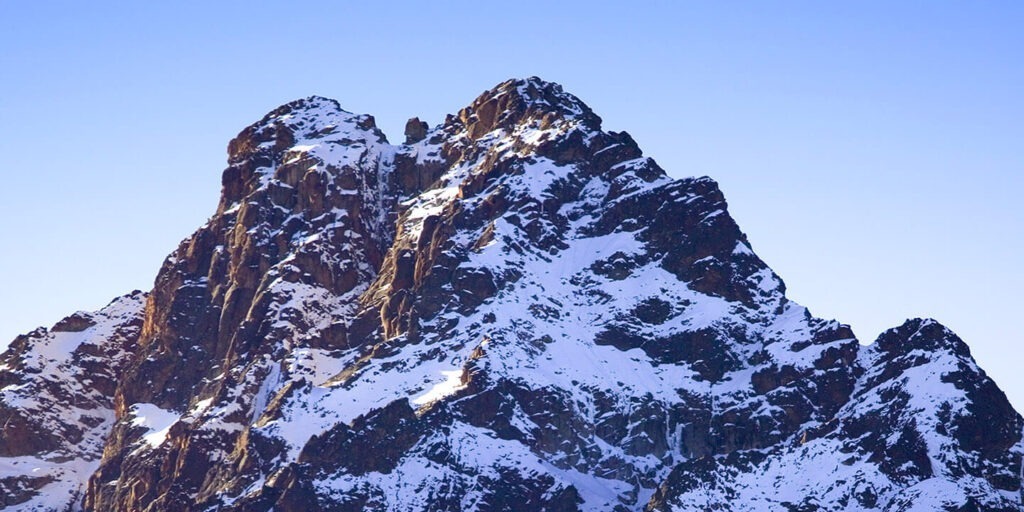
At the end of the 19th Century Mount Kenya had 18 glaciers, of which only 11 remain today – a sad reminder of the ravages of climate change. Today there is very little snow-fall to help the remaining glaciers recover, and climatologists estimated that by 2050 they will all have disappeared. (This fact alone should have you packing your bags for a visit right now!).
Although the prime attraction of the Mount Kenya National Park is exploring the mountain itself, there is also a good selection of wildlife to see along the way and the birding is great. Pack some comfortable hiking boots and set off on foot to discover the wonders of this national gem.
Have you been to Mount Kenya National Park?
Write A Comment Below
What to Do in Mount Kenya National Park
- Trekking and hiking
- Wildlife viewing
- Forest and Moorland walks
- Trout fishing
- Mountain Climbing
- Helicopter excursions
Trekking and Hiking
It’s all about the mountain!! Although there is wonderful flora and fauna to observe, it is the beauty and diversity of the landscape in Mount Kenya National Park that draws throngs of people each year. The main pursuit is hiking or trekking through the ever-changing landscape, dotted with gorges, cliffs, waterfalls, beautiful glacial lakes and alpine vegetation – a rarity in Africa!
It would be wise to carefully consider which of the several trekking routes is right for you. If you attempt the ascent too rapidly you run the risk of developing altitude sickness which is not only most unpleasant, but will also spell the end of your adventure almost before it begins! Using a slow and steady ascent makes reaching Point Lenana an achievable goal for any reasonably fit hiker, and the added bonus is that you will have the necessary time to enjoy the stunning scenery.
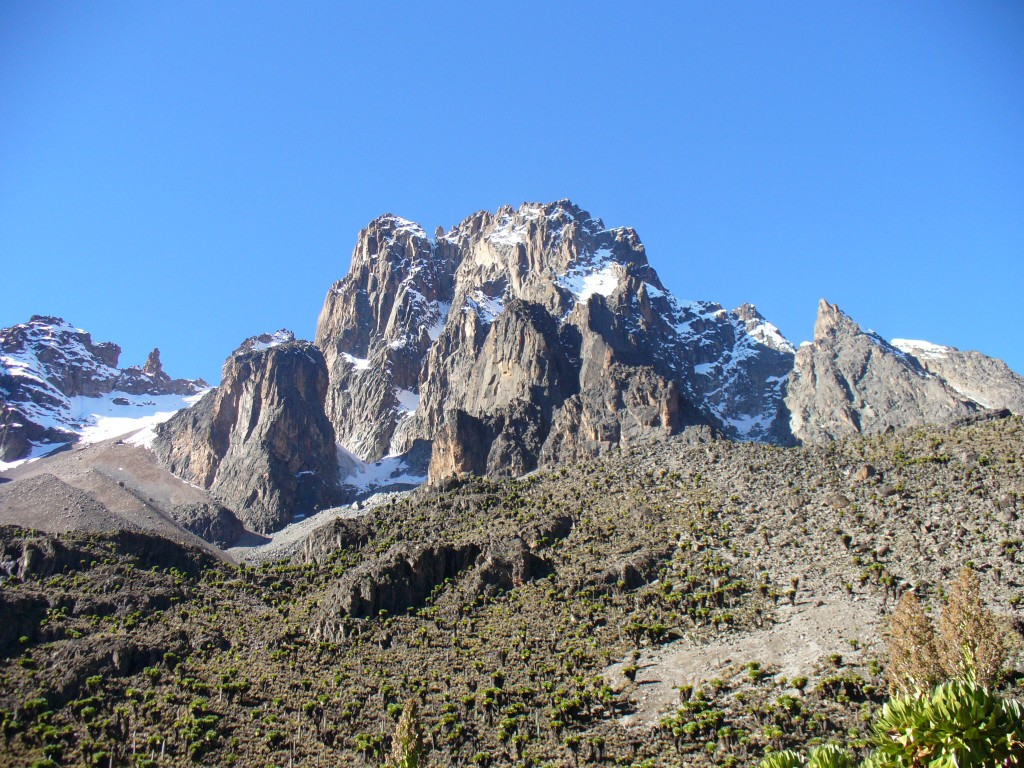
At a very respectable 4,985 mt, Point Lenana is the highest of the Mount Kenya peaks that you can reach without resorting to technical climbing. From this rocky and usually snow-covered vantage point you will have wonderful views of the glaciers and the two impressive rock towers that form the highest peaks, namely Batian and Nelion.
Note: Recent warming and the recession of the Lewis Glacier means that at certain times of year the final ascent to Point Lenana can require a fairly perilous scramble across a large and stony ice-field, and some technical gear (crampons and ice-axe) could be required! Please check conditions before setting out.)
Chogoria is probably the most scenic of the routes, offering amazing views down sheer cliffs to the Gorges Valley and the stunningly lovely Lake Michaelson.
You will be accompanied on your trek by a guide and porter/s and you will sleep in mountain huts or tents. It’s a great adventure or team-building exercise, a test of your resolve, and an excellent opportunity to acclimatize before an assault on Mount Kilimanjaro.
Wildlife Viewing
There is plenty of wildlife to observe in the Mount Kenya National Park, including some rare and endangered species. The lower mountain slopes are covered with dry upland forest, and are rich in wildlife attracted by plentiful water from the streams and springs. The birdlife is also abundant and you can hope to spot many of the 130 species that have been recorded in the park. You do not need to be worried about encountering wild animals during your walk – they will nearly always spot you well in advance and move out of your path. (And your guide is armed for your protection just in case you should need it!).
Fishing
Crystal-clear mountain Trout streams and glacial tarns will attract keen fly-fishermen.
Mountain Climbing
Serious technical climbers will relish the challenge of ascending the two highest peaks, namely Batian (5199) and Nelion (5188). Even the easiest route to both peaks is IV (UIAA grading) and is not to be underestimated! In addition to scaling Batian and Nelion, there are some good shorter climbs on a few of the lesser peaks.
Helicopter Excursions
If your legs are not up to the walking, but you just cannot leave Mount Kenya National Park without exploring the higher altitudes, there is a solution! Take advantage of an amazing helicopter picnic or trout fishing excursion into the park.
What to See in Mount Kenya National Park
- Geological features
- Diverse vegetation zones
- Animals
- Birds
Geology
Mount Kenya is not just a straight up-and- down mountain! This amazing volcanic structure hides some of the most impressive mountain features you will find anywhere in the world. Imposing rock spires, deep and dramatic gorges, bubbling mineral springs, waterfalls, mountain streams and numerous stunning glacial lakes (or tarns) will compete for your attention.
Diverse Vegetation: Because mighty Mount Kenya is so tall, you will pass through several distinct bands of vegetation between the base and the summit. The lower slopes (2000-3000mt) are predominantly forested, and you will first make your way though montane forest, followed by dense bamboo forest, before reaching a thinner upper forest of smaller trees. Above 3000mt the vegetation gradually changes to heath-land and high-altitude Afro-Alpine, characterized by giant senecio, giant lobelia and giant thistle.
Animals
Most of the animals in Mount Kenya National Park live on the forested lower slopes where there is plenty of food and the climate is kinder. There are various species of Monkeys, several antelope including the rare Bongo, Porcupines and Tree-Hyrax. Some of the larger mammals you may come across are Elephant, Buffalo and Giant Hog, while predators are represented by Leopard, Hyena and the occasional Lion. At higher altitudes you may come across the Mount Kenya Hyrax, common Duiker, the Groove-toothed Rat and the Mount Kenya Mole Rat, all of which fulfil an important role in the ecology of the mountain.
Birdlife
Over 130 species of birds have been recorded in the park and you can expect to see Sunbirds, Starlings, and Chats. The raptors include Augur Buzzard, Verreaux’s Eagle and the endangered Lammergeier.
Where to Stay in Mount Kenya National Park
If you decide to trek up Mount Kenya you will either have to camp or stay in one of the several climber’s huts that are dotted along the various trekking routes. These are quite basic, offering bunk-style beds and a place to relax and cook. Some are even more rustic and just provide shelter from the elements. Most have running water. Some of these huts require advance booking while others can be booked at the park gates – this you can leave to your Tour Operator to organize.
There are some comfortable and even luxurious lodges on the lower slopes, and several in the surrounding Aberdare National Park and the private conservancies just beyond the boundaries of the Park. Two of the most popular choices inside Mount Kenya National Park include:
Fairmont Mount Kenya Safari Club
A luxury hotel-style lodge with a country-club atmosphere, the Fairmont offers all the mod cons, including a swimming pool, spa, golf, horse-back riding and lavishly appointed rooms and suites. The hotel offers wildlife viewing excursions to near-by Solio Game Reserve, Ol Pejeta Conservancy and Aberdare National Park.
Serena Mountain Lodge
This timbered, tree-house-styled lodge is an excellent base for exploring the Mount Kenya National Park. The lodge overlooks a waterhole and salt-lick which regularly attracts many animals including sizeable herds of Elephant and Buffalo, which can be viewed from your private balcony or from one of the viewing decks. There is also a hide, reached via an underground tunnel, which gives you a great chance of observing the visiting wildlife up close. The lodge arranges guided forest walks, moorland excursions, bush picnics, fishing and even tree-planting!
How to Get to Mount Kenya National Park
It is easy to reach Mount Kenya National Park by road from Nairobi in about 2 hours. If you prefer to fly in, there are daily scheduled flights from Nairobi Wilson to Nanyuki Airport, which is close by. Flying time is just 35 minutes.
Are you ready to explore the fabulous Mount Kenya National Park with us? Our team of Kenya experts are waiting to plan the perfect Kenya safari holiday for you, incorporating an exhilarating trek up the second highest mountain in Africa. Those glaciers are shrinking every year – make this the year that you get to see them!
Frequently Asked Questions
Why is Mount Kenya called the “Mountain of Brightness”?
The name “Mount Kenya” is believed to come from the Kikuyu word Kirinyaga, which means “place of brightness” or “mountain of light.” This refers to the snow, capped peaks that glisten beautifully under the sun, especially at sunrise and sunset. For locals, the mountain holds deep cultural and spiritual meaning, often associated with blessings and life. The bright glaciers and icy summit once stood out dramatically against the African landscape. Even today, despite shrinking glaciers, the mountain still carries that magical glow that inspired its name. It’s not just a mountain, it’s a symbol of natural beauty and heritage.
What can you expect to see in Mount Kenya National Park?
The park offers an incredible mix of landscapes, from dense forests and bamboo zones to alpine meadows and rocky peaks. As you climb higher, you’ll notice dramatic changes in vegetation and climate. Wildlife is also part of the experience, with animals like elephants, buffalo, monkeys, and unique species like the Mount Kenya hyrax. Bird lovers will enjoy spotting rare and colorful birds along the trails. The scenery becomes more rugged and breathtaking as you approach the peaks. Every level of the mountain feels like entering a completely different world.
Is climbing Mount Kenya suitable for beginners?
Yes, Mount Kenya can be suitable for beginners, but it depends on the route you choose. Some routes, like Sirimon and Naro Moru, are more accessible and don’t require technical climbing skills. However, reaching the highest peaks such as Batian or Nelion requires advanced mountaineering experience. For most visitors, trekking to Point Lenana, the third, highest peak, is a realistic and rewarding goal. It still offers stunning views without the need for ropes or specialized gear. With proper preparation, a guide, and good fitness, beginners can have an amazing experience.
When is the best time to visit Mount Kenya National Park?
The best time to visit is during the dry seasons, typically from January to March and July to October. During these months, the weather is clearer, making trekking safer and more enjoyable. You’ll have better chances of seeing the peaks without cloud cover. Trails are also less muddy, which makes hiking easier. That said, the mountain can be visited year, round, but rainy seasons may bring slippery paths and limited visibility. Planning your trip around the dry months will give you the best overall experience.
What makes Mount Kenya different from other African mountains?
Mount Kenya stands out because of its unique combination of rugged peaks, glaciers, and diverse ecosystems. Unlike Mount Kilimanjaro, which is a single massive volcanic cone, Mount Kenya has jagged peaks that offer a more technical and adventurous climb. It’s also less crowded, giving visitors a more peaceful and intimate trekking experience. The variety of flora and fauna is exceptional, especially the giant lobelias and groundsels found at higher altitudes. Additionally, its cultural significance to local communities adds a deeper layer to the journey. It’s a destination that blends adventure, nature, and tradition in a truly unique way.
Still have questions?
Our local safari experts are happy to help you plan the perfect African safari.


