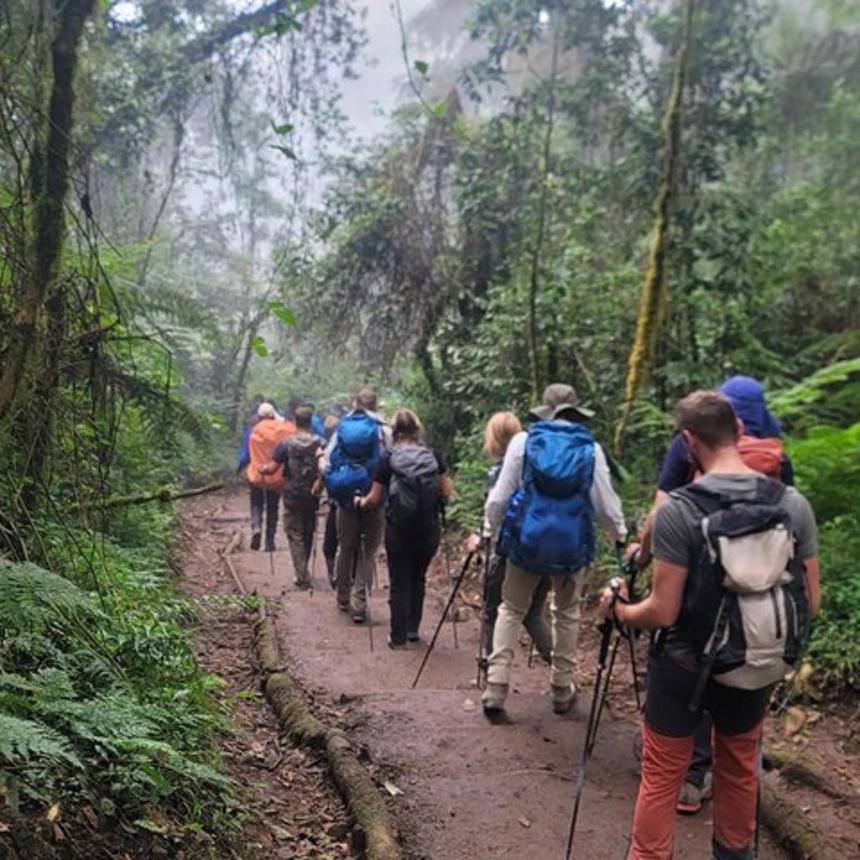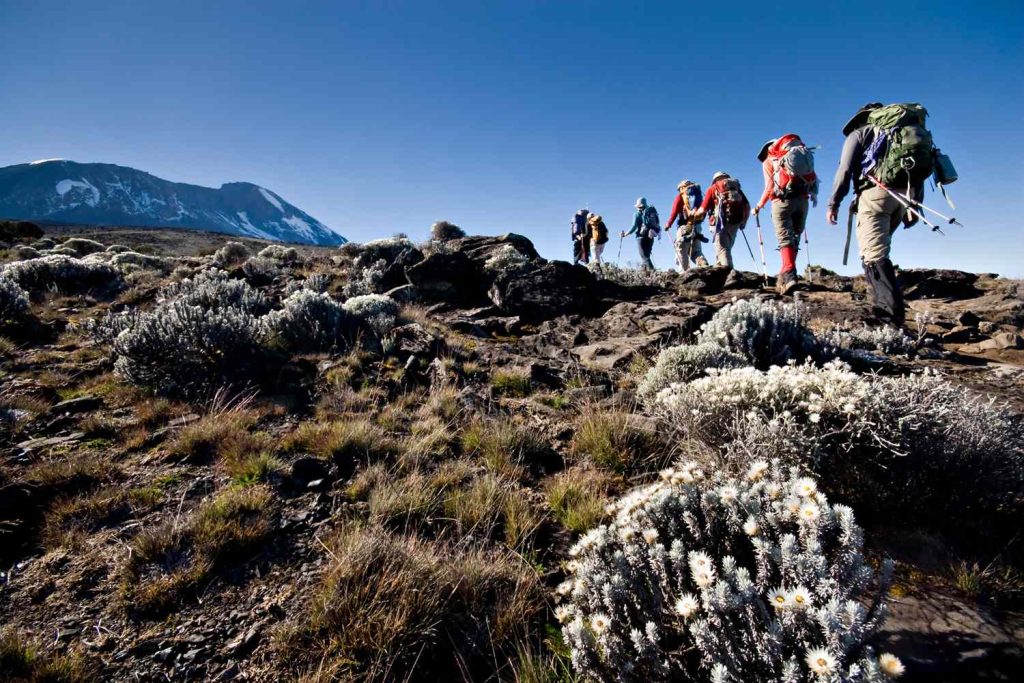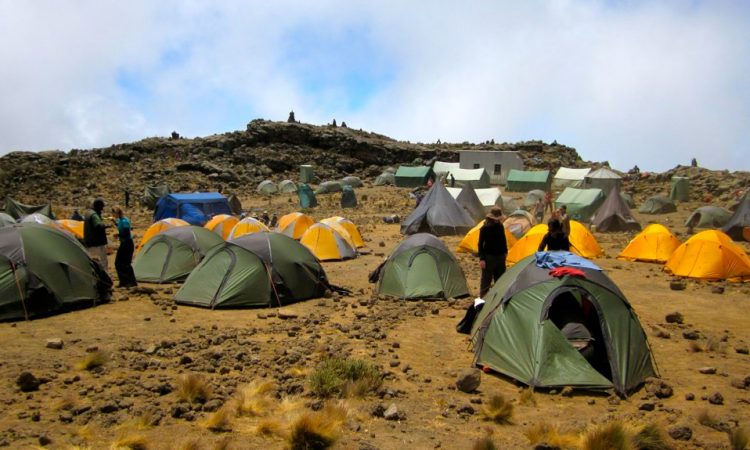
One of the most important items you will bring to Kilimanjaro is your hiking boots! Due to the varied terrain and weather conditions you will need a very good pair of boots. Your trek will include some even paths. But mostly you will encounter trails that are uneven, slippery, steep, stony and you will be required to navigate rocks, scree and rock scrambles.
Those who are avid trekkers or hike occasionally will already be familiar with preferred brands, style, etc. and may likely bring a well worn pair to Kilimanjaro. Or you may be an active person whose activity of choice does not include hiking, or you may be a couch potato getting fit for the trek and you know nothing about selecting the proper type of boots for Kilimanjaro.
Whether you are an experienced hiker or less so, in our opinion, following the boot tips below will give you the very best experience on the mountain. If you already own a pair of boots that fits the description below, bring them! If you don’t, you will want to invest in a new pair of boots.
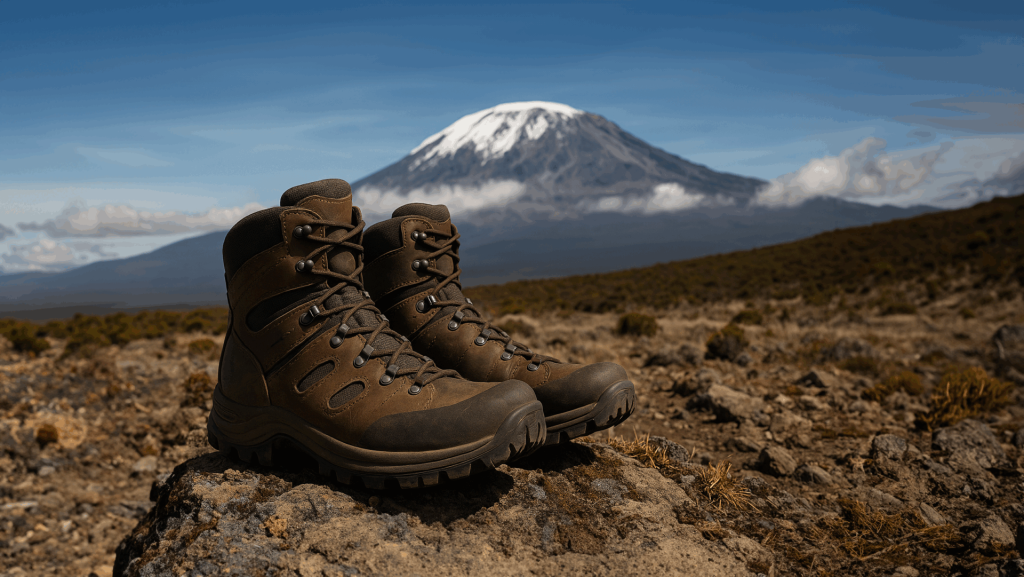
Light weight. Around 2 lbs or so total weight for the pair. You don’t need heavy mountaineering boots on Kilimanjaro.
Sturdy. A leather upper or leather combination and deep lugged soles of tough rubber.
Warm. Leather is generally warmer than other materials.
Waterproof. Gore-Tex boots are waterproof, windproof and breathable. It is crucial to ensure your feet stay dry.
Comfortable. Boots must be very well broken in. This is the key to comfortable feet on the trek. Boots take a while to break in, especially leather boots. If you are purchasing new boots, we recommend you do so many months before the trek, at least 6 months is best. Do not come to Kilimanjaro with boots that you plan to break in on the trek!
If you purchase new boots, as you break them in you may develop a “hot spot” or two, or areas in the boots that hurt after you’ve been walking for a while. You can take your boots back to the outfitter where you purchased them and have them help work out the “hot spots” (a metal tool is used to rub the leather to help break them in).
Also for optimum comfort, ensure the boots are the right fit considering you will wear 2 pairs of socks and considering the impact of the steep descent on your toes. You should have some room in the toe area! And don’t tie your boots too tight. This can cause comfort problems, and lessen the blood circulation. Good blood circulation in your feet helps them stay warm.
Mid-rise. We recommend mid rise boots (that cover your ankle).The mid’s will protect your ankle, provide good support and offer the best stability on the varied mountain terrain. Can you trek in low rise boots? Yes. But mid’s are best!
Because your boots are so important on the trek, we recommend you consider wearing them on your flights to Tanzania. This is a precaution to ensure they arrive with you vs. placing them in checked baggage where there is a chance they could be delayed or lost.