
There is an immense wildlife population on Mount Kilimanjaro National Park and also in the forest that covers the lower slopes, and despite the tough climate they all thrive up there.
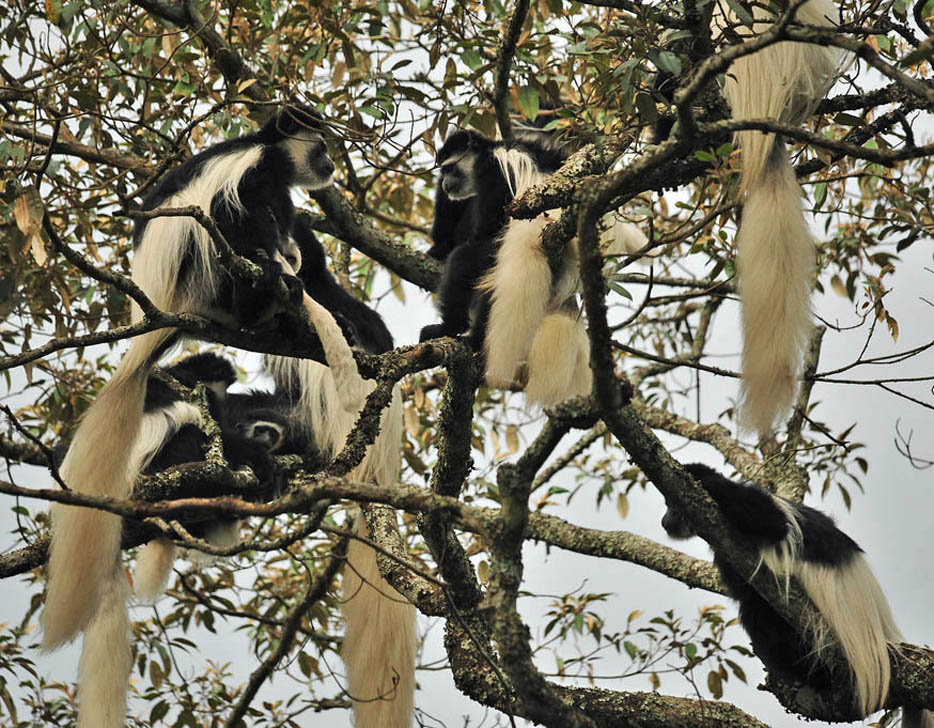
You’ll find 140 different species of mammals that live on Mount Kilimanjaro including 25 antelopes, 24 different species of bats, 7 primates and 25 carnivores. You will also find 7 larger mammals including buffalos, bushbacks, red duiker, grey duiker and tree hyrax. Three primate species can also be found in the montane forest, bushbabies, black and white colobus monkeys and the blue monkey.
The birds and animals of Kilimanjaro are the heartbeat of this land.
If you’re looking to spot any larger wildlife such as giraffes and elephants, they tend to live in the areas surrounding Mount Meru. Right from the moment you arrive in Arusha (depending on your itinerary and trekking route selected) you are sure to at least catch a glimpse of these truly magnificent creatures.
Arusha National Park covers 552 square kilometres which is dominated by Mount Meru and the snow capped peak of Kilimanjaro in the distance. You will find animals such as leopards, spotted hyenas, giraffes, warthogs, bushbuck and blue monkeys, and water buffalos.
If your aim is to go birding (which is a definite must do for keen bird watches) then you can expect to see the laughing dove, silvery-cheeked hornbill, brown breasted barbet, white-browed robin chat and the olive thrush.
The weather conditions of Mount Kilimanjaro can be severe when you climb above 4000 metres. During the day you can expect temperatures of over 35 degrees and then as darkness falls the temperatures can plummet to well below freezing.
The creatures that can stand these extreme changes in temperature are insects and spiders because no other creature dare venture up this far! Although you may see one or two birds of prey looking for their next meal this will only be for a very short period of time as they cannot survive in these extreme temperatures and high altitude for very long!
An interesting story about Kilimanjaro is of the frozen leopard which was found on the summit in 1926, which was made famous by Ernest Hemingway’s book ‘The Snows of Kilimanjaro’. It’s a mystery what the leopard was doing at such a high altitude but to this day will always remain one of Kilimanjaro’s great tales.
You’ll find the vegetation on the slopes of Mt Meru spectacular and it’s also extremely rich in wildlife. Expect to see water buffaloes, warthog and giraffes as you trek along. You may be lucky enough to walk in between the giraffes as they are feeding on the vegetation above them.
If you decide to take the Marangu route then expect to run into the fascinating blue monkeys. They are extremely friendly creatures and certainly not worried about coming into contact with humans. They tend to congregate around the Mandara Huts, which is why that part of the forest above the Mandara Huts is called the monkey forest.
Look out for the silvery-cheeked hornbill which you may likely see on your climb up Kilimanjaro. You can catch then hanging out in the trees or if you’re lucky, you may see one in flight which is a wonderful sight.
We’ve only touched on a few of the birds and animals that you will find on Mount Kilimanjaro, Mount Meru and the surrounding parklands, so when you finally experience it for yourself, you too will be amazed at the magnificent creatures that can be seen here.
There really is no place on earth quite like Tanzania.
Frequently Asked Questions
What animals can you see on Mount Kilimanjaro?
Kilimanjaro is home to a surprising variety of animals, especially in the lower forest zones. You might spot Colobus monkey swinging through the trees or Blue monkey along the trails. Larger animals like Elephant and Buffalo also live in the park, though sightings are less common during treks. These animals usually stay deeper in the forest, away from busy routes. Still, knowing they share the mountain adds to the sense of adventure.
Are there dangerous animals on Kilimanjaro?
Yes, some potentially dangerous animals do live in the park, but encounters are rare. Animals like buffalo or elephants can be unpredictable if approached too closely. However, trekking routes are well, managed, and guides are trained to ensure safety. Climbers are always accompanied by park rangers in certain areas, especially at the start. As long as you follow instructions, the trek remains very safe.
What kinds of birds can be found on Kilimanjaro?
Kilimanjaro is a great place for bird lovers, with many colorful and unique species. You might see Hornbill, Sunbird, and turacos in the forest zone. These birds are often heard before they are seen, adding to the atmosphere of the hike. As you climb higher, birdlife becomes less common due to the harsher environment. The lower slopes are the best place to enjoy birdwatching.
Does wildlife change as you climb higher?
Yes, wildlife changes significantly as you move up the mountain. The dense rainforest at lower elevations supports the most animals and birds. As you reach the moorland and alpine zones, vegetation becomes sparse and wildlife decreases. At the summit, conditions are too harsh for most animals to survive. This transition is part of what makes Kilimanjaro so unique.
Can I combine wildlife viewing with my Kilimanjaro trek?
While you may see some animals on the mountain, Kilimanjaro is not primarily a safari destination. For a richer wildlife experience, many travelers visit nearby parks like Serengeti National Park or Tarangire National Park. These parks offer better chances to see large herds and predators. Combining a trek with a safari gives you the best of both worlds. It’s a perfect way to experience Tanzania’s natural beauty.
Still have questions?
Our local safari experts are happy to help you plan the perfect African safari.


